
Entry
Reader's guide
Entries A-Z
Subject index
Energy Efficiency
Within the context of sustainable design, energy efficiency is regarded as an important key to reducing fossil fuel use by improving the energy performance of equipment and appliances, buildings, and municipal infrastructure. Many energy experts today regard continued dependence on coal, oil, and natural gas to be unsustainable because supplies are not limitless and combustion of fossil fuels results in a variety of negative environmental impacts including air and water pollution and significant carbon dioxide emissions.
Energy efficiency describes the rate at which energy is used to accomplish a particular task (e.g., the miles that a car can travel per gallon of gasoline). Improving energy efficiency means getting more work from the same or less energy input. A hybrid sedan is more energy efficient than a large pick-up truck because it will travel farther on the same amount of gas.
Houses designed for a specific site, like this solar-heated, cement house built into a hillside, can employ topography and the path of the sun to increase efficiency
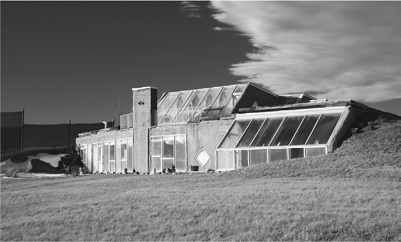
Improvement of energy efficiency has traditionally been considered a production engineering strategy that increased profits by reducing fuel costs. Improvement of the energy efficiency of equipment and machinery played a key role in the phenomenal growth of industrial productivity in the early 20th century. Since the oil embargo of the 1970s, federal, state, and utility programs have laid a solid foundation for improving the efficiency of energy consumption across all sectors of the economy. However, the new sense of urgency surrounding carbon emissions and other environmental impacts has led cities to identify and support the many opportunities that remain to improve energy efficiency in homes, businesses, schools, government buildings, and industrial facilities.
The Legacy of the 1970s
The consumer side of energy efficiency has its roots in the oil embargo of the 1970s. When political upheaval in the Mideast in 1973 temporarily cut the oil supply flowing to the United States, Americans were made aware for the first time that the fossil energy supply was neither free nor endless. This brief supply disruption illustrated America's energy vulnerability and caused a subtle but permanent change in the way the United States would regard all its fossil energy resources from then on. Energy efficiency as a national policy concern began with President Jimmy Carter in the late 1970s, and it has continued to remain on the agenda to some degree with every presidential administration since.
State Energy Offices
By the end of the 1970s, every state had established an energy office to administer federally mandated programs to promote energy efficiency through financial incentives and public education. These programs were funded by the Petroleum Violation Escrow funds that were settlements from lawsuits brought by the federal government against several U.S. oil companies that took advantage of the oil crisis and overcharged consumers at the gas pump. Also referred to as the Oil Overcharge Program, this was the first time energy efficiency was ever promoted to the public by the federal government. Even though most of the original funding settlements have been spent, many states have retained their energy offices. Some have expanded into helping communities with sustainable energy planning.
...
- City Organizations, Movements, and Planning
- Agenda 21
- Brownfields
- Carrying Capacity
- Charrette
- City Politics
- Civic Space
- Ecoindustrial Parks
- Environmental Impact Assessment
- Environmental Planning
- Green Communities and Neighborhood Planning
- Green Design, Construction and Operations
- Greenfield Sites
- Infrastructure
- Intermodal Transportation
- Millennium Development Goals
- Mitigation
- NIMBY
- Personal Rapid Transit
- Resilience
- Sustainability Indicators
- Sustainable Development
- Transit-Oriented Development
- Transportation Demand Management
- City Profiles
- Austin, Texas
- Bahía de Caráquez, Ecuador
- Bangkok, Thailand
- Barcelona, Spain
- Beijing, China
- Bogotá, Colombia
- Chattanooga, Tennessee
- Chernobyl, Ukraine
- Chicago, Illinois
- Copenhagen, Denmark
- Curitiba, Brazil
- Dongtan, China
- Dzerzhinsk, Russia
- Hamburg, Germany
- Kabwe, Zambia
- Kampala, Uganda
- La Oroya, Peru
- Linfen, China
- London, England
- Los Angeles, California
- Malmö, Sweden
- Mexico City, Mexico
- New York City, New York
- Norilsk, Russia
- Portland, Oregon
- Reykjavik, Iceland
- Rio de Janeiro, Brazil
- San Francisco, California
- Seattle, Washington
- Stockholm, Sweden
- Sukinda, India
- Sumgayit, Azerbaijan
- Sydney, Australia
- Tianying, China
- Vancouver, Canada
- Vapi, India
- Green City Challenges
- Adaptation, Climate Change
- Adaptive Reuse
- Air Quality
- Biodiversity
- Carbon Footprints
- Coastal Zone Management
- Combined Sewer Overflow
- Commuting
- Construction and Demolition Waste
- Denitrification
- Density
- Ecological Footprint
- Ecosystem Restoration
- Embodied Energy
- Energy Efficiency
- Environmental Justice
- Environmental Risk
- Food Deserts
- Food Security
- Garbage
- Greywater
- Gridlock
- Heat Island Effect
- Indoor Air Quality
- Landfills
- Light Pollution
- Natural Capital
- Nonpoint Source Pollution
- Ports
- Power Grids
- Recycling in Cities
- Sea Level Rise
- Stormwater Management
- Transit
- Waste Disposal
- Water Conservation
- Water Pollution
- Water Treatment
- Water, Sources and Delivery
- Watershed Protection
- Wetlands
- Green City Solutions
- Bicycling
- Biophilia
- Bioregion
- Bluebelts
- Bus Rapid Transit
- Carbon Neutral
- Carbon Trading
- Carpooling
- Cities for Climate Protection
- Citizen Participation
- Combined Heat and Power (Cogeneration)
- Community Gardens
- Compact Development (New Urbanism)
- Composting
- Congestion Pricing
- Conservation Subdivision
- Daylighting
- Distributed Generation
- District Energy
- Ecovillages
- Green Belt
- Green Energy
- Green Fleets (Vehicles)
- Green Housing
- Green Infrastructure
- Green Jobs
- Green Landscaping
- Green Procurement and Purchasing
- Green Roofs
- Greening Suburbia
- Greyfield Development
- Habitat Conservation and Restoration
- Healthy Cities
- Historic Preservation
- Infill Development
- LEED (Leadership in Energy and Environmental Design)
- Location-Efficient Mortgage
- Masdar Ecocity
- Mayors Climate Protection Agreement
- Parks, Greenways, and Open Space
- Renewable Energy
- Smart Growth
- Traffic Calming
- Universal Design
- Urban Agriculture
- Urban Forests
- Walkability (Pedestrian-Friendly Streets)
- Xeriscaping
- Loading...
Get a 30 day FREE TRIAL
-
 Watch videos from a variety of sources bringing classroom topics to life
 -
Read modern, diverse business cases
-
Explore hundreds of books and reference titles

Read next

More like this
Sage Recommends
We found other relevant content for you on other Sage platforms.
Have you created a personal profile? Login or create a profile so that you can save clips, playlists and searches