
Entry
Reader's guide
Entries A-Z
Subject index
Daylighting
Daylighting refers to the theory and applied methods for allowing natural sunlight to enter into interior building spaces. Various day-lighting techniques have been used in architectural design for much of human history. During the 20th century, however, natural day-lighting was replaced by the widespread use of electric fluorescent lighting. Today, as increasing numbers recognize the environmental, economic, and psychological benefits of daylighting, more interior spaces are being lit by the sun. Green building advocates promote day-lighting as an example of an integrative approach to sustainable design. Successful daylighting carefully integrates passive and active design elements for a holistic effect on the whole building. Such a “whole building” approach takes variables like glare, heat gain, seasonal change, cost, paint color, and other elements into account.
The electricity used to light interior spaces comprises a significant portion of the energy cost for buildings. Daylighting uses natural light to illuminate interiors, which reduces energy costs
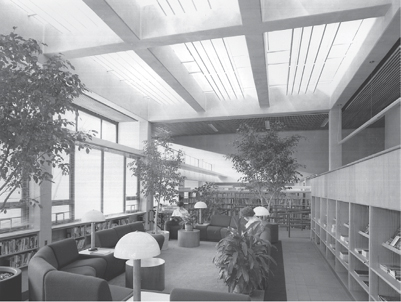
Three main benefits ascribed to daylighting of interior building spaces include:
- Environmental
- Economic
- Psychological
Daylighting and Sustainability
The recent resurgence of interest in daylighting is driven by the increasing cost of fossil fuels and the recognition of global warming as a tangible threat to environmental ecology and human quality of life. The electricity used to light interior spaces makes up a significant part of the overall energy cost for buildings. In the United States, electricity used to light interior spaces accounts for 20–25 percent of the total electrical energy used nationally. In colder climates and during winter months, the practice of naturally heating spaces via solar heat gain can greatly reduce heating costs. Naturally heated buildings require less energy and help minimize the burning of fossil fuels. The U.S. Green Building Council estimates that buildings that successfully use daylighting can conserve 50–80 percent of their normal energy use.
A comprehensive approach to daylighting includes the use of automated or electronic management systems to balance lighting between natural sunlight and electrical lighting. A 2005 study conducted by the Center for the Built Environment at the University of California, Berkley, concluded that installing control systems to properly manage daylit environments resulted in a 65 percent decrease in electrical lighting use.
Cost
Prospective owners should view such green building technologies using a life cycle analysis approach. This type of approach emphasizes long-term energy cost savings, rather than a singular focus on up-front costs of daylighting techniques. Daylighting improvements, similar to all properly calibrated green building measures, should be viewed as investments, rather than sunk costs. In addition, there are numerous positive externalities to daylit environments that can positively affect the bottom line. Some of these externalities include lower rates of employee absenteeism, a healthier workforce, increased productivity, and higher morale. The effect on worker morale and well-being is especially valuable, as it is typically more costly to continuously hire and train new employees than to make investments in creating a pleasant working environment that would help retain the current workforce.
Psychological Connections
In addition to reduced energy use, daylighting affects human psychology in profound ways. The U.S. Green Building Council's Leadership in Energy and Environmental Design reference manual notes that a visual connection with the outside, natural world can result in greater appreciation and respect for nature by building occupants.
...
- City Organizations, Movements, and Planning
- Agenda 21
- Brownfields
- Carrying Capacity
- Charrette
- City Politics
- Civic Space
- Ecoindustrial Parks
- Environmental Impact Assessment
- Environmental Planning
- Green Communities and Neighborhood Planning
- Green Design, Construction and Operations
- Greenfield Sites
- Infrastructure
- Intermodal Transportation
- Millennium Development Goals
- Mitigation
- NIMBY
- Personal Rapid Transit
- Resilience
- Sustainability Indicators
- Sustainable Development
- Transit-Oriented Development
- Transportation Demand Management
- City Profiles
- Austin, Texas
- Bahía de Caráquez, Ecuador
- Bangkok, Thailand
- Barcelona, Spain
- Beijing, China
- Bogotá, Colombia
- Chattanooga, Tennessee
- Chernobyl, Ukraine
- Chicago, Illinois
- Copenhagen, Denmark
- Curitiba, Brazil
- Dongtan, China
- Dzerzhinsk, Russia
- Hamburg, Germany
- Kabwe, Zambia
- Kampala, Uganda
- La Oroya, Peru
- Linfen, China
- London, England
- Los Angeles, California
- Malmö, Sweden
- Mexico City, Mexico
- New York City, New York
- Norilsk, Russia
- Portland, Oregon
- Reykjavik, Iceland
- Rio de Janeiro, Brazil
- San Francisco, California
- Seattle, Washington
- Stockholm, Sweden
- Sukinda, India
- Sumgayit, Azerbaijan
- Sydney, Australia
- Tianying, China
- Vancouver, Canada
- Vapi, India
- Green City Challenges
- Adaptation, Climate Change
- Adaptive Reuse
- Air Quality
- Biodiversity
- Carbon Footprints
- Coastal Zone Management
- Combined Sewer Overflow
- Commuting
- Construction and Demolition Waste
- Denitrification
- Density
- Ecological Footprint
- Ecosystem Restoration
- Embodied Energy
- Energy Efficiency
- Environmental Justice
- Environmental Risk
- Food Deserts
- Food Security
- Garbage
- Greywater
- Gridlock
- Heat Island Effect
- Indoor Air Quality
- Landfills
- Light Pollution
- Natural Capital
- Nonpoint Source Pollution
- Ports
- Power Grids
- Recycling in Cities
- Sea Level Rise
- Stormwater Management
- Transit
- Waste Disposal
- Water Conservation
- Water Pollution
- Water Treatment
- Water, Sources and Delivery
- Watershed Protection
- Wetlands
- Green City Solutions
- Bicycling
- Biophilia
- Bioregion
- Bluebelts
- Bus Rapid Transit
- Carbon Neutral
- Carbon Trading
- Carpooling
- Cities for Climate Protection
- Citizen Participation
- Combined Heat and Power (Cogeneration)
- Community Gardens
- Compact Development (New Urbanism)
- Composting
- Congestion Pricing
- Conservation Subdivision
- Daylighting
- Distributed Generation
- District Energy
- Ecovillages
- Green Belt
- Green Energy
- Green Fleets (Vehicles)
- Green Housing
- Green Infrastructure
- Green Jobs
- Green Landscaping
- Green Procurement and Purchasing
- Green Roofs
- Greening Suburbia
- Greyfield Development
- Habitat Conservation and Restoration
- Healthy Cities
- Historic Preservation
- Infill Development
- LEED (Leadership in Energy and Environmental Design)
- Location-Efficient Mortgage
- Masdar Ecocity
- Mayors Climate Protection Agreement
- Parks, Greenways, and Open Space
- Renewable Energy
- Smart Growth
- Traffic Calming
- Universal Design
- Urban Agriculture
- Urban Forests
- Walkability (Pedestrian-Friendly Streets)
- Xeriscaping
- Loading...
Get a 30 day FREE TRIAL
-
 Watch videos from a variety of sources bringing classroom topics to life
 -
Read modern, diverse business cases
-
Explore hundreds of books and reference titles

Read next

More like this
Sage Recommends
We found other relevant content for you on other Sage platforms.
Have you created a personal profile? Login or create a profile so that you can save clips, playlists and searches