
Entry
Reader's guide
Entries A-Z
Subject index
Adaptation, Climate Change
Anthropogenic (human-caused) climate change will seriously test our ability to plan and manage cities. Taken-for-granted urban institutions such as housing, industries, schools, hospitals, and transport systems will all likely be affected. Although the scale and intensity of impacts will vary, anticipated problems will have pernicious consequences, especially for the poor and politically disenfranchised. This article considers climate change adaptation concepts, issues, and responses. Beginning by briefly defining mitigation, adaptation, vulnerability, and resilience, this article identifies key players, provides examples of how some cities are already addressing threats, and discusses limitations to current adaptation practices.
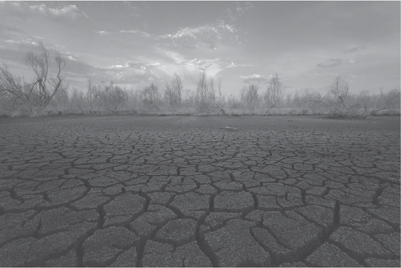
With rising temperatures, heat waves will become more frequent and severe. Droughts, like this one in Louisiana, will threaten food and water supplies
Key Concepts
Four key concepts are central to how the world's cities are adapting to climate change. Early climate change responses hinged on the not ion of reducing or offsetting human-caused greenhouse gases—an idea referred to as mitigation. However, some degree of climate change is now inevitable. The differential effect of climate change on natural and social systems is a function of three interrelated factors: sensitivity to biophysical change, the duration of their exposure to altered conditions (e.g., higher temperature, less rainfall), and the capacity to adapt to new conditions. Intense long-term exposure, extreme sensitivity, and low adaptive capacity will heighten vulnerability to harm, but some cities will be able to quickly “bounce back” from perturbations without suffering high death rates and/or long-term damage to infrastructure, life-sustaining systems, and social institutions. This capacity to withstand harm is termed resilience. Climate change adaptation seeks to forecast the likely impacts and then to figure out how best to modify cities to cope with these expected changes and their environmental, social, and financial consequences.
Likely Urban Effects of Climate Change
The Intergovernmental Panel on Climate Change has predicted that global warming will bring numerous biophysical changes to the world's cities, with knock-on environmental, social, political, and economic effects. For instance, with rising temperatures, heat waves in many places will become more frequent and severe, and urban “heat island” effects will kill many more people. Increased higher-intensity storm events and more rainfall will cause widespread flooding, with concomitant property and infrastructure damage. Frequent droughts will threaten food and water supplies. Increased insect-borne diseases will incapacitate many urban residents. Rising sea levels will devastate some low-lying coastal cities. Urban biodiversity will also likely decline markedly. However, these impacts will disproportionately affect cities in developing countries because of their predominantly warm climates, nature of existing built environments, scale and intensity of expected impacts, high costs of adaptation, and size of the affected populations. Large numbers of people will be displaced as climate refugees.
Numerous urban development practices will exacerbate these impacts, making adaptation more difficult. Unregulated clearing of vegetation increases stormwater run-off, worsening flooding and heightening landslide risk. Development on floodplains and coastlines increases vulnerability to flooding and coastal erosion, raising insurance premiums. Squatter settlements may be especially vulnerable because of unregulated construction methods, inadequate sanitation, their inappropriate location, and substandard infrastructure—flooding, landslides, fire, and epidemic disease will all take their toll. In addition, very high densities within many Asian, South American, and African megacities will expose more people to “heat island” effects. The challenge for urban professionals (e.g., planners, engineers, and healthcare practitioners, etc.) is how best to adapt cities to these and other expected changes.
...
- City Organizations, Movements, and Planning
- Agenda 21
- Brownfields
- Carrying Capacity
- Charrette
- City Politics
- Civic Space
- Ecoindustrial Parks
- Environmental Impact Assessment
- Environmental Planning
- Green Communities and Neighborhood Planning
- Green Design, Construction and Operations
- Greenfield Sites
- Infrastructure
- Intermodal Transportation
- Millennium Development Goals
- Mitigation
- NIMBY
- Personal Rapid Transit
- Resilience
- Sustainability Indicators
- Sustainable Development
- Transit-Oriented Development
- Transportation Demand Management
- City Profiles
- Austin, Texas
- Bahía de Caráquez, Ecuador
- Bangkok, Thailand
- Barcelona, Spain
- Beijing, China
- Bogotá, Colombia
- Chattanooga, Tennessee
- Chernobyl, Ukraine
- Chicago, Illinois
- Copenhagen, Denmark
- Curitiba, Brazil
- Dongtan, China
- Dzerzhinsk, Russia
- Hamburg, Germany
- Kabwe, Zambia
- Kampala, Uganda
- La Oroya, Peru
- Linfen, China
- London, England
- Los Angeles, California
- Malmö, Sweden
- Mexico City, Mexico
- New York City, New York
- Norilsk, Russia
- Portland, Oregon
- Reykjavik, Iceland
- Rio de Janeiro, Brazil
- San Francisco, California
- Seattle, Washington
- Stockholm, Sweden
- Sukinda, India
- Sumgayit, Azerbaijan
- Sydney, Australia
- Tianying, China
- Vancouver, Canada
- Vapi, India
- Green City Challenges
- Adaptation, Climate Change
- Adaptive Reuse
- Air Quality
- Biodiversity
- Carbon Footprints
- Coastal Zone Management
- Combined Sewer Overflow
- Commuting
- Construction and Demolition Waste
- Denitrification
- Density
- Ecological Footprint
- Ecosystem Restoration
- Embodied Energy
- Energy Efficiency
- Environmental Justice
- Environmental Risk
- Food Deserts
- Food Security
- Garbage
- Greywater
- Gridlock
- Heat Island Effect
- Indoor Air Quality
- Landfills
- Light Pollution
- Natural Capital
- Nonpoint Source Pollution
- Ports
- Power Grids
- Recycling in Cities
- Sea Level Rise
- Stormwater Management
- Transit
- Waste Disposal
- Water Conservation
- Water Pollution
- Water Treatment
- Water, Sources and Delivery
- Watershed Protection
- Wetlands
- Green City Solutions
- Bicycling
- Biophilia
- Bioregion
- Bluebelts
- Bus Rapid Transit
- Carbon Neutral
- Carbon Trading
- Carpooling
- Cities for Climate Protection
- Citizen Participation
- Combined Heat and Power (Cogeneration)
- Community Gardens
- Compact Development (New Urbanism)
- Composting
- Congestion Pricing
- Conservation Subdivision
- Daylighting
- Distributed Generation
- District Energy
- Ecovillages
- Green Belt
- Green Energy
- Green Fleets (Vehicles)
- Green Housing
- Green Infrastructure
- Green Jobs
- Green Landscaping
- Green Procurement and Purchasing
- Green Roofs
- Greening Suburbia
- Greyfield Development
- Habitat Conservation and Restoration
- Healthy Cities
- Historic Preservation
- Infill Development
- LEED (Leadership in Energy and Environmental Design)
- Location-Efficient Mortgage
- Masdar Ecocity
- Mayors Climate Protection Agreement
- Parks, Greenways, and Open Space
- Renewable Energy
- Smart Growth
- Traffic Calming
- Universal Design
- Urban Agriculture
- Urban Forests
- Walkability (Pedestrian-Friendly Streets)
- Xeriscaping
- Loading...
Get a 30 day FREE TRIAL
-
 Watch videos from a variety of sources bringing classroom topics to life
 -
Read modern, diverse business cases
-
Explore hundreds of books and reference titles

Read next

More like this
Sage Recommends
We found other relevant content for you on other Sage platforms.
Have you created a personal profile? Login or create a profile so that you can save clips, playlists and searches