
Entry
Reader's guide
Entries A-Z
Subject index
Organic
Organic food and farming developed through the 20th century in response to crises in the farmed environment and technological innovations in farming and food technologies. Organic food and farming is based on not using nitrogen fertilizers, synthetic pesticides or insecticides, prophylactic antibiotics, artificial hormones, or genetically engineered plants or animals. Instead of using these technologies, the farm is managed to ensure that fertility is gained with compost, manures and leguminous plants, companion planting, and encouragement of natural predators. Plant-based insecticides are used to control insects, with homeopathy and less-intensive production techniques used to secure animal welfare. To ensure that organic food is produced in accordance with the principles and ethos of the organic movement, farms and food processors are inspected and certified, allowing the product to display a logo indicating its organic status.
Instead of using chemical fertilizers and pesticides, organic products, such as these cauliflowers, are managed to ensure that fertility is gained with compost, manures, and leguminous plants; companion planting; and encouragement of natural predators
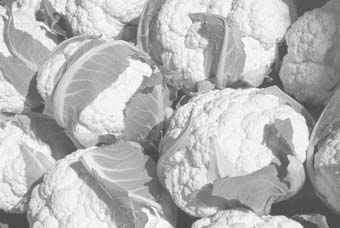
Organic farming, according to its proponents, is better for the environment because it encourages a complex ecosystem on the farm and uses fewer natural resources. Organic food, it is argued, is healthier because of the absence of chemical residues and the presence of trace minerals and chemicals missing from nonorganic products.
The origins of the organic movement lie in two separate, and initially independent, developments in Germany and the British Empire in the first half of the 20th century. During the 1920s, the Life Reform movement in Germany brought into question the use of nitrogen fertilizers in agriculture and sought to find a method of producing agriculture more in tune with nature. Simultaneously, Rudolf Steiner, the founder of anthroposophy, delivered a series of lectures on agriculture that were developed into biodynamic agriculture. This perspective on organic farming requires the farm to be as closed a system as possible, with wastes and nutrients returned to the farm, but adds a cosmological dimension whereby various preparations are used to optimize the soil and crops of the farm. In the British Empire, the encounter of Western agricultural science with traditional Indian farming practices led to the development of a vision of agriculture that sought to nurture the ecosystems of the soil and valued traditional agriculture. This perspective argued that nitrogen fertilizers destroy the ecosystem of the soil, and therefore undermine the health of the plants, animals, and humans dependent on it. Albert Howard, then a prominent British agricultural scientist, argued that proper soil management with composts based on animal manure and plant matter would maintain the health of the soil and those reliant on it. Howard had little time for the mystical ideas of Steiner, labeling them “muck and magic,” while promoting his own ideas as based in science.
Despite some interest within the leadership of Nazi Germany, the organic movement there foundered, leaving the British movement as the fulcrum of the heart of the movement. The most prominent proponent of organic agriculture was Lady Evelyn Balfour, who after hearing the arguments of Balfour and his associates, undertook to start a comparative experiment on her own farm at Haughley, Suffolk, England. Balfour's plan was a farm-scale trial managing one set of fields with “artificials,” one left fallow, and the other organically. The outbreak of World War II led to many of those who had been experimenting with organic farming and food in the previous decade to record their experiences. It was at this time that the term organic began to be used by the movement, rather than terms such as compost or humus farming. Balfour's account of her experiment, The Living Soil (1943), catalyzed the networks into thinking about an organization that they could form at the end of the war. The Soil Association was founded in 1946, with the direct purpose of promoting organic farming and food, as well as the evidence necessary to underpin it. The association sought in the following years to coordinate the organic movement across the planet and manage Balfour's research at Haughley. At this time, the organic movement began to gain a foothold in North America with a number of experiments being undertaken, the most prominent of which were those of Jerome Rodale. Rodale had read the work of, and then entered into a correspondence with, Albert Howard in the early 1940s. He began to publish a magazine, Organic Farming, and to offer scientific research funding to those prepared to investigate organic agriculture.
...
- Business Organizations, Movements, and Planning
- Balanced Scorecard
- Best Available Control Technology
- Best Management Practices
- Ceres Principles
- Certification
- Closed-Loop Supply Chain
- Compliance
- Core Competencies
- Corporate Social Responsibility
- Cost-Benefit Analysis
- Demand-Side Management
- Discounting
- Dow Jones Sustainability Index
- Ecoeffectiveness
- Ecoefficiency
- Ecoindustrial Park
- Ecological Economics
- Economic Value Added
- Emissions Trading
- Energy Performance Contracting
- Energy Service Company
- Environmental Accounting
- Environmental Assessment
- Environmental Audit
- Environmental Economics
- Environmental Impact Statement
- Environmental Indicators
- Environmental Management System
- Environmental Marketing
- Environmental Risk Assessment
- Environmental Services
- Environmentally Preferable Purchasing
- Equator Principles
- Extended Producer Responsibility
- Extended Product Responsibility
- Externalities
- Factor Four and Factor Ten
- Fair Trade
- Genuine Progress Indicator
- Global Reporting Initiative
- Global Sullivan Principles
- Industrial Ecology
- Industrial Metabolism
- Industrial Nutrients
- Informational Regulation
- Integrated Bottom Line
- International Organization for Standardization
- ISO 14000
- ISO 19011
- Leadership in Green Business
- Life Cycle Analysis
- Material Input per Service Unit (MIPS)
- Maximum Achievable Control Technology
- National Priorities List
- Natural Capital
- New Source Review
- Quantitative Risk Assessment
- Recycling, Business of
- Reverse Logistics
- Service Design
- Social Return on Investment
- Steady State Economy
- Stewardship
- Supply Chain Management
- Value Chain
- Business Profiles
- Green Business Challenges
- Green Business Solutions
- Abatement
- Appropriate Technology
- Bio-Based Material
- Biofuels
- Biological Resource Management
- Biomimicry
- Bioremediation
- Biotechnology
- Blended Value
- Brownfield Redevelopment
- Carbon Neutral
- Carbon Sequestration
- Carbon Trading
- Cause-Related Marketing
- Clean Fuels
- Clean Production
- Clean Technology
- Cogeneration
- Conservation
- Coopetition
- Cradle-to-Cradle
- Deposit Systems
- Distributed Energy
- Ecolabels
- Ecosystem Services
- Ecotourism
- Environmental Justice
- Green Building
- Green Chemistry
- Green Design
- Green Retailing
- Green Technology
- Green-Collar Jobs
- Gross National Happiness
- Integrated Pest Management
- Organic
- Pollution Offsets
- Pollution Prevention
- Precautionary Principle
- Remanufacturing
- Resource Management
- Responsible Sourcing
- Restoration
- Right to Know
- Seventh Generation
- Six Sigma
- Smart Energy
- Social Entrepreneurship
- Social Marketing
- Socially Responsible Investing
- Superfund
- Sustainability
- Sustainable Design
- Sustainable Development
- Systems Thinking
- Take Back
- Upcycle
- Voluntary Standards
- Waste Reduction
- Loading...
Get a 30 day FREE TRIAL
-
 Watch videos from a variety of sources bringing classroom topics to life
 -
Read modern, diverse business cases
-
Explore hundreds of books and reference titles

Read next

More like this
Sage Recommends
We found other relevant content for you on other Sage platforms.
Have you created a personal profile? Login or create a profile so that you can save clips, playlists and searches