
Entry
Reader's guide
Entries A-Z
Subject index
IKEA
Founded in Sweden, IKEA has grown to be the world's largest furniture retailer, specializing in flat-pack kits to be assembled at home. IKEA is also renowned for its prominent efforts to reduce its environmental impact and increase the social good generated throughout its supply chains. Although IKEA has certainly been reactive to wider trends and demands, many argue that responsibility has been at the core of IKEA's operation throughout its history. Having said this, IKEA has not gone without criticism, and perhaps the biggest area of controversy is the company's unusual legal structure that some say fails tests of transparency, and possibly implies tax evasion.
IKEA's progressive tenets include a pledge to minimize their own ecological footprint and to forge partnerships with trade unions to ensure fair and safe working conditions for their own and their supplier's employees
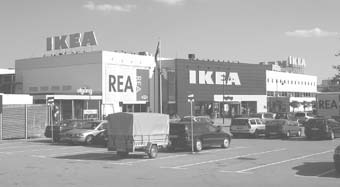
IKEA was founded as a general trading company in Sweden in 1943 by Ingvar Kamprad. After first introducing furniture in 1947, it was decided that this would constitute the entirety of the company's range from 1951 onward, and in the same year, IKEA launched its first catalog: a marketing approach that has become synonymous with the company's brand. IKEA has subsequently gone on to become the world's largest furniture store, with some 301 franchised stores in 37 countries across the world, and although having only a few factories of its own, contracts some 1,500 third-party suppliers in 55 countries, mostly in Asia.
Some argue that the concept of corporate social responsibility (CSR) has always been ingrained in IKEA's business operation, and perhaps the most innovative aspect of the company is the degree to which a more sustainable approach has not superseded the goal of providing accessible goods. For example, it is argued that the minimal use of materials has both reduced environmental impact and price, and likewise that the flat-packed nature of the product leads to both reduced environmental and financial transport costs. The degree to which such financial savings are passed on to the consumer or accumulated in profit (which would lead some to categorize the above measures as greenwashing), is of course a different issue.
Whether responsible operations are intrinsic or not, IKEA's core business, which involves transforming natural resources into economic commodities at minimal cost, has certainly attracted attention in the era of greater environmental and social awareness. The first of the concerns emerged in the mid-1980s, when formaldehyde emissions from IKEA's widely used particle board designs were found to exceed some recommended standards. Later on, movements for the preservation of the rainforests accused IKEA of making a significant contribution to the loss of important environmental capital, and in the early 1990s, the company was faced with allegations that it profited from child labor.
The first controversy led IKEA to apply the new E-1 German standards on formaldehyde emissions, which were recognized to be the strictest in the world, even in countries where the existing standards were more lax. Indeed, the application of the most rigorous standards across all markets became a standard of IKEA operations. The response to environmental concerns involved engaging both with external and internal stakeholders, and has been seen as a prominent element of IKEA's innovation. For example, although Karl-Henrik Robèrt (the founder of The Natural Step) was initially invited to IKEA by Lennart Dahlgren (vice president) and Russell Johnson (head of quality) as a means of trying to overcome resistance to reform, genuine engagement with wider management yielded a practical way to reduce environmental impact without impacting finances. Instead, the approach was to gradually introduce a range of more sustainable equivalents to standard products, the Gustavian line, but to justify the additional costs not in reference to sustainability, but by the exclusivity of the range. As the marketing strategy promoted new options over conventional products, consumer demand increased, production volumes grew, and unit prices fell. This was also complemented by improvements to other items, and all sectors of the business were reformed by making structural changes in six key categories: (1) management and personnel; (2) products and materials; (3) customers; (4) suppliers; (5) buildings equipment and consumable materials; and (6) transport. What is more, responsibility has not just remained a policy, but has been translated down the corporate structure through a number of educational and interactive schemes, such as “environmental coordinators” and “ideas banks” for employee initiative. IKEA has also partnered with other external organizations, including the Forest Stewardship Council (FSC). As a result, in November 1999 the company banned timber from intact natural forests, except those certified by the FSC. While there has been substantial criticism of such private governance schemes, many argue that IKEA has set a strong example on how voluntary action can reduce the impact of business on the environment.
...
- Business Organizations, Movements, and Planning
- Balanced Scorecard
- Best Available Control Technology
- Best Management Practices
- Ceres Principles
- Certification
- Closed-Loop Supply Chain
- Compliance
- Core Competencies
- Corporate Social Responsibility
- Cost-Benefit Analysis
- Demand-Side Management
- Discounting
- Dow Jones Sustainability Index
- Ecoeffectiveness
- Ecoefficiency
- Ecoindustrial Park
- Ecological Economics
- Economic Value Added
- Emissions Trading
- Energy Performance Contracting
- Energy Service Company
- Environmental Accounting
- Environmental Assessment
- Environmental Audit
- Environmental Economics
- Environmental Impact Statement
- Environmental Indicators
- Environmental Management System
- Environmental Marketing
- Environmental Risk Assessment
- Environmental Services
- Environmentally Preferable Purchasing
- Equator Principles
- Extended Producer Responsibility
- Extended Product Responsibility
- Externalities
- Factor Four and Factor Ten
- Fair Trade
- Genuine Progress Indicator
- Global Reporting Initiative
- Global Sullivan Principles
- Industrial Ecology
- Industrial Metabolism
- Industrial Nutrients
- Informational Regulation
- Integrated Bottom Line
- International Organization for Standardization
- ISO 14000
- ISO 19011
- Leadership in Green Business
- Life Cycle Analysis
- Material Input per Service Unit (MIPS)
- Maximum Achievable Control Technology
- National Priorities List
- Natural Capital
- New Source Review
- Quantitative Risk Assessment
- Recycling, Business of
- Reverse Logistics
- Service Design
- Social Return on Investment
- Steady State Economy
- Stewardship
- Supply Chain Management
- Value Chain
- Business Profiles
- Green Business Challenges
- Green Business Solutions
- Abatement
- Appropriate Technology
- Bio-Based Material
- Biofuels
- Biological Resource Management
- Biomimicry
- Bioremediation
- Biotechnology
- Blended Value
- Brownfield Redevelopment
- Carbon Neutral
- Carbon Sequestration
- Carbon Trading
- Cause-Related Marketing
- Clean Fuels
- Clean Production
- Clean Technology
- Cogeneration
- Conservation
- Coopetition
- Cradle-to-Cradle
- Deposit Systems
- Distributed Energy
- Ecolabels
- Ecosystem Services
- Ecotourism
- Environmental Justice
- Green Building
- Green Chemistry
- Green Design
- Green Retailing
- Green Technology
- Green-Collar Jobs
- Gross National Happiness
- Integrated Pest Management
- Organic
- Pollution Offsets
- Pollution Prevention
- Precautionary Principle
- Remanufacturing
- Resource Management
- Responsible Sourcing
- Restoration
- Right to Know
- Seventh Generation
- Six Sigma
- Smart Energy
- Social Entrepreneurship
- Social Marketing
- Socially Responsible Investing
- Superfund
- Sustainability
- Sustainable Design
- Sustainable Development
- Systems Thinking
- Take Back
- Upcycle
- Voluntary Standards
- Waste Reduction
- Loading...
Get a 30 day FREE TRIAL
-
 Watch videos from a variety of sources bringing classroom topics to life
 -
Read modern, diverse business cases
-
Explore hundreds of books and reference titles

Read next

More like this
Sage Recommends
We found other relevant content for you on other Sage platforms.
Have you created a personal profile? Login or create a profile so that you can save clips, playlists and searches