
Entry
Reader's guide
Entries A-Z
Subject index
Environmentally Preferable Purchasing
Environmentally preferable purchasing (EPP) refers to procurement policies that seek to minimize the environmental impacts of purchasing decisions. EPP, alternatively referred to as “green purchasing,” has been implemented in various forms by governments at all levels with the intent of using their purchasing power to strengthen markets for environmentally preferable products, and to lead the way to environmentally responsible purchasing decisions by example. While private firms and individuals also engage in EPP, except when taking collective action, their ability to sway markets is comparatively limited. Governments expend vast amounts of money annually to very effectively augment private sector demand both by government purchases and by providing incentives to manufacturers for developing greener products.
In the United States, EPP became federal policy with the adoption of Executive Order 12873 in 1993. Two years later, the U.S. Environmental Protection Agency (EPA) released the Proposed Guidance on Acquisition for Environmentally Preferable Products and Services. In 1996 the EPA teamed with the Organisation for Economic Co-operation and Development (OECD) to study the programs operating in OECD member countries. Based on that research, comments received on the 1995 document, and pilot projects conducted by the agency, the EPA released its Final Guidance on Environmentally Preferable Purchasing in 1999.
The EPA's EPP program rests on four primary guiding principles. The first is that environmental costs must be as a matter of course factored into any governmental purchasing decision. In decades past, price and performance were the only metrics considered. Ignoring externalized costs benefited certain vendors, giving them a competitive edge in the procurement process, but those environmental costs avoided by manufacturers were ultimately exacted on citizens and the government in the form of public health, remediation, or liability costs. The EPP approach requires all foreseeable costs to be documented using life cycle cost analysis techniques and transfers the competitive advantage to firms that operate in an environmentally responsible manner. The second principle of the EPP program is that pollution prevention should be integral to the procurement process, starting at the earliest decision point. Consideration must be given to whether acquisition of the product is necessary at all, whether an environmentally superior substitute is available. or, where no substitute exists, how the product can be altered to lessen any detrimental environmental impacts. The third principle requires comparative life cycle analysis. This entails examining the product from multiple perspectives, taking such attributes as toxicity, energy requirements, and impacts to sensitive habitats into account. The fourth principle calls for comparison and rank ordering of products relative to the type, scope, scale, and geographic extent of any impacts. Of primary concern is the impact to human health, including the health of the producer's employees, the end user, and the general public. The impacts must also be assessed on the basis of how broad an area is affected, how long the impacts can be expected to persist, and whether impacts are reversible.
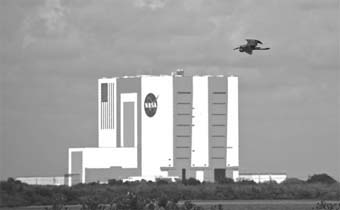
NASA was among first federal agencies that committed to environmentally preferable purchasing after President Clinton signed it into law in 1993. Here, a great blue heron flies near Kennedy Space Center in Florida, which shares a boundary with a wildlife refuge
...
- Business Organizations, Movements, and Planning
- Balanced Scorecard
- Best Available Control Technology
- Best Management Practices
- Ceres Principles
- Certification
- Closed-Loop Supply Chain
- Compliance
- Core Competencies
- Corporate Social Responsibility
- Cost-Benefit Analysis
- Demand-Side Management
- Discounting
- Dow Jones Sustainability Index
- Ecoeffectiveness
- Ecoefficiency
- Ecoindustrial Park
- Ecological Economics
- Economic Value Added
- Emissions Trading
- Energy Performance Contracting
- Energy Service Company
- Environmental Accounting
- Environmental Assessment
- Environmental Audit
- Environmental Economics
- Environmental Impact Statement
- Environmental Indicators
- Environmental Management System
- Environmental Marketing
- Environmental Risk Assessment
- Environmental Services
- Environmentally Preferable Purchasing
- Equator Principles
- Extended Producer Responsibility
- Extended Product Responsibility
- Externalities
- Factor Four and Factor Ten
- Fair Trade
- Genuine Progress Indicator
- Global Reporting Initiative
- Global Sullivan Principles
- Industrial Ecology
- Industrial Metabolism
- Industrial Nutrients
- Informational Regulation
- Integrated Bottom Line
- International Organization for Standardization
- ISO 14000
- ISO 19011
- Leadership in Green Business
- Life Cycle Analysis
- Material Input per Service Unit (MIPS)
- Maximum Achievable Control Technology
- National Priorities List
- Natural Capital
- New Source Review
- Quantitative Risk Assessment
- Recycling, Business of
- Reverse Logistics
- Service Design
- Social Return on Investment
- Steady State Economy
- Stewardship
- Supply Chain Management
- Value Chain
- Business Profiles
- Green Business Challenges
- Green Business Solutions
- Abatement
- Appropriate Technology
- Bio-Based Material
- Biofuels
- Biological Resource Management
- Biomimicry
- Bioremediation
- Biotechnology
- Blended Value
- Brownfield Redevelopment
- Carbon Neutral
- Carbon Sequestration
- Carbon Trading
- Cause-Related Marketing
- Clean Fuels
- Clean Production
- Clean Technology
- Cogeneration
- Conservation
- Coopetition
- Cradle-to-Cradle
- Deposit Systems
- Distributed Energy
- Ecolabels
- Ecosystem Services
- Ecotourism
- Environmental Justice
- Green Building
- Green Chemistry
- Green Design
- Green Retailing
- Green Technology
- Green-Collar Jobs
- Gross National Happiness
- Integrated Pest Management
- Organic
- Pollution Offsets
- Pollution Prevention
- Precautionary Principle
- Remanufacturing
- Resource Management
- Responsible Sourcing
- Restoration
- Right to Know
- Seventh Generation
- Six Sigma
- Smart Energy
- Social Entrepreneurship
- Social Marketing
- Socially Responsible Investing
- Superfund
- Sustainability
- Sustainable Design
- Sustainable Development
- Systems Thinking
- Take Back
- Upcycle
- Voluntary Standards
- Waste Reduction
- Loading...
Get a 30 day FREE TRIAL
-
 Watch videos from a variety of sources bringing classroom topics to life
 -
Read modern, diverse business cases
-
Explore hundreds of books and reference titles

Read next

More like this
Sage Recommends
We found other relevant content for you on other Sage platforms.
Have you created a personal profile? Login or create a profile so that you can save clips, playlists and searches