
Entry
Reader's guide
Entries A-Z
Subject index
Environmental Audit
Environmental audit (EA) is an environmental compliance and management tool that aims to systematically, periodically, and objectively examine and document an organization's environmental management activities and operations. It is conducted to verify the compliance with environmental regulations, standards, and specific management practices; evaluate the effectiveness of the existing environmental management/control systems; and pro pose measures to improve environmental compliance and performance. Undertaking periodic EA can benefit organizations in numerous ways. It can help identify environmental problems and develop solutions, reduce operating contingencies, avoid excessive costs and fines or lawsuits, increase environmental awareness, meet the stakeholders’ environmental expectations, and improve environmental performance as well as corporate image and public relations. Therefore, awareness about the nature, types, process of and constraints to a successful EA program is indispensable for “greening” organizations.
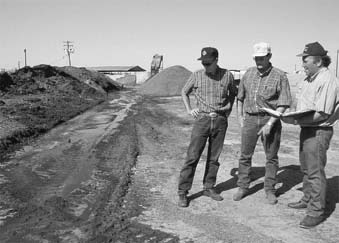
Michael McElhiney, from the U.S. Natural Resources Conservation Service, discusses waste management with dairy farmers in California in a typical portion of an environmental audit
EAs emerged in the 1970s in response to growing environmental and health concerns and calls for stronger environmental control. The increasing quantity and complexity of both international and national environmental legislation and standards stimulated the proliferation of EAs. Many industrial companies started voluntarily conducting EAs to avoid noncompliance costs and civil/criminal liability, and to obtain better control over their environmental performance. EA was also encouraged by the regulators as a powerful tool to safeguard the natural and human environment. In the 1990s, as the sustainability concept called for increased social and corporate environmental responsibility, organizations recognized that EAs could promote their sustainability image and environmental credentials to the public and regulators. Initially emerging from pragmatic business rationales, EA has evolved to integrate sustainability values in the quotidian activities of both business and public organizations.
Currently, EA is widely institutionalized as part of the control and review function of environmental management systems—methodological and procedural frameworks that guide organizations’ environmental performance (e.g., ISO 14000 series). During the last decade, a nonstandardized and ad hoc practice of Environmental Impact Assessment–related EAs has emerged. Overall, EA remains largely voluntary and does not replace regulatory inspections. Rather, it helps identify deficiencies, develop solutions, and improve environmental performance and management prior to official inspections.
Depending on its objectives, EA may include various types of activities, such as
- a compliance audit (checks against environmental legislation and organization policies);
- a performance audit (an evaluation of conformance of the actual environmental management to stated objectives);
- an issues audit (an evaluation of organizations’ activities in relation to a specific environmental issue, e.g., waste or water pollution);
- a life cycle audit; or
- a health and safety audit.
The type and objectives of audits coupled with the organization's needs and capacities determine whether an EA is conducted in-house, or by external auditors, or both.
Frequency of audits varies among organizations. Based on the prescriptions of the environmental management systems in place and on the level of environmental risks and impacts, EAs are conducted from every six months to every three years.
The EA process typically includes three stages—pre-audit, on-site audit, and post-audit—each consisting of several steps. The pre-audit activities start with the determination of the goals and objectives of the EA, drawing upon a detailed consideration of the organization's needs and activities, management philosophy, corporate culture, organizational structure, and size. Communication of management commitments and audit objectives to internal personnel should occur to secure on-site cooperation and support.
...
- Business Organizations, Movements, and Planning
- Balanced Scorecard
- Best Available Control Technology
- Best Management Practices
- Ceres Principles
- Certification
- Closed-Loop Supply Chain
- Compliance
- Core Competencies
- Corporate Social Responsibility
- Cost-Benefit Analysis
- Demand-Side Management
- Discounting
- Dow Jones Sustainability Index
- Ecoeffectiveness
- Ecoefficiency
- Ecoindustrial Park
- Ecological Economics
- Economic Value Added
- Emissions Trading
- Energy Performance Contracting
- Energy Service Company
- Environmental Accounting
- Environmental Assessment
- Environmental Audit
- Environmental Economics
- Environmental Impact Statement
- Environmental Indicators
- Environmental Management System
- Environmental Marketing
- Environmental Risk Assessment
- Environmental Services
- Environmentally Preferable Purchasing
- Equator Principles
- Extended Producer Responsibility
- Extended Product Responsibility
- Externalities
- Factor Four and Factor Ten
- Fair Trade
- Genuine Progress Indicator
- Global Reporting Initiative
- Global Sullivan Principles
- Industrial Ecology
- Industrial Metabolism
- Industrial Nutrients
- Informational Regulation
- Integrated Bottom Line
- International Organization for Standardization
- ISO 14000
- ISO 19011
- Leadership in Green Business
- Life Cycle Analysis
- Material Input per Service Unit (MIPS)
- Maximum Achievable Control Technology
- National Priorities List
- Natural Capital
- New Source Review
- Quantitative Risk Assessment
- Recycling, Business of
- Reverse Logistics
- Service Design
- Social Return on Investment
- Steady State Economy
- Stewardship
- Supply Chain Management
- Value Chain
- Business Profiles
- Green Business Challenges
- Green Business Solutions
- Abatement
- Appropriate Technology
- Bio-Based Material
- Biofuels
- Biological Resource Management
- Biomimicry
- Bioremediation
- Biotechnology
- Blended Value
- Brownfield Redevelopment
- Carbon Neutral
- Carbon Sequestration
- Carbon Trading
- Cause-Related Marketing
- Clean Fuels
- Clean Production
- Clean Technology
- Cogeneration
- Conservation
- Coopetition
- Cradle-to-Cradle
- Deposit Systems
- Distributed Energy
- Ecolabels
- Ecosystem Services
- Ecotourism
- Environmental Justice
- Green Building
- Green Chemistry
- Green Design
- Green Retailing
- Green Technology
- Green-Collar Jobs
- Gross National Happiness
- Integrated Pest Management
- Organic
- Pollution Offsets
- Pollution Prevention
- Precautionary Principle
- Remanufacturing
- Resource Management
- Responsible Sourcing
- Restoration
- Right to Know
- Seventh Generation
- Six Sigma
- Smart Energy
- Social Entrepreneurship
- Social Marketing
- Socially Responsible Investing
- Superfund
- Sustainability
- Sustainable Design
- Sustainable Development
- Systems Thinking
- Take Back
- Upcycle
- Voluntary Standards
- Waste Reduction
- Loading...
Get a 30 day FREE TRIAL
-
 Watch videos from a variety of sources bringing classroom topics to life
 -
Read modern, diverse business cases
-
Explore hundreds of books and reference titles

Read next

More like this
Sage Recommends
We found other relevant content for you on other Sage platforms.
Have you created a personal profile? Login or create a profile so that you can save clips, playlists and searches