
Entry
Reader's guide
Entries A-Z
Subject index
Ecotourism
Ecotourism (also known as ecological tourism) is a widely used, yet ill-defined term in today's tourism industry. In very broad terms, most observers would probably agree that ecotourism describes “the practice of low-impact, educational, ecologically and culturally sensitive travel that benefits local communities and host countries.” In contrast to traditional tourism, ecotourism often involves travel to smaller and less developed destinations, fosters respect and educates participants, claims to economically benefit communities visited, and purports to protect the environment, natural habitats, and precious cultures. Other terms widely used are sustainable tourism, green tourism, responsible tourism, and nature-based tourism.
By emphasizing the value of preserving nature, environmentalists and tour organizers are able to bring money to places that need it, such as this slice of the Amazonian rainforest in Ecuador's Cuyabeno National Park
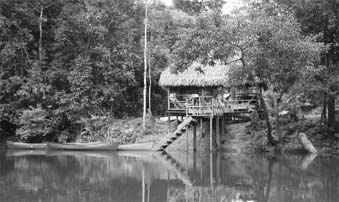
While there is obviously no central authority providing a set definition for any of these terms, all forms of environmental tourism appeal to a growing environmentally aware segment of the population that wants to learn and experience different cultures, peoples, and places, without, at a minimum, causing harm to such cultures, peoples, and places. With reported growth rates of up to 15 percent annually, ecotourism by now represents a major source of income not only for the tourism industry, but also for the national economies of favorite destinations such as Costa Rica, Antarctica, or New Zealand. Unlike traditional tourism that takes a top-down, consumptive approach to visiting people, places, and things, ecotourism appeals to travelers who are interested in the beauty of nature, including pristine and rarely visited locations, and who generally try to stay away from the hustle and bustle of traditional tourist sites. Ecotourist destinations tend to be those regarded as more authentic and natural, such as trips to the Amazon River, mountain climbing in the Himalayas, or rafting in Costa Rica. Ideally, the image is of traveler and natives engaging in mutually beneficial exchanges of time, resources, and experiences in ways that contribute to maintenance of both ecological and cultural diversity. Ecotourist destinations are generally areas rich in natural attractions (flora, fauna, and cultural heritage). Key to alternative forms of tourism are mutually beneficial exchanges, opportunities for local peoples to participate in and benefit directly from tourist visits, and not overwhelming communities by the presence of visitors.
Because of the large potential economic benefits of ecotourism for both providers and destinations, definitions of what ecotourism does, or should, encompass vary widely between environmentalists, industry standards, and governments. A progressive New York couple taking a one-week rafting trip to Costa Rica, paying what they consider fair wages for local rafting guides, and reading up on the history and culture of Costa Rica before departing, for instance, would undoubtedly be considered ecotourism by the tourism industry, and probably also by the Costa Rican government. From the perspective of an environmentalist, however, the roughly 4,400 mile roundtrip flight alone, generating approximately 40–50 pounds of carbon dioxide emissions per passenger each traveled mile, fails to meet the standard of “low impact” travel, as do hotel stays, cab rides, and various other amenities likely fail to meet the standard of ecologically and culturally sensitive travel that benefits local communities and host countries.
...
- Business Organizations, Movements, and Planning
- Balanced Scorecard
- Best Available Control Technology
- Best Management Practices
- Ceres Principles
- Certification
- Closed-Loop Supply Chain
- Compliance
- Core Competencies
- Corporate Social Responsibility
- Cost-Benefit Analysis
- Demand-Side Management
- Discounting
- Dow Jones Sustainability Index
- Ecoeffectiveness
- Ecoefficiency
- Ecoindustrial Park
- Ecological Economics
- Economic Value Added
- Emissions Trading
- Energy Performance Contracting
- Energy Service Company
- Environmental Accounting
- Environmental Assessment
- Environmental Audit
- Environmental Economics
- Environmental Impact Statement
- Environmental Indicators
- Environmental Management System
- Environmental Marketing
- Environmental Risk Assessment
- Environmental Services
- Environmentally Preferable Purchasing
- Equator Principles
- Extended Producer Responsibility
- Extended Product Responsibility
- Externalities
- Factor Four and Factor Ten
- Fair Trade
- Genuine Progress Indicator
- Global Reporting Initiative
- Global Sullivan Principles
- Industrial Ecology
- Industrial Metabolism
- Industrial Nutrients
- Informational Regulation
- Integrated Bottom Line
- International Organization for Standardization
- ISO 14000
- ISO 19011
- Leadership in Green Business
- Life Cycle Analysis
- Material Input per Service Unit (MIPS)
- Maximum Achievable Control Technology
- National Priorities List
- Natural Capital
- New Source Review
- Quantitative Risk Assessment
- Recycling, Business of
- Reverse Logistics
- Service Design
- Social Return on Investment
- Steady State Economy
- Stewardship
- Supply Chain Management
- Value Chain
- Business Profiles
- Green Business Challenges
- Green Business Solutions
- Abatement
- Appropriate Technology
- Bio-Based Material
- Biofuels
- Biological Resource Management
- Biomimicry
- Bioremediation
- Biotechnology
- Blended Value
- Brownfield Redevelopment
- Carbon Neutral
- Carbon Sequestration
- Carbon Trading
- Cause-Related Marketing
- Clean Fuels
- Clean Production
- Clean Technology
- Cogeneration
- Conservation
- Coopetition
- Cradle-to-Cradle
- Deposit Systems
- Distributed Energy
- Ecolabels
- Ecosystem Services
- Ecotourism
- Environmental Justice
- Green Building
- Green Chemistry
- Green Design
- Green Retailing
- Green Technology
- Green-Collar Jobs
- Gross National Happiness
- Integrated Pest Management
- Organic
- Pollution Offsets
- Pollution Prevention
- Precautionary Principle
- Remanufacturing
- Resource Management
- Responsible Sourcing
- Restoration
- Right to Know
- Seventh Generation
- Six Sigma
- Smart Energy
- Social Entrepreneurship
- Social Marketing
- Socially Responsible Investing
- Superfund
- Sustainability
- Sustainable Design
- Sustainable Development
- Systems Thinking
- Take Back
- Upcycle
- Voluntary Standards
- Waste Reduction
- Loading...
Get a 30 day FREE TRIAL
-
 Watch videos from a variety of sources bringing classroom topics to life
 -
Read modern, diverse business cases
-
Explore hundreds of books and reference titles

Read next

More like this
Sage Recommends
We found other relevant content for you on other Sage platforms.
Have you created a personal profile? Login or create a profile so that you can save clips, playlists and searches