
Entry
Reader's guide
Entries A-Z
Subject index
Biofuels
Research into biofuels began in earnest soon after the oil crisis of 1973. By the early to mid-1990s, biofuels emerged as a serious alternative to fossil fuels, and were touted as an Earth-friendly answer to the need for lower fossil fuel carbon emissions and a reduction of foreign dependency on overseas oil. In essence, biofuel is an energy resource that is derived either from living organisms (called biomass) or from waste biomass (also called biowaste). It can be produced in solid, liquid, and gaseous form, but since it is used mostly for transportation, it is primarily found in liquid form.
In the public debate, biofuels generally refer to ethanol or biodiesel, the former favored by the Americas (Brazil and the United States produce 90 percent of the world's ethanol between them); the latter preferred by Europe (accounting for 89 percent of global biodiesel production in 2005). While biofuels can derive from a large number of crops, most ethanol in the world today comes from corn and sugar cane, whereas most biodiesel emanates from vegetable oils or animal fats, including waste cooking oil.
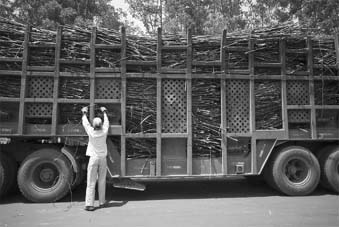
Biofuels, such as sugar cane at this distillation plant near São Paulo, Brazil, are believed to be an important pollution-reduction alternative and a renewable source of energy
While biofuels undoubtedly have several benefits over fossil fuels, it has become increasingly apparent in recent years that they do not represent the environmental panacea many hoped they would. The United Nations Commission on Sustainable Development in a recent report acknowledged, for instance, that biofuels are more carbon dioxide (CO2) neutral than fossil fuels, but may have harmful effects if growing the feedstock is done in a way that causes deforestation, competes with the food supply and drives up the cost of food, or consumes water in water-scarce regions.
First-Generation Biofuels: Agricultural Assets (Agrofuels)
First-generation biofuels use biomass generated by agricultural assets; hence, they are derived from sources such as starch, sugar, animal fats, and vegetable oil. The main crops employed to produce biofuels are corn, sugarcane, soybeans, and canola.
There are many different types of first-generation biofuels that are produced. One of the most common is biodiesel. It is produced by mixing transformed biomass with methanol. This fuel is commonly found as it can be used in diesel engines after being mixed with a mineral diesel. There are also vehicles that are designed to use regular diesel or biodiesel without distinction. Some countries promote biodiesel in an attempt to reach economic independence, while others promote it as a way to reduce vehicle pollution emissions. Biodiesel mix can be anywhere from 5 percent to 20 percent (which means 5 percent to 20 percent biodiesel is added to regular diesel). Other biofuels include biogas (which is produced by anaerobic digestion) and bioalcohol (produced through fermentation of starches and sugar).
The main advantage of first-generation biofuels is that the technology has been extensively researched and developed. As such, many transformation facilities are almost commercially viable (excluding subsidies). The main disadvantage is that converting crops into biofuels creates pressures on the food chain, as there is a competitive relationship between traditional food industries and energy industries to purchase agricultural assets.
...
- Business Organizations, Movements, and Planning
- Balanced Scorecard
- Best Available Control Technology
- Best Management Practices
- Ceres Principles
- Certification
- Closed-Loop Supply Chain
- Compliance
- Core Competencies
- Corporate Social Responsibility
- Cost-Benefit Analysis
- Demand-Side Management
- Discounting
- Dow Jones Sustainability Index
- Ecoeffectiveness
- Ecoefficiency
- Ecoindustrial Park
- Ecological Economics
- Economic Value Added
- Emissions Trading
- Energy Performance Contracting
- Energy Service Company
- Environmental Accounting
- Environmental Assessment
- Environmental Audit
- Environmental Economics
- Environmental Impact Statement
- Environmental Indicators
- Environmental Management System
- Environmental Marketing
- Environmental Risk Assessment
- Environmental Services
- Environmentally Preferable Purchasing
- Equator Principles
- Extended Producer Responsibility
- Extended Product Responsibility
- Externalities
- Factor Four and Factor Ten
- Fair Trade
- Genuine Progress Indicator
- Global Reporting Initiative
- Global Sullivan Principles
- Industrial Ecology
- Industrial Metabolism
- Industrial Nutrients
- Informational Regulation
- Integrated Bottom Line
- International Organization for Standardization
- ISO 14000
- ISO 19011
- Leadership in Green Business
- Life Cycle Analysis
- Material Input per Service Unit (MIPS)
- Maximum Achievable Control Technology
- National Priorities List
- Natural Capital
- New Source Review
- Quantitative Risk Assessment
- Recycling, Business of
- Reverse Logistics
- Service Design
- Social Return on Investment
- Steady State Economy
- Stewardship
- Supply Chain Management
- Value Chain
- Business Profiles
- Green Business Challenges
- Green Business Solutions
- Abatement
- Appropriate Technology
- Bio-Based Material
- Biofuels
- Biological Resource Management
- Biomimicry
- Bioremediation
- Biotechnology
- Blended Value
- Brownfield Redevelopment
- Carbon Neutral
- Carbon Sequestration
- Carbon Trading
- Cause-Related Marketing
- Clean Fuels
- Clean Production
- Clean Technology
- Cogeneration
- Conservation
- Coopetition
- Cradle-to-Cradle
- Deposit Systems
- Distributed Energy
- Ecolabels
- Ecosystem Services
- Ecotourism
- Environmental Justice
- Green Building
- Green Chemistry
- Green Design
- Green Retailing
- Green Technology
- Green-Collar Jobs
- Gross National Happiness
- Integrated Pest Management
- Organic
- Pollution Offsets
- Pollution Prevention
- Precautionary Principle
- Remanufacturing
- Resource Management
- Responsible Sourcing
- Restoration
- Right to Know
- Seventh Generation
- Six Sigma
- Smart Energy
- Social Entrepreneurship
- Social Marketing
- Socially Responsible Investing
- Superfund
- Sustainability
- Sustainable Design
- Sustainable Development
- Systems Thinking
- Take Back
- Upcycle
- Voluntary Standards
- Waste Reduction
- Loading...
Get a 30 day FREE TRIAL
-
 Watch videos from a variety of sources bringing classroom topics to life
 -
Read modern, diverse business cases
-
Explore hundreds of books and reference titles

Read next

More like this
Sage Recommends
We found other relevant content for you on other Sage platforms.
Have you created a personal profile? Login or create a profile so that you can save clips, playlists and searches