
Entry
Entries A-Z
Subject index
Geography
Geography is an academic discipline that traces its roots to classical
Greece. The Greek scholar Eratosthenes (275–195 b.c.e.) is usually identified as the father of geography. He
coined the term geography, which is derived by
combining the Greek noun for “Earth” (geo) with
the Greek verb “to write” (graphein). Literally
translated, geography means to write or describe the Earth. Based on his
travels up the Nile River and his knowledge of geometry, he was able to
accurately calculate the circumference of the Earth.
Since the time of the ancient Greeks, geography has evolved into a varied discipline with many research subjects and methodologies. Some scholars have attempted to impose a narrow definition on the sprawling reach of geography. However, other geographers suggest that four research traditions have evolved within the discipline, all of which examine the regional dimensions of human and/or physical processes on the surface of the Earth. These themes include: physical geography or environmental science, the primary emphasis on natural processes such as hydrology, geomorphology, meteorology, and biogeography; spatial science, using deductive mathematical models, geographic information system (GIS) and global positioning system (GPS) technologies, remote sensing, and statistical analyses to study terrestrial processes; nature–society relations, focusing on the interface between human activities and environmental changes; and regional geography, examining people, places, and regions using an array of methodologies.
There is overlap between these traditions. The organization of geographical research into these four broad themes has been affirmed by the Association of American Geographers (AAG), the preeminent American organization of academic geographers, who have organized the subsections of their flagship journal, the Annals of the AAG, to roughly correspond to these divisions. The Royal Geographical Society (RGS), the British counterpart to the AAG, and other organizations of academic geographers largely agree with this sweeping definition of geography. Given the broad reach and crosscutting nature of the discipline, it is appropriate to view global warming through the prism of geography.
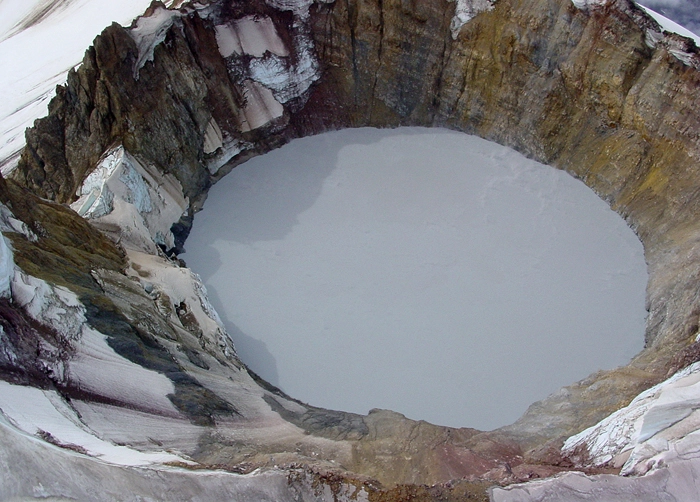
Physical geographers study the impact of climate change from different disciplines, including geomorphology biogeography and hydrology. Researchers from the U.S. Geological Survey are studying a 1,300-ft.- (400-m-) wide meltwater lake that formed in the snow and ice-filled summit crater at Chiginagak Volcano in Alaska. The outflow initiated flooding and volcanic debris mudflows that contained acidic water, which damaged vegetation, contaminated salmon spawning habitats, and lowered the pH of a nearby lake.
Physical Geography
Physical geographers have studied the causes and consequences of global warming from different perspectives, including biogeography, the cryosphere, geomorphology, and hydrology. For example, biogeographers have studied how rising temperatures or changing precipitation regimes will affect entire plant ecosystems or biomes such as boreal forests. They have also examined how specific plant species will cope under different climate conditions. In many instances, the research predicts that warm-weather plant species will successfully migrate toward higher latitudes. On the other hand, some cool-weather plant species found at high altitudes may die out if they are not able to ascend beyond a certain elevation to avoid the heat.
Geomorphologists suggest that global climate change could have drastic impacts on river flows, coastlines, and soils. These studies of fluvial and coastal geomorphology suggest that increased precipitation will increase flooding and soil erosion. This will, in turn, affect agriculture and other human activities.
...
- Loading...
Get a 30 day FREE TRIAL
-
 Watch videos from a variety of sources bringing classroom topics to life
 -
Read modern, diverse business cases
-
Explore hundreds of books and reference titles

Read next

More like this
Sage Recommends
We found other relevant content for you on other Sage platforms.
Have you created a personal profile? Login or create a profile so that you can save clips, playlists and searches