
Entry
Entries A-Z
Subject index
Fiji
Encompassing a number of islands in the Pacific Ocean, Fiji has a land area of 7,056 sq. mi. (18,274 sq. km), a population of 849,000 (2009 est.), and a population density of 120.3 people per sq. mi. (46.4 per sq. km). About 10 percent of the country's land is arable, with another 10 percent used for pasture, mainly for cattle and goats. About 65 percent of the land is forested, but Fiji has a significant timber industry, which is leading to rapid deforestation. Fiji has a relatively low per-capita rate of carbon dioxide (CO2) emissions, which measured 1.1 metric tons per person in 1990 and remained relatively stable until slowly rising to 1.3 metric tons by 2003. The number then vacillated, hitting a peak of 2.0 metric tons before falling to 1.7 metric tons per person in 2007.
Although there is extensive use of electricity throughout the country, only 18 percent is derived from fossil fuels, with the remaining 82 percent from hydropower. As such, most of the country's CO2 emissions do not come from electricity generation (solid fuels account for only 7 percent of these emissions). Liquid fuels account for 87 percent of emissions, mainly from automobiles and household generators, with 6 percent from the manufacture of cement. The development of hydropower, which was initiated in 1977 in an attempt to reduce the country's dependence on imported diesel fuel, has resulted in Fiji's much lower impact on climate change than many other countries in the Pacific, where energy for transportation, air conditioning, and heating for food and industry comes from the burning of fossil fuels.
Despite its low emissions, Fiji continues to face major problems from global warming and climate change, with the rising sea level threatening to flood many parts of the country and land erosion already taking place. Some reports from around the islands reveal that the average shoreline has been receding at a rate of 6 in. (15 cm) per year since 1920.
The most dramatic effects of global warming have been seen on the island of Gau (in the Lomaiviti Group to the east of the main island Viti Levu), which has lost 656 ft. (200 m) of coast. The coastlines of Beachcomber Island and Treasure Island in the Mamanuca Group to the west of Viti Levu are also threatened, and the coral atolls of Lelevia and Caqelai are also likely to be affected in the next 25 years. Other places likely to be affected are the Tokou village on Ovalau Island, and even some villages on low-lying land on Viti Levu, such as Culanuku and Toguvu.
Another problem has been the rise in the incidence of coral reef bleaching, especially during the summer months, mainly caused from the rise in water temperature. This is also expected to cause a decline in the marine life living on coral reefs. There has also been a noticeable rise in tropical cyclones, with three during the 1940s and 15 in the 1990s.
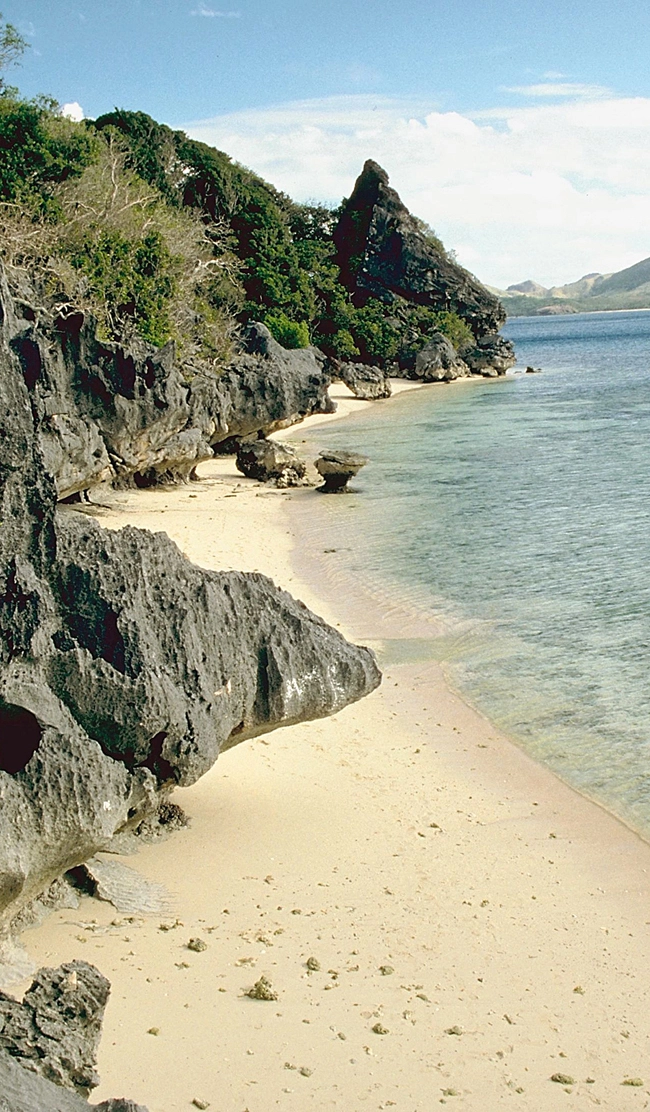
Fiji's shoreline has reportedly receded at a rate of six inches per year since 1920. Rising water temperatures have increased the incidence of coral bleaching, threatening marine life.
...
- Loading...
Get a 30 day FREE TRIAL
-
 Watch videos from a variety of sources bringing classroom topics to life
 -
Read modern, diverse business cases
-
Explore hundreds of books and reference titles

Read next

More like this
Sage Recommends
We found other relevant content for you on other Sage platforms.
Have you created a personal profile? Login or create a profile so that you can save clips, playlists and searches