
Entry
Reader's guide
Entries A-Z
Subject index
Suriname
Now a republic on the northern coast of the South American continent, Suriname was until 1795 exclusive property of the Suriname Society and then a Dutch colony. Colonization, immigration, and missionary activities determined the unique religious makeup of the country. Prior to independence in 1975, a great deal of Suriname's culture and religious practices migrated to the Netherlands. This circumstance further contributes to the relevance of Suriname as an example of the globalization of religion.
The first colonization was by the British after 1650. In the Anglo-Dutch wars later in that century, the Dutch conquered this area around the Suriname River—a location settled in 1674. Since then, Suriname has been private property. The Indian population with its indigenous religion was soon outnumbered by African slaves and marginalized by the new rulers. The religions of the slaves developed into Winti and included African and Christian elements. Among the first settlers were Sephardic Jewish plantation owners, who fled from Pernam buco (Brazil) after the Portuguese had reconquered this city; later their community gained members from Amsterdam Jews. These settlers are responsible for the first stone synagogue in the New World. Already in 1735, the Moravian Brothers (Herrnhutters) arrived via Zeist (the Netherlands) in Suriname, but only after 1830 did the plantation owners allow them to convert the slaves. Their pietistic message about the equality of man before God had great appeal. The Calvinist rulers suppressed Catholic missionary activities, but when the Catholics gained freedom in the Netherlands, the mission in Suriname was handed over to the Redemptorist order in 1866.
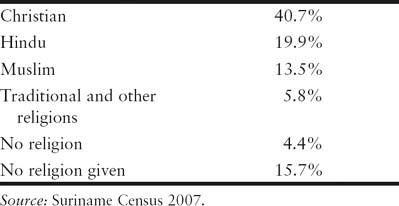
Table 1 Religious Composition of Suriname
After the abolition of slavery in 1863, the Dutch government recruited labor power in Northern India and Indonesia, which further contributed to the religious diversity in Suriname: The country gained a substantial proportion of Hindu and Muslim inhabitants. In the last decades of the 20th century, Charismatic Churches entered the country.
Table 1 gives the religious composition of Suriname as of 2007.
Suriname is often seen as an example of a country where religions coexist peacefully. Indeed, churches, mosques, and synagogues are situated close to each other, and various religious feasts are public holidays. The historic center of Paramaribo with its many religious buildings is placed on the world heritage list.
The religious history of Suriname is itself an example of the globalization of religion, but even more so prior to independence in 1975. Many Surinamese profited from the possibility to migrate to the Netherlands, and so did their religion. As a consequence, the Netherlands were confronted with substantial minorities of Dutch-socialized Hindus and Muslims. The Moravian Brothers transformed from a White into a Black church organization. And at a time of increasing liberalization, the Catholic Church was confronted with more traditional believers.
Further Readings
- Biographies
- Abduh, Muhammad
- Adams, James Luther
- Akbar
- al-Banna, Hasan
- Alexander the Great
- Asahara, Shôkô
- Asoka
- Atta, Mohammad
- Augustine
- Barker, Eileen
- Bataille, Georges
- Bellah, Robert
- Benedict XVI
- Berger, Peter
- Blavatsky, Helena P.
- Campbell, Joseph
- Constantine
- Dōgen
- Dalai Lama
- dan Fodio, Osman
- Deng Xiaoping
- Douglas, Mary
- Dumont, Louis
- Durkheim, Émile
- Eliade, Mircea
- Faraj, Abd al-Salam
- Foucault, Michel
- Freud, Sigmund
- Gandhi, Mohandas
- Geertz, Clifford
- Girard, René
- Ibn Khaldū
- John Paul II
- Jung, Carl Gustav
- Küng, Hans
- Kabir
- Kant, Immanuel
- Khomeini, Ruhallah Ayatullah
- Kierkegaard, Søren
- King, Coretta Scott
- King, Martin Luther, Jr.
- Lévi-Strauss, Claude
- Long, Charles H.
- Luckmann, Thomas
- Müller, Max
- Mahdi of Sudan
- Malinowski, Bronislaw
- Martin, David
- Mawdudi, Abu'l-a'la’
- McVeigh, Timothy
- Mother Teresa
- Mujtahid-Shabistari, Muhammad
- Niebuhr, Reinhold
- Nietzsche, Friedrich
- Olcott, Henry Steel
- Otto, Rudolf
- Panikkar, Raimon (Raimundo)
- Prabhupada, Bhaktivedanta
- Pramukh Swami
- Qutb, Sayyid
- Radhakrishnan, Sarvepalli
- Rahman, Fazlur
- Ramanuja
- Rudolph, Eric Robert
- Schleiermacher, Friedrich
- Serra, Father Junípero
- Shankar, Sri Sri Ravi
- Shankara
- Shariati, Ali
- Shimazono, Susumu
- Smart, Ninian
- Smith, Huston
- Smith, Wilfred Cantwell
- Soroush, Abdulkarim
- Srinivas, M. N.
- Suzuki, D. T.
- Tagore, Rabindranath
- Thich Nhat Hanh
- Tillich, Paul
- Tutu, Bishop Desmond
- Tylor, Edward Burnett
- Venerable Master Cheng-yen
- Vivekananda
- Weber, Max
- Concepts and Theories
- Khariji
- Li
- Ancestors
- Animals
- Apocalypticism
- Arabic
- Art
- Asceticism
- Assimilation
- Astronomy
- Atheism
- Authority
- Bhakti
- Bharata Natyam
- Borderlands
- Bricolage
- Buddhist Law
- Charisma
- Christmas
- Churches
- Cinema
- Civil Religion
- Civil Society
- Clash of Civilizations Thesis
- Clothing
- Communism
- Conspiracy Theories
- Conversion
- Cosmic War and Cosmic Conflict
- Creationism
- Cycle of Rebirth
- Death Ritual
- Desecularization
- Detraditionalization and Retraditionalization
- Dharma, Karma, and Samsara
- Divination
- Divine Law
- Easter
- Ecumenicalism
- Emergent Religion
- Encyclicals
- Ethics
- Ethnogenesis
- Fatwa
- Feng Shui (Geomancy)
- Fez
- Ganga
- Gender
- Generational Change
- Global Religion
- Global Secularization Paradigm
- Globalization
- Globalization and Conversion
- Glocalization
- God
- Goddess
- Golden Rule
- Hajj
- Halakha and Shari'a
- Halal
- Heaven
- Hebrew
- Hell
- Henotheism
- Heresy
- Hijab
- Hindu Orthopraxy
- Holidays
- Holistic Spirituality
- Human Rights
- Hybridization
- Jihad
- Just War
- Karma
- Kingship
- Liberation Theology
- Lotus
- Mahdi
- María Lionza Cult of Venezuela
- Martyrdom
- Marx and Religion
- Marxism
- Material Culture
- McDonaldization
- Meditation
- Missions and Missionaries
- Modernism
- Modernization
- Monasticism
- Monotheism
- Mosques
- Multiculturalism
- Multiple Modernities
- Music
- Mysticism
- Myth
- Nation-State
- Natural Law
- Nonviolence
- Orientalism
- Other (The Other)
- Pāli
- Panjabi
- Perennial Philosophy
- Pilgrimage
- Pluralism
- Polytheism
- Postcolonial Theology
- Postcolonialism
- Postmodernism
- Prayer Beads
- Prophecy
- Qigong
- Queer Theory
- Religious Identity
- Rites of Passage
- Sacred Places
- Satan
- Scapegoating
- Secularism
- Secularization
- Social Justice
- Stupa
- Swastika
- Sword
- Symbol
- Synagogue
- Syncretism
- Tattooing and Piercing
- Television
- Tolerance
- Translocalization
- Unitarians
- World Religions
- World Theology
- Yarmulke/Kippah
- Yiddish
- Countries, Cities, and Regions
- Afghanistan
- Africa
- Albania
- Algeria
- Amsterdam
- Andorra
- Angola
- Anguilla
- Antigua and Barbuda
- Argentina
- Armenia
- Aruba
- Australia
- Austria
- Azerbaijan
- Bahamas
- Bahrain
- Baltic Countries
- Banaras
- Bangladesh
- Barbados
- Beijing
- Belarus
- Belgium
- Belgrade
- Belize
- Benin
- Bermuda
- Bhutan
- Bodh Gaya
- Bolivia
- Bosnia and Herzegovina
- Botswana
- Brazil
- Brunei Darussalam
- Bulgaria
- Burkina Faso
- Burundi
- Cambodia
- Cameroon
- Canada
- Cape Verde
- Caribbean
- Central African Republic
- Chad
- Chechnya
- Chile
- China
- Colombia
- Comoros
- Constantinople
- Cook Islands
- Costa Rica
- Croatia
- Cuba
- Curaçao
- Cyprus
- Czech Republic
- Democratic Republic of the Congo
- Denmark
- Djibouti
- Dominican Republic
- East Timor
- Ecuador
- Egypt
- El Salvador
- England
- Equatorial Guinea
- Eritrea
- Estonia
- Ethiopia
- Europe
- Faroe Islands
- Fiji
- Finland
- France
- French Polynesia
- Gabon
- Gambia
- Gaza
- Georgia
- Germany
- Ghana
- Granada
- Greece
- Greenland
- Grenada
- Guadeloupe
- Guam
- Guatemala
- Guernsey
- Guinea
- Guinea-Bissau
- Guyana
- Haiti
- Hawai'i
- Honduras
- Hong Kong
- Hungary
- Iceland
- India
- Indonesia
- Iran
- Iraq
- Ireland, Republic of
- Israel
- Italy
- Ivory Coast
- Jamaica
- Japan
- Jordan
- Kashmir
- Kazakhstan
- Kenya
- Kiribati
- Korea, Democratic People's Republic of (North Korea)
- Korea, Republic of (South Korea)
- Kosovo
- Kurdistan
- Kuwait
- Kyrgyzstan
- Laos
- Latin America
- Latvia
- Lebanon
- Lesotho
- Liberia
- Libya
- Liechtenstein
- Lithuania
- Los Angeles
- Lourdes
- Luxembourg
- Macau
- Macedonia
- Madagascar
- Madrid
- Malawi
- Malaysia
- Mali
- Malta
- Marshall Islands
- Martinique
- Mashhad
- Mauritania
- Mauritius
- Mecca
- Medina
- Mexico
- Mexico City
- Micronesia
- Middle East
- Moldova
- Monaco
- Mongolia
- Montenegro
- Morocco
- Moscow
- Mozambique
- Myanmar (Burma)
- Najaf
- Namibia
- Nepal
- Netherlands
- New Caledonia
- New York City
- New Zealand
- Nicaragua
- Niger
- Nigeria
- Niue
- Nordic Countries
- Norfolk Island
- North Africa
- North America
- Northern Ireland
- Northern Mariana Islands
- Norway
- Oman
- Pacific Islands/Oceania
- Pakistan
- Palau
- Palestine
- Panama
- Papua
- Papua New Guinea
- Paraguay
- Peru
- Philippines
- Poland
- Portugal
- Puerto Rico
- Qatar
- Qum
- Réunion
- Romania
- Rome
- Russian Federation
- Rwanda
- São Tomé and Príncipe
- Sārnāth
- Saint Lucia
- Saint Vincent and the Grenadines
- Samoa (American and Independent State of)
- San Marino
- Saudi Arabia
- Scotland
- Senegal
- Serbia
- Seychelles
- Sierra Leone
- Singapore
- Sint Maarten
- Slovakia
- Slovenia
- Solomon Islands
- Somalia
- Somaliland
- South Africa
- South Asia
- South Sudan
- Southeast Asia
- Spain
- Sri Lanka
- St. Kitts and Nevis
- Sudan
- Suriname
- Swaziland
- Sweden
- Switzerland
- Syrian Arab Republic
- Taiwan
- Tajikistan
- Tanzania
- Thailand
- Tibet
- Timur
- Togo
- Tokyo
- Tonga
- Trinidad and Tobago
- Tunisia
- Turkey
- Turkmenistan
- Uganda
- Ukraine
- United Arab Emirates
- United Kingdom
- United States of America
- Uruguay
- Uzbekistan
- Vanuatu
- Vatican City State and the Holy See
- Venezuela
- Vietnam
- Virgin Islands (British)
- Virgin Islands (U.S.)
- Wales
- Yemen
- Yugoslavia
- Zambia
- Zimbabwe
- Events and Historical Topics
- ‘Abbāsid Caliphate
- Kumbha Mela
- Aryans
- Axial Age
- Ayodhya Mosque Attack
- Aztecs
- Battle of Badr
- Bodh Gaya
- Canterbury
- Council of Nicea
- Crusades
- Diaspora
- Emergent Religion
- Enlightenment
- Flood Myth
- French Revolution
- Generational Change
- Hiroshima and Nagasaki
- Holocaust
- Incas
- Indo-European Religion
- Indus Valley Civilization
- Inquisition
- Jewish Diaspora
- Karbala
- Mashhad
- Mediterranean World
- Mongol Empire
- Mughal Empire
- Ottoman Empire
- Postcolonialism
- September 11, 2001
- Silk Road
- Taiping Rebellion
- Umayyad Dynasty
- Vatican Council, Second
- Influential Texts and Figures of Veneration
- Movements and Organizations
- Pajelanca of the Brazilian North
- Tabligh
- 3HO (Sikh Dharma Fellowship)
- Abakuá Secret Society
- Al-Azhar
- Aum Shinrikyô
- Auroville
- Ayahuasca Religious Movements
- Babi
- Base Communities in Latin America
- Batuque de Porto Alegre
- Branch Davidians
- Buddhist Compassion Relief Tzu Chi Foundation
- Cao Dai
- Cargo Cults
- Catholic Charismatic Renewal
- Catholic Charities
- Christian Identity
- Christian Reconstructionism
- Church World Service
- Communione e Liberazione
- Divine Light Mission
- Ebenezer Baptist Church
- Eckankar
- Evangelical Movements
- Falun Gong
- Father Divine and the Peace Mission Movement
- Fellowship of Reconciliation
- Fo Guang Shan
- Folk Saints in Latin America
- Fulani Jihad
- Ghost Dance Religion
- Gulen Movement
- Hallelujah Movement
- Hamas
- Hare Krishna (International Society for Krishna Consciousness)
- Heaven's Gate
- Hoa Hao
- Igreja Universal
- Jamaat-e-Islami
- Jemaah Islamiyah
- Jurema of the Brazilian North
- Kali
- Khalistan Movement
- La Luz del Mundo Church
- Marian Cults and Apparitions in Latin America
- Mexican Concheros
- Millenarian Movements
- Mithras Cult
- Neo-Pagan Movement
- New Age Movements
- Opus Dei
- Pana Wave Laboratory
- Pentecostal Movements
- Peoples Temple
- Radhasoami
- Rashtriya Swayamsevak Sangh
- Sarvodaya Movement
- Satya Sai Movement
- Scientology
- Self-Realization Fellowship
- Soka Gakkai
- Solar Temple Order
- Swaminarayan Movement
- Taizé
- Tambor de Mina
- Transcendental Meditation
- Unity Movement
- Vale do Amanhecer
- Vedanta Society
- Wahhabis
- World Congress of Faiths
- World Council of Churches
- World's Parliament of Religions
- YMCA, YWCA
- Yoga
- Youth With a Mission
- Zionism
- Religion in Public Life
- al Qaeda
- Anti-Americanism
- Anti-Semitism
- Bharatiya Janata Party
- Black Muslims
- Buddhist Law
- Burka
- Christian Democratic Parties
- Christian Militia
- Civil Religion
- Civil Society
- Clash of Civilizations Thesis
- Communism
- Consumer Culture
- Cosmic War and Cosmic Conflict
- Cultural Revolution (China)
- Detainees
- Diaspora
- Economic Issues and Religion
- Environment
- Equality
- Ethnic Nationalism
- European Court of Human Rights
- European Union
- Geneva Convention
- Global Capitalism and Religion
- Global Migration
- Global Secularization Paradigm
- Hajj
- Halakha and Shari'a
- Halal
- Hamas
- Hezbollah
- Hijab
- Hindu Law
- Hindu Nationalism
- Human Rights
- Hybridization
- Immigration
- Intermarriage
- International Monetary Fund
- International NGOs
- Islamic State
- Jihad
- Just War
- Killing Fields (Cambodia)
- Kingship
- Laicization
- Liberation Theology
- Marxism
- Material Culture
- McDonaldization
- Men's Roles
- Modernization
- Multiple Faiths
- Muslim Brotherhood
- Nation-State
- Natural Law
- Nonviolence
- Oklahoma City Federal Building Bombing
- Politics and Religion
- Prison Religion
- Public and Private Religion
- Racism
- Refugees
- Religion and State
- Religions and World Federation
- Religious Dialogue
- Religious Freedom
- Religious Minority-Majority Relations
- Religious Nationalism
- Secularism
- Secularization
- Sexuality
- Social Justice
- Suicide Bombing
- Swastika
- Taliban
- Televangelism
- Terrorism
- Tiananmen Square
- Tolerance
- Torture
- Turban
- United Nations
- Violence
- War on Terrorism
- Women's Roles
- World Economic Forum
- World Social Forum
- Zionism
- Religious Traditions and Groups
- Ahmaddiya
- Ancient Near Eastern Religions
- Anglicans
- Ashkanaz
- Assyrian Church of the East
- Autochthonous Christians in Latin America
- Baha'i
- Brahmanical Hinduism
- Candomblé
- Chinese Popular Religion
- Christianity
- Compostela
- Confucianism
- Coptic Christianity
- Daoism
- Eastern Orthodox Christianity
- Engaged Buddhist Groups
- Fundamentalism
- Hinduism
- Indigenous Religions
- Islam
- Islam in China
- Islam in Latin America
- Islamic Modernism
- Islamic Reform
- Islamism (Political Islam)
- Ismailis
- Jainism
- Japanese Religions in Latin America
- Judaism
- Liberal Islam
- Liberal Protestantism
- Local Religion
- Mahayana Buddhism
- Manichaeism
- Mesoamerican Religions
- Mormons
- Native Latin American Religion
- Native North American Religion
- Neo-Shamanisms
- Neo-Sufism (Sufi Renewal)
- New Religions
- New Religions in Africa
- New Religions in Cuba
- New Religions in Japan
- New Religions in South America
- New Religions in the United States
- Popular Religion
- Protestant Buddhism
- Protestant Christianity
- Pure Land Buddhism
- Radhasoami
- Reform Hinduism
- Reform Judaism
- Roman Catholicism
- Sangha
- Santería
- Shaivism
- Shamanism
- Shi'a Islam
- Shinto
- Siddha Yoga
- Sikhism
- Soka Gakkai
- Spiritualism
- Sufism
- Sunnī Islam
- Theosophy
- Theravada Buddhism
- Ugaritic Religion
- Unification Church
- Unitarians
- Vaishnavism
- Vajrayana, Tibetan
- Vodou
- Wahhabis
- World Religions
- Yagé
- Zen Buddhism
- Zionism
- Zoroastrianism (and Parsis)
- Social Issues and Global Trends
- Da Vinci Code, The
- Left Behind Series
- Abortion
- Aging
- Anti-Americanism
- Anti-Semitism
- Art
- Cinema
- Civil Religion
- Civil Society
- Clash of Civilizations Thesis
- Clothing
- Communism
- Conspiracy Theories
- Consumer Culture
- Conversion
- Cosmic War and Cosmic Conflict
- Creationism
- Desecularization
- Detainees
- Detraditionalization and Retraditionalization
- Diaspora
- Environment
- Equality
- Faith Tourism
- Festivals
- Gay and Lesbian Theology
- Generational Change
- Global Capitalism and Religion
- Global Cities
- Global Migration
- Globalization
- Globalization and Conversion
- Immigration
- Intermarriage
- Internet
- Material Culture
- McDonaldization
- Megachurch
- Men's Roles
- Modernism
- Modernization
- Multiculturalism
- Multiple Faiths
- Multiple Modernities
- Music
- Postcolonial Theology
- Postcolonialism
- Postmodernism
- Prison Religion
- Public and Private Religion
- Racism
- Refugees
- Religions and World Federation
- Religious Dialogue
- Religious Freedom
- Religious Minority-Majority Relations
- Secularism
- Secularization
- Sexuality
- Social Justice
- Sports
- Suicide Bombing
- Tattooing and Piercing
- Televangelism
- Television
- Terrorism
- Torture
- Transnational
- Transvestites and Transsexuals
- Violence
- War on Terrorism
- Women's Roles
- Loading...
Get a 30 day FREE TRIAL
-
 Watch videos from a variety of sources bringing classroom topics to life
 -
Read modern, diverse business cases
-
Explore hundreds of books and reference titles

Read next

More like this
Sage Recommends
We found other relevant content for you on other Sage platforms.
Have you created a personal profile? Login or create a profile so that you can save clips, playlists and searches