
Entry
Reader's guide
Entries A-Z
Subject index
Simulacra
Simulacra are representations that have no direct relation to the referent system. In its original meaning, the Latin word simulacrum means “likeness” and “similarity.” A simulacrum is a representation of an object or a person that may or may not exist. For example, a painting of a dragon and the statue of Venus de Milo are both simulacra. The term was made popular by French postmodernist Jean Baudrillard, who argued that simulacra in hyperreality have come to replace real objects and people in reality. Baudrillard used the term to explain the pervasiveness and primacy of images in a media-saturated consumer society. The concept has been applied in studies of media, film, arts, and culture in general.
Baudrillard's earliest writings were grounded in the philosophy of Karl Marx, but he later criticized Marxist thought for emphasizing the materialist nature of the social world. For example, in his essay “For a Critique of the Political Economy of Sign,” he critiqued Marx for failing to see the use value and exchange value of symbols. In Marxist thought, a basic-necessity good like a loaf of bread has a use value and an exchange value. The use value is the need to reduce hunger; the exchange value is the cost to buy a loaf of bread. To Baudrillard, the use value (which he called symbolic exchange) and the exchange value of signs (which he called sign value) in a consumer society work in different ways. For example, an advertisement of designer perfume often shows a glamorous woman in a fancy setting. The images signify to consumers that perfume brings joy, love, romance, and sex. Baudrillard believed that the symbols (the images of a glamorous woman, the perfume, and so on) determine the sign value, which is an abstract, fetishized social relation (such as romantic/sexual attraction). The images created the need of use, in this case the need to be in a romantic/sexual relationship.
Baudrillard's interests in the primacy of images in a consumer society are also reflected in his work Simulacra and Simulation (1994). He asserts that there are four different types of simulacra, each corresponding to a historical period. The first kind is a faithful representation of “reality.” Portraits and sculptures before the Industrial Revolution were examples of these simulacra. Artists documented a person, an object, or a landscape as closely as possible. A good artist was one who could reproduce reality in the most precise way.
The second kind is associated with mass-produced images in the Industrial Revolution era and with the advancement of technologies such as photography. To Baudrillard, a photograph may hint at the existence of reality, but it shows only part of the reality. For example, family portraits taken in the late 19th century often showed a well-dressed, middle-class family. These portraits, however, failed to show the preparation the family had to undertake before the photograph was taken. Nevertheless, the image in the photograph has come to represent the family.
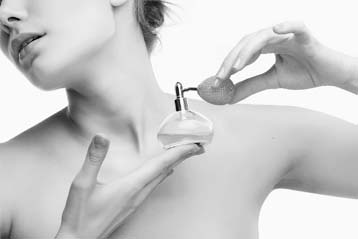
French postmodernist Jean Baudrillard wrote about simulacra used to market items like designer perfume. He stated that the symbols used, such as images of a glamorous woman using perfume, determined the sign value, which is an abstract ideal such as a romantic involvement, and that the images created the belief that one needed to use the product to obtain the relationship.
...
- Barthes, Roland
- Berger, John
- Bordo, Susan
- Boyd, Danah
- Doane, Mary Ann
- Douglas, Susan J.
- Ellul, Jacques
- Fiske, John
- Gamson, Joshua
- Giroux, Henry
- Guerrilla Girls
- Hall, Stuart
- Hanna, Kathleen
- hooks, bell
- Jenkins, Henry
- Jervis, Lisa
- Jhally, Sut
- Kellner, Douglas
- Kilbourne, Jean
- Kruger, Barbara
- Lasn, Kalle
- McChesney, Robert
- McLuhan, Marshall
- Miller, Mark Crispin
- Moyers, Bill
- Mulvey, Laura
- Radway, Janice
- Rushkoff, Douglas
- Steinem, Gloria
- Cognitive Script Theory
- Critical Theory
- Cultivation Theory
- Desensitization Effect
- Discourse Analysis
- Encoding and Decoding
- Feminism
- Feminist Theory: Liberal
- Feminist Theory: Marxist
- Feminist Theory: Postcolonial
- Feminist Theory: Second Wave
- Feminist Theory: Socialist
- Feminist Theory: Third Wave
- Feminist Theory: Women-of-Color and Multiracial Perspectives
- Gender Schema Theory
- Hegemony
- Ideology
- Male Gaze
- Mass Media
- Media Convergence
- Media Ethnography
- Media Globalization
- Media Rhetoric
- Mediation
- Patriarchy
- Polysemic Text
- Postfeminism
- Postmodernism
- Post-Structuralism
- Quantitative Content Analysis
- Queer Theory
- Reception Theory
- Scopophilia
- Semiotics
- Simulacra
- Social Comparison Theory
- Social Construction of Gender
- Social Learning Theory
- Televisuality
- Textual Analysis
- Transgender Studies
- Transsexuality
- Beauty and Body Image: Beauty Myths
- Beauty and Body Image: Eating Disorders
- Class Privilege
- Heterosexism
- Homophobia
- Identity
- Intersectionality
- Minority Rights
- Misogyny
- Prejudice
- Racism
- Sexism
- Sexuality
- Stereotypes
- Violence and Aggression
- Avatar
- Blogs and Blogging
- Cyberdating
- Cyberpunk
- Cyberspace and Cyberculture
- Cyborg
- Electronic Media and Social Inequality
- E-Zines: Third Wave Feminist
- Hacking and Hacktivism
- Hypermedia
- Massively Multiplayer Online Role-Playing Games
- Multi-User Dimensions
- Online New Media: GLBTQ Identity
- Online New Media: Transgender Identity
- Social Inequality
- Social Media
- Social Networking Sites: Facebook
- Social Networking Sites: Myspace
- Viral Advertising and Marketing
- Virtual Community
- Virtual Sex
- Virtuality
- Web 2.0
- Wiki
- YouTube
- Audiences: Producers of New Media
- Audiences: Reception and Injection Models
- Fairness Doctrine
- Federal Communications Commission
- Media Consolidation
- Network News Anchor Desk
- New Media
- Telecommunications Act of 1996
- Workforce
- Advertising
- Children's Programming: Cartoons
- Children's Programming: Disney and Pixar
- Comics
- E-Zines: Riot Grrrl
- Film: Hollywood
- Film: Horror
- Film: Independent
- Graphic Novels
- Men's Magazines: Lad Magazines
- Men's Magazines: Lifestyle and Health
- Music: Underrepresentation of Women Artists
- Music Videos: Representations of Men
- Music Videos: Representations of Women
- Music Videos: Tropes
- Newsrooms
- Pornification of Everyday Life
- Pornography: Gay and Lesbian
- Pornography: Heterosexual
- Pornography: Internet
- Radio
- Radio: Pirate
- Reality-Based Television: America's Next Top Model
- Reality-Based Television: Makeover Shows
- Reality-Based Television: Wedding Shows
- Romance Novels
- Sitcoms
- Soap Operas
- Sports Media: Extreme Sports and Masculinity
- Sports Media: Olympics
- Sports Media: Transgender
- Talk Shows
- Textbooks
- Toys and Games: Gender Socialization
- Toys and Games: Racial Stereotypes and Identity
- Tropes
- Tween Magazines
- Video Gaming: Representations of Femininity
- Video Gaming: Representations of Masculinity
- Video Gaming: Violence
- Women's Magazines: Fashion
- Women's Magazines: Feminist Magazines
- Women's Magazines: Lifestyle and Health
- Gay and Lesbian Portrayals on Television
- Gender and Femininity: Motherhood
- Gender and Femininity: Single/Independent Girl
- Gender and Masculinity: Black Masculinity
- Gender and Masculinity: Fatherhood
- Gender and Masculinity: Metrosexual Male
- Gender and Masculinity: White Masculinity
- Gender Embodiment
- Heroes: Action and Super Heroes
- Television
- Affirmative Action
- Cultural Politics
- Culture Jamming
- Diversity
- Empowerment
- Equal Employment Opportunity Commission
- Gender Media Monitoring
- Media Literacy
- Loading...
Get a 30 day FREE TRIAL
-
 Watch videos from a variety of sources bringing classroom topics to life
 -
Read modern, diverse business cases
-
Explore hundreds of books and reference titles

Read next

More like this
Sage Recommends
We found other relevant content for you on other Sage platforms.
Have you created a personal profile? Login or create a profile so that you can save clips, playlists and searches