
Entry
Reader's guide
Entries A-Z
Subject index
Reality-Based Television: Wedding Shows
The 2009 creation and debut of Wedding Central, a channel devoted entirely to wedding-related programming, exemplifies the popularity of reality television shows such as Bridezillas, Bridalplasty, Say Yes to the Dress, Platinum Weddings, and My Fair Wedding With David Tutera. Nearly every one of these programs focuses on the woman, her interests, and her needs, while almost dismissing the man entirely from any conversations about the impending marriage. This pattern conforms to the stereotypical ideology that a wedding is more about the bride's wishes than the groom's (few, if any of these programs showcase same-sex marriages). These shows, however popular, reinforce very traditional stereotypes about gender, romance, and weddings.
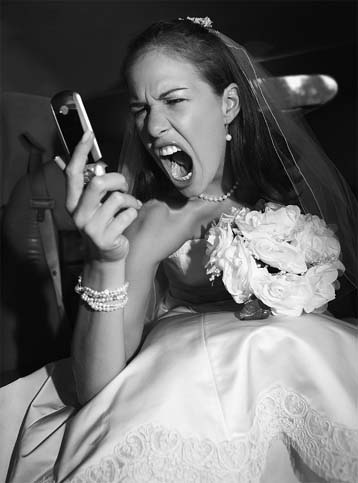
Bridezillas and Bridalplasty examine some of the most troubling gender stereotypes of brides. Bridezillas, as the name implies, highlights demanding, self-centered, and at times cruel brides-to-be. In one episode, a child goes missing and the bride begins to cry. When asked if she is worried about the missing boy, the bride says she is crying because the child took the attention from her on her special day. This example, like so many others on Bridezillas, plays on the show's focus on extreme and atypical emotions; most women would show compassion for a missing child, regardless of circumstances. Bridezillas capitalizes on the behavior of a particular type of stereotypical bride, the selfish bride who believes that the wedding is a celebration of her alone, rather than a celebration of the love between partners.
The show Bridalplasty also conveys messages about stereotypical brides, in this case related specifically to their physical appearance. Bridalplasty follows a group of brides-to-be living in the same house who compete against one another. In each episode, one girl loses her place in the house. The winner receives as much plastic surgery as she desires, so she can look perfect for her wedding day.
The behavior of the women on the reality show Bridezillas reinforces the image of the selfish bride who believes that her upcoming wedding is “her day” rather than a celebration of the love between her and her future husband. The popularity of wedding-related programming led to the debut of the channel Wedding Central.
When the popular tabloid Life and Style ran a story on the show, one contestant, Alexandra, commented that she wanted to win so she could have a tummy tuck, because “Women need to look good for their man.” This show perpetuates the stereotype that women care more about their physical appearance than more important issues and that men care more about their partner's appearance than her character or intelligence.
Reality-based wedding shows such as Say Yes to the Dress and Platinum Weddings also imply that brides-to-be are more concerned about their attire, flowers, meals, jewelry, and wedding favors than they are about their partner. Say Yes to the Dress's slogan, “More Drama, More Weddings, More Dresses,” implies that weddings are not meant to be peaceful times of celebration but occasions during which women resort to primal survival strategies to obtain the dream wedding gown. Episodes of this show include women who typically use phrases like “I want to look like a perfect princess” and “This is my special day.” These brides refuse to view or acknowledge the wedding as a shared celebration in which both the bride and groom star. Say Yes to the Dress also emphasizes the gender stereotype that brides care little (if at all) about what a wedding costs while grooms are concerned about cost, in this case the cost of the dress. In the episode “Time to Cut the Cord,” future bride Sarah says that her fiancé thinks only about how much things cost, which the wedding dress consultant says “kills the mood and kills the sale.” Another bride-to-be, Diana, shops for dresses with her mother. When the salesperson asks Diana's mother how much she would be willing to spend on her daughter's gown, the woman answers, “I can't put a price on my daughter.” This example reinforces the notion that women in general (not just future brides) do not worry about costs associated with a wedding; instead, beauty remains their top priority. In addition, the mother's equation of the cost of a dress with care for her daughter underscores the program's main message: that material acquisition supports or leads to intangible goods such as love and happiness.
...
- Barthes, Roland
- Berger, John
- Bordo, Susan
- Boyd, Danah
- Doane, Mary Ann
- Douglas, Susan J.
- Ellul, Jacques
- Fiske, John
- Gamson, Joshua
- Giroux, Henry
- Guerrilla Girls
- Hall, Stuart
- Hanna, Kathleen
- hooks, bell
- Jenkins, Henry
- Jervis, Lisa
- Jhally, Sut
- Kellner, Douglas
- Kilbourne, Jean
- Kruger, Barbara
- Lasn, Kalle
- McChesney, Robert
- McLuhan, Marshall
- Miller, Mark Crispin
- Moyers, Bill
- Mulvey, Laura
- Radway, Janice
- Rushkoff, Douglas
- Steinem, Gloria
- Cognitive Script Theory
- Critical Theory
- Cultivation Theory
- Desensitization Effect
- Discourse Analysis
- Encoding and Decoding
- Feminism
- Feminist Theory: Liberal
- Feminist Theory: Marxist
- Feminist Theory: Postcolonial
- Feminist Theory: Second Wave
- Feminist Theory: Socialist
- Feminist Theory: Third Wave
- Feminist Theory: Women-of-Color and Multiracial Perspectives
- Gender Schema Theory
- Hegemony
- Ideology
- Male Gaze
- Mass Media
- Media Convergence
- Media Ethnography
- Media Globalization
- Media Rhetoric
- Mediation
- Patriarchy
- Polysemic Text
- Postfeminism
- Postmodernism
- Post-Structuralism
- Quantitative Content Analysis
- Queer Theory
- Reception Theory
- Scopophilia
- Semiotics
- Simulacra
- Social Comparison Theory
- Social Construction of Gender
- Social Learning Theory
- Televisuality
- Textual Analysis
- Transgender Studies
- Transsexuality
- Beauty and Body Image: Beauty Myths
- Beauty and Body Image: Eating Disorders
- Class Privilege
- Heterosexism
- Homophobia
- Identity
- Intersectionality
- Minority Rights
- Misogyny
- Prejudice
- Racism
- Sexism
- Sexuality
- Stereotypes
- Violence and Aggression
- Avatar
- Blogs and Blogging
- Cyberdating
- Cyberpunk
- Cyberspace and Cyberculture
- Cyborg
- Electronic Media and Social Inequality
- E-Zines: Third Wave Feminist
- Hacking and Hacktivism
- Hypermedia
- Massively Multiplayer Online Role-Playing Games
- Multi-User Dimensions
- Online New Media: GLBTQ Identity
- Online New Media: Transgender Identity
- Social Inequality
- Social Media
- Social Networking Sites: Facebook
- Social Networking Sites: Myspace
- Viral Advertising and Marketing
- Virtual Community
- Virtual Sex
- Virtuality
- Web 2.0
- Wiki
- YouTube
- Audiences: Producers of New Media
- Audiences: Reception and Injection Models
- Fairness Doctrine
- Federal Communications Commission
- Media Consolidation
- Network News Anchor Desk
- New Media
- Telecommunications Act of 1996
- Workforce
- Advertising
- Children's Programming: Cartoons
- Children's Programming: Disney and Pixar
- Comics
- E-Zines: Riot Grrrl
- Film: Hollywood
- Film: Horror
- Film: Independent
- Graphic Novels
- Men's Magazines: Lad Magazines
- Men's Magazines: Lifestyle and Health
- Music: Underrepresentation of Women Artists
- Music Videos: Representations of Men
- Music Videos: Representations of Women
- Music Videos: Tropes
- Newsrooms
- Pornification of Everyday Life
- Pornography: Gay and Lesbian
- Pornography: Heterosexual
- Pornography: Internet
- Radio
- Radio: Pirate
- Reality-Based Television: America's Next Top Model
- Reality-Based Television: Makeover Shows
- Reality-Based Television: Wedding Shows
- Romance Novels
- Sitcoms
- Soap Operas
- Sports Media: Extreme Sports and Masculinity
- Sports Media: Olympics
- Sports Media: Transgender
- Talk Shows
- Textbooks
- Toys and Games: Gender Socialization
- Toys and Games: Racial Stereotypes and Identity
- Tropes
- Tween Magazines
- Video Gaming: Representations of Femininity
- Video Gaming: Representations of Masculinity
- Video Gaming: Violence
- Women's Magazines: Fashion
- Women's Magazines: Feminist Magazines
- Women's Magazines: Lifestyle and Health
- Gay and Lesbian Portrayals on Television
- Gender and Femininity: Motherhood
- Gender and Femininity: Single/Independent Girl
- Gender and Masculinity: Black Masculinity
- Gender and Masculinity: Fatherhood
- Gender and Masculinity: Metrosexual Male
- Gender and Masculinity: White Masculinity
- Gender Embodiment
- Heroes: Action and Super Heroes
- Television
- Affirmative Action
- Cultural Politics
- Culture Jamming
- Diversity
- Empowerment
- Equal Employment Opportunity Commission
- Gender Media Monitoring
- Media Literacy
- Loading...
Get a 30 day FREE TRIAL
-
 Watch videos from a variety of sources bringing classroom topics to life
 -
Read modern, diverse business cases
-
Explore hundreds of books and reference titles

Read next

More like this
Sage Recommends
We found other relevant content for you on other Sage platforms.
Have you created a personal profile? Login or create a profile so that you can save clips, playlists and searches