
Entry
Reader's guide
Entries A-Z
Subject index
Polysemic Text
Polysemic text refers to the idea that any text can have multiple meanings rather than a single meaning. Although the concept of polysemic text seems simple, researchers and theorists have examined and debated a number of questions regarding polysemy. For example, are the meanings of a text potentially endless? Are some texts more semiotically open than others (through the use of reflexivity, parody, or nonnarrative style)? Are some meanings more likely or commonsensical, given the impact of ideology on discourse and audiences? How active or free are audiences when interpreting texts? What method or methods are best for assessing the polysemic nature of texts? Do some variables, such as age, gender, race, and class, shape interpretation more than other variables? Scholars interested in semiotics, rhetoric, and reader-response theory, as well as those working within cultural and media studies, have examined these questions.
The catalyst for investigating the polysemic text emerged from three different scholarly strands: children and television reception research, research on media audiences' uses and gratifications, and reader-response theory.
Challenging the thought that children's processing of media messages on television requires no interpretation, empirical research found that watching television teaches children to be visually literate in the same way that reading makes them book literate.
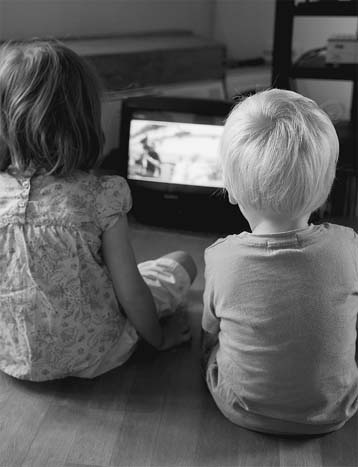
The literature on children's interpretation of media messages challenged the notion that meaning, particularly in television, is commonsensical and requires no interpretation. Instead, empirical research demonstrated that children watching television learn to be visually literate, not unlike how they become book literate. Research in this tradition also examined how children's level of sophistication in interpretation grows with developmental age.
Empirical media scholarship in the area of uses and gratification also spurred inquiry regarding textual polysemy. This voluminous body of research repeatedly demonstrated how motivated and selective viewers—active audiences—make decisions about what to view and what it means in the light of their needs and the gratifications they receive from these media choices.
Reader-response theory, a branch of literary studies, proved an additional influence. This paradigm criticized literary criticism's traditional focus on high culture, authorial intention, and the interpretation of canonical literary texts at the expense of popular literature and readers' responses to it. Challenging the notion that meaning exists in the text, critics asserted the importance of examining the text-audience interaction. Influenced by the work of Wolfgang Iser and Mikhail Bakhtin, particularly Bakhtin's idea of heteroglossia (referring to texts potentially speaking with “many voices”), this perspective influenced media studies by hastening the shift from a text-based or content-analytical approach to television to a focus on the moment of reception between text and audience.
These three strands of research led to a growth in the 1980s and 1990s of empirically based audience reception research, which emphasized the active viewer's partaking in a complex process of negotiating meaning. Suddenly media texts, no longer monolithic, were polysemic and open for interpretation. Some critical mass communication scholars argued that by focusing on the role of ideology and institutional power in shaping meaning, critics in this tradition minimized or ignored the audience's interpretive role and the potential openness of texts. Similarly, others criticized much of the work by media effects researchers, who, in attempting to account for the extent and magnitude of media impact on audiences' beliefs, attitudes, and behaviors, had increasingly relied on impoverished notions of media texts and the contexts in which they are interpreted.
...
- Barthes, Roland
- Berger, John
- Bordo, Susan
- Boyd, Danah
- Doane, Mary Ann
- Douglas, Susan J.
- Ellul, Jacques
- Fiske, John
- Gamson, Joshua
- Giroux, Henry
- Guerrilla Girls
- Hall, Stuart
- Hanna, Kathleen
- hooks, bell
- Jenkins, Henry
- Jervis, Lisa
- Jhally, Sut
- Kellner, Douglas
- Kilbourne, Jean
- Kruger, Barbara
- Lasn, Kalle
- McChesney, Robert
- McLuhan, Marshall
- Miller, Mark Crispin
- Moyers, Bill
- Mulvey, Laura
- Radway, Janice
- Rushkoff, Douglas
- Steinem, Gloria
- Cognitive Script Theory
- Critical Theory
- Cultivation Theory
- Desensitization Effect
- Discourse Analysis
- Encoding and Decoding
- Feminism
- Feminist Theory: Liberal
- Feminist Theory: Marxist
- Feminist Theory: Postcolonial
- Feminist Theory: Second Wave
- Feminist Theory: Socialist
- Feminist Theory: Third Wave
- Feminist Theory: Women-of-Color and Multiracial Perspectives
- Gender Schema Theory
- Hegemony
- Ideology
- Male Gaze
- Mass Media
- Media Convergence
- Media Ethnography
- Media Globalization
- Media Rhetoric
- Mediation
- Patriarchy
- Polysemic Text
- Postfeminism
- Postmodernism
- Post-Structuralism
- Quantitative Content Analysis
- Queer Theory
- Reception Theory
- Scopophilia
- Semiotics
- Simulacra
- Social Comparison Theory
- Social Construction of Gender
- Social Learning Theory
- Televisuality
- Textual Analysis
- Transgender Studies
- Transsexuality
- Beauty and Body Image: Beauty Myths
- Beauty and Body Image: Eating Disorders
- Class Privilege
- Heterosexism
- Homophobia
- Identity
- Intersectionality
- Minority Rights
- Misogyny
- Prejudice
- Racism
- Sexism
- Sexuality
- Stereotypes
- Violence and Aggression
- Avatar
- Blogs and Blogging
- Cyberdating
- Cyberpunk
- Cyberspace and Cyberculture
- Cyborg
- Electronic Media and Social Inequality
- E-Zines: Third Wave Feminist
- Hacking and Hacktivism
- Hypermedia
- Massively Multiplayer Online Role-Playing Games
- Multi-User Dimensions
- Online New Media: GLBTQ Identity
- Online New Media: Transgender Identity
- Social Inequality
- Social Media
- Social Networking Sites: Facebook
- Social Networking Sites: Myspace
- Viral Advertising and Marketing
- Virtual Community
- Virtual Sex
- Virtuality
- Web 2.0
- Wiki
- YouTube
- Audiences: Producers of New Media
- Audiences: Reception and Injection Models
- Fairness Doctrine
- Federal Communications Commission
- Media Consolidation
- Network News Anchor Desk
- New Media
- Telecommunications Act of 1996
- Workforce
- Advertising
- Children's Programming: Cartoons
- Children's Programming: Disney and Pixar
- Comics
- E-Zines: Riot Grrrl
- Film: Hollywood
- Film: Horror
- Film: Independent
- Graphic Novels
- Men's Magazines: Lad Magazines
- Men's Magazines: Lifestyle and Health
- Music: Underrepresentation of Women Artists
- Music Videos: Representations of Men
- Music Videos: Representations of Women
- Music Videos: Tropes
- Newsrooms
- Pornification of Everyday Life
- Pornography: Gay and Lesbian
- Pornography: Heterosexual
- Pornography: Internet
- Radio
- Radio: Pirate
- Reality-Based Television: America's Next Top Model
- Reality-Based Television: Makeover Shows
- Reality-Based Television: Wedding Shows
- Romance Novels
- Sitcoms
- Soap Operas
- Sports Media: Extreme Sports and Masculinity
- Sports Media: Olympics
- Sports Media: Transgender
- Talk Shows
- Textbooks
- Toys and Games: Gender Socialization
- Toys and Games: Racial Stereotypes and Identity
- Tropes
- Tween Magazines
- Video Gaming: Representations of Femininity
- Video Gaming: Representations of Masculinity
- Video Gaming: Violence
- Women's Magazines: Fashion
- Women's Magazines: Feminist Magazines
- Women's Magazines: Lifestyle and Health
- Gay and Lesbian Portrayals on Television
- Gender and Femininity: Motherhood
- Gender and Femininity: Single/Independent Girl
- Gender and Masculinity: Black Masculinity
- Gender and Masculinity: Fatherhood
- Gender and Masculinity: Metrosexual Male
- Gender and Masculinity: White Masculinity
- Gender Embodiment
- Heroes: Action and Super Heroes
- Television
- Affirmative Action
- Cultural Politics
- Culture Jamming
- Diversity
- Empowerment
- Equal Employment Opportunity Commission
- Gender Media Monitoring
- Media Literacy
- Loading...
Get a 30 day FREE TRIAL
-
 Watch videos from a variety of sources bringing classroom topics to life
 -
Read modern, diverse business cases
-
Explore hundreds of books and reference titles

Read next

More like this
Sage Recommends
We found other relevant content for you on other Sage platforms.
Have you created a personal profile? Login or create a profile so that you can save clips, playlists and searches