
Entry
Reader's guide
Entries A-Z
Subject index
Minority Rights
Historically stereotyped, diminished, or overlooked by the media, women and members of cultural minorities are pushing to heighten their own visibility, identities, and causes in myriad ways, from staging roadside dramas in isolated villages to demanding clearer voices in news outlets around the globe. Social media, where technologically accessible, have emerged as powerhouses to connect the disadvantaged or repressed in common causes, notably in the wave of “Arab Spring” uprisings across the Middle East and North Africa in 2011. Television images shown around the world depicted women joining or even leading protests against some Arab regimes, showcasing tensions between an age-old subordination of women and a 21st-century drive for fairer treatment. Regional and global organizations are systematically monitoring the progress of women as news gatherers and news makers, with the twin goals of promoting gender parity for women within the news industry and advancing women as the subjects of important stories.
Relevant to the intersection of personal rights and media attention was the mob attack on Columbia Broadcasting System (CBS) network correspondent Lara Logan in February 2011 in Cairo's Tahrir Square, where she was covering a massive rally by Egyptians who were, for the most part, celebrating the ouster of Hosni Mubarak's regime. Logan's landmark recounting of the prolonged sexual assault against her on the CBS news program 60 Minutes focused new attention on the dangers to women reporters, especially in covering conflict.
A rich history of ethnic media has long given voice to those who are culturally marginalized, underscoring the enduring role of media messages in raising the consciousness of both the oppressed and their oppressors. In the United States, the first African American newspaper, Freedom's Journal, was founded in 1827, and the first Latino newspaper, El Misisipi, dates from 1808, report Clint C. Wilson II and his colleagues. They write that Freedom's Journal in its first issue declared, on the front page, that it sought to overcome misrepresentations of black Americans conveyed by the dominant press. In 1911, the researchers report, a Spanish-language weekly, La Cronica of Laredo, Texas, campaigned against movies shown across Texas that it believed demeaned Mexicans and Native Americans. The first Native American newspaper, the Cherokee Phoenix, was launched in 1828 to counter the federal government's plan to remove the people of the Cherokee Nation from their own lands. The Golden Hills' News, established in San Francisco in 1854 as the first Asian Pacific American newspaper, published news for Chinese immigrants as well as English-language editorials seeking improved treatment of Chinese workers in California.
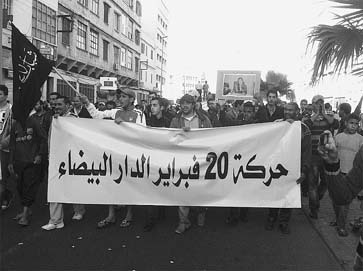
Moroccan citizens participate in demonstrations calling for political change during the “Arab Spring” uprisings in 2011. The press-monitoring organization Freedom House reported that 95 percent of people in North Africa and the Middle East reside in areas where media are tightly controlled.
Autocratic Regimes Suppress Journalists
Autocratic regimes—and sometimes pervasive criminal elements—retain their power partly by seeking to intimidate and control the press. Correspondents assigned to tell the stories of repressed groups, from Mexico in North America to Thailand in Southeast Asia, have been subjected to grave personal risks from authorities and others. The independent press-monitoring organization Freedom House reports that just one of six people worldwide lives with a free press. For instance, it finds that 95 percent of the population in North Africa and the Middle East reside where the media are tightly controlled; some Western journalists who covered the Arab uprisings were detained, interrogated, and beaten. Morocco resurrected an article of law in 2001 that permits it to suppress publications considered a threat to its political and religious institutions, leading to the confiscation of newspapers and jailing of editors. In 2000 alone, Iran closed more than 20 publications, imprisoning and even executing journalists, report media scholars Gholam Khiabany and Annabelle Sreberny. Zanan, a popular women's magazine in Iran, was shut down in 2008 as socially detrimental. Among the 196 countries rated by Freedom House in 2010, those with the least-free media were Burma, Equatorial Guinea, Eritrea, Libya, North Korea, Somalia, Sudan, Turkmenistan, and Uzbekistan.
...
- Barthes, Roland
- Berger, John
- Bordo, Susan
- Boyd, Danah
- Doane, Mary Ann
- Douglas, Susan J.
- Ellul, Jacques
- Fiske, John
- Gamson, Joshua
- Giroux, Henry
- Guerrilla Girls
- Hall, Stuart
- Hanna, Kathleen
- hooks, bell
- Jenkins, Henry
- Jervis, Lisa
- Jhally, Sut
- Kellner, Douglas
- Kilbourne, Jean
- Kruger, Barbara
- Lasn, Kalle
- McChesney, Robert
- McLuhan, Marshall
- Miller, Mark Crispin
- Moyers, Bill
- Mulvey, Laura
- Radway, Janice
- Rushkoff, Douglas
- Steinem, Gloria
- Cognitive Script Theory
- Critical Theory
- Cultivation Theory
- Desensitization Effect
- Discourse Analysis
- Encoding and Decoding
- Feminism
- Feminist Theory: Liberal
- Feminist Theory: Marxist
- Feminist Theory: Postcolonial
- Feminist Theory: Second Wave
- Feminist Theory: Socialist
- Feminist Theory: Third Wave
- Feminist Theory: Women-of-Color and Multiracial Perspectives
- Gender Schema Theory
- Hegemony
- Ideology
- Male Gaze
- Mass Media
- Media Convergence
- Media Ethnography
- Media Globalization
- Media Rhetoric
- Mediation
- Patriarchy
- Polysemic Text
- Postfeminism
- Postmodernism
- Post-Structuralism
- Quantitative Content Analysis
- Queer Theory
- Reception Theory
- Scopophilia
- Semiotics
- Simulacra
- Social Comparison Theory
- Social Construction of Gender
- Social Learning Theory
- Televisuality
- Textual Analysis
- Transgender Studies
- Transsexuality
- Beauty and Body Image: Beauty Myths
- Beauty and Body Image: Eating Disorders
- Class Privilege
- Heterosexism
- Homophobia
- Identity
- Intersectionality
- Minority Rights
- Misogyny
- Prejudice
- Racism
- Sexism
- Sexuality
- Stereotypes
- Violence and Aggression
- Avatar
- Blogs and Blogging
- Cyberdating
- Cyberpunk
- Cyberspace and Cyberculture
- Cyborg
- Electronic Media and Social Inequality
- E-Zines: Third Wave Feminist
- Hacking and Hacktivism
- Hypermedia
- Massively Multiplayer Online Role-Playing Games
- Multi-User Dimensions
- Online New Media: GLBTQ Identity
- Online New Media: Transgender Identity
- Social Inequality
- Social Media
- Social Networking Sites: Facebook
- Social Networking Sites: Myspace
- Viral Advertising and Marketing
- Virtual Community
- Virtual Sex
- Virtuality
- Web 2.0
- Wiki
- YouTube
- Audiences: Producers of New Media
- Audiences: Reception and Injection Models
- Fairness Doctrine
- Federal Communications Commission
- Media Consolidation
- Network News Anchor Desk
- New Media
- Telecommunications Act of 1996
- Workforce
- Advertising
- Children's Programming: Cartoons
- Children's Programming: Disney and Pixar
- Comics
- E-Zines: Riot Grrrl
- Film: Hollywood
- Film: Horror
- Film: Independent
- Graphic Novels
- Men's Magazines: Lad Magazines
- Men's Magazines: Lifestyle and Health
- Music: Underrepresentation of Women Artists
- Music Videos: Representations of Men
- Music Videos: Representations of Women
- Music Videos: Tropes
- Newsrooms
- Pornification of Everyday Life
- Pornography: Gay and Lesbian
- Pornography: Heterosexual
- Pornography: Internet
- Radio
- Radio: Pirate
- Reality-Based Television: America's Next Top Model
- Reality-Based Television: Makeover Shows
- Reality-Based Television: Wedding Shows
- Romance Novels
- Sitcoms
- Soap Operas
- Sports Media: Extreme Sports and Masculinity
- Sports Media: Olympics
- Sports Media: Transgender
- Talk Shows
- Textbooks
- Toys and Games: Gender Socialization
- Toys and Games: Racial Stereotypes and Identity
- Tropes
- Tween Magazines
- Video Gaming: Representations of Femininity
- Video Gaming: Representations of Masculinity
- Video Gaming: Violence
- Women's Magazines: Fashion
- Women's Magazines: Feminist Magazines
- Women's Magazines: Lifestyle and Health
- Gay and Lesbian Portrayals on Television
- Gender and Femininity: Motherhood
- Gender and Femininity: Single/Independent Girl
- Gender and Masculinity: Black Masculinity
- Gender and Masculinity: Fatherhood
- Gender and Masculinity: Metrosexual Male
- Gender and Masculinity: White Masculinity
- Gender Embodiment
- Heroes: Action and Super Heroes
- Television
- Affirmative Action
- Cultural Politics
- Culture Jamming
- Diversity
- Empowerment
- Equal Employment Opportunity Commission
- Gender Media Monitoring
- Media Literacy
- Loading...
Get a 30 day FREE TRIAL
-
 Watch videos from a variety of sources bringing classroom topics to life
 -
Read modern, diverse business cases
-
Explore hundreds of books and reference titles

Read next

More like this
Sage Recommends
We found other relevant content for you on other Sage platforms.
Have you created a personal profile? Login or create a profile so that you can save clips, playlists and searches