
Entry
Reader's guide
Entries A-Z
Subject index
Tongan Americans
Tongan Americans represent a relatively small group in the United States. They are part of a much larger collective immigrant group sometimes referred to as “Pacific Islanders.” This entry provides a brief description of the Tongan homeland, looks at immigration patterns, and describes the current Tongan community in the United States.
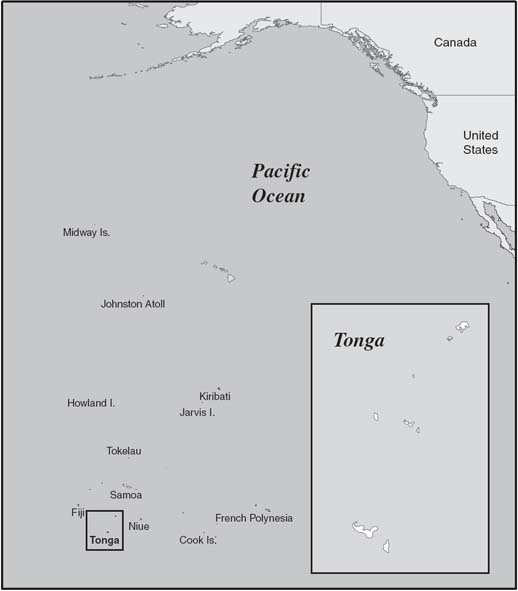
The Kingdom of Tonga
Tonga, an archipelago, is the only remaining kingdom in the South Pacific, with an estimated 2007 population of about 100,000. The crowning of Prince Tupouto'a in 2006 as King George Tupou V follows in the modern legacy of the Tupou dynasty that solidified its power in the constitution of 1875 under the auspices of the British military and Christian missionaries. Although Tonga was not formally colonized, the British ruled indirectly, and their prodigious influence can be traced in the formation of Tonga's government, judiciary system, and indigenous cultural politics.
The U.S. occupation of the Tongan islands during World War II was a pivotal moment in Tongan history because it greatly altered the Tongan economy. The structural changes that occurred during these years further widened the economic gap between commoners and elites. These economic disparities led to the unprecedented and exponential growth of the U.S.-based Mormon Church from the 1950s until the 21st century. The central role of Mormonism in Tongan culture is illuminated by the fact that Tonga holds the record for the world's highest ratio of Mormon conversions and membership to general population. The church offered Tongan commoners opportunities for upward mobility that often included a plane ticket to the United States and educational opportunities at the Mormon-owned Brigham Young University located in Laie, Hawai'i. Early Tongan migrations to the United States were thus mitigated through membership in or affiliation with the Mormon Church.
Although dubbed the “Friendly Islands” in 1777 by the British Captain James Cook, Tonga in the 20th and 21st centuries has been rife with social unrest including mass labor strikes, public demonstrations, and violent upheavals. These social contestations in the public sphere were the culmination of Tongan people's resistance to new and often oppressive structural and economic policies. For example, the Tongan Pro-democracy Movement, a movement headed by Tongan commoners, was born in the 1990s. The movement's allies continue to grow and extend beyond the borders of the Tongan nation-state into the diaspora.
These critical trajectories in contemporary Tongan history reveal the dire economic disparities created by globalization, and they inadvertently illuminate the Tongan government's role in the exacerbation of economic disparities. The genealogies of past and present imperialisms in the Tongan islands led to the unprecedented numbers of Tongan conversions to Western religions and the subsequent migrations to industrialized countries like the United States.
Early Migrations
Migrations overseas have become common in Tongan life. More than half the population of the islands lives abroad in industrialized countries such as Australia, Canada, New Zealand, and the United States. In the often-circuitous routes of Tongan overseas migrations, about four in ten Tongans live in the United States, a country viewed as the preferred and most prestigious destination. Tongan migrations to the United States began in 1945 after World War II, and they later proliferated after 1965 because of changes in U.S. immigration laws.
...
- Biographies
- Baldwin, James
- Black Elk
- Boas, Franz
- Carmichael, Stokely
- Chávez, César
- Chin, Vincent
- Collins, Patricia Hill
- Deloria, Vine, Sr.
- Douglass, Frederick
- Drake, St. Clair
- Du Bois, William Edward Burghardt
- Fanon, Frantz
- Frazier, E. Franklin
- hooks, bell
- Huerta, Dolores
- Jackson, Jesse, Jr.
- Johnson, Charles S.
- King, Martin Luther, Jr.
- Kitano, Harry H. L.
- Lee, Spike
- Lincoln, Abraham
- Malcolm X
- Mandela, Nelson
- Marshall, Thurgood
- Newton, Huey
- Park, Robert E.
- Parks, Rosa
- Peltier, Leonard
- Robinson, Cedric
- Robinson, Jackie
- Samora, Julian
- Thorpe, Jim
- Truth, Sojourner
- Tubman, Harriet
- Washington, Booker T.
- Washington, Harold
- Wells-Barnett, Ida B.
- Williams, Fannie Barrier
- Wilson, William Julius
- Community and Urban Issues
- American Apartheid
- Colonias
- Gautreaux Decision
- Apartheid
- Asian Americans, New York City
- Barrio
- Black Metropolis
- Blockbusting
- Chicago School of Race Relations
- Chinatowns
- Code of the Street
- Colonialism
- Community Cohesion
- Community Empowerment
- Crown Heights, Brooklyn
- Culture of Poverty
- Discrimination in Housing
- East Harlem
- Ethnic Enclave, Economic Impact of
- Ethnic Succession
- Gangs
- Gentrification
- Ghetto
- Harlem
- Homelessness
- Housing Audits
- Hull House School of Race Relations
- Hurricane Katrina
- National Urban League
- Public Housing
- Redlining
- Resegregation
- School Desegregation
- Segregation
- Sundown Towns
- Urban Riots
- White Flight
- Zoot Suit Riots
- Concepts and Theories
- “Boat People”
- “Marielitos”
- “Us and Them”
- “Welfare Queen”
- “Wetbacks”
- Colonias
- Desi
- Hafu
- Hispanic Versus Latino
- Invisible Man
- La Raza
- Acculturation
- Afrocentricity
- Americanization
- Anti-Semitism
- Assimilation
- Asylum
- Authoritarian Personality
- Aztlán
- Barrio
- Black Bourgeoisie
- Black Nationalism
- Black Power
- Blockbusting
- Blood Quantum
- Body Image
- Boycott
- Brain Drain
- Caste
- Chinatowns
- Citizenship
- Civil Disobedience
- Civil Religion
- Code of the Street
- Colonialism
- Color Blindness
- Color Line
- Community Cohesion
- Community Empowerment
- Contact Hypothesis
- Cosmopolitanism
- Critical Race Theory
- Cultural Capital
- Cultural Relativism
- Culture of Poverty
- Deficit Model of Ethnicity
- Diaspora
- Digital Divide
- Dillingham Flaw
- Double Consciousness
- Environmental Justice
- Ethnic Enclave, Economic Impact of
- Ethnic Group
- Ethnic Succession
- Ethnicity, Negotiating
- Ethnocentrism
- Ethnonational Minorities
- Ethnoviolence
- Eugenics
- Familism
- Feminism
- Feminism, Black
- Feminism, Latina
- Genocide
- Gentrification
- Gerrymandering
- Ghetto
- Glass Ceiling
- Globalization
- Guest Workers
- Hapa
- Hate Crimes
- Hate Crimes in Canada
- Higher Education: Racial Battle Fatigue
- Holocaust
- Holocaust Deniers and Revisionists
- Homelessness
- Hourglass Economy
- Housing Audits
- Identity Politics
- Informal Economy
- Intercultural Communication
- Internal Colonialism
- Internalized Racism
- Internment Camps
- Islamophobia
- Jim Crow
- Kinship
- Kwanzaa
- Labeling
- Labor Market Segmentation
- Machismo
- Marginalization
- Marxism and Racism
- Melting Pot
- Minority/Majority
- Model Minority
- Multiracial Identity
- Native American Identity
- Nativism
- Nikkeijin
- Nisei
- One-Drop Rule
- Orientalism
- Pan-Asian Identity
- Pan-Indianism
- Panethnic Identity
- People of Color
- Peoplehood
- Pipeline
- Pluralism
- Political Economy
- Privilege
- Race
- Race, Social Construction of
- Racetalk
- Racial Formation
- Racial Identity
- Racial Identity Development
- Racial Profiling
- Racialization
- Racism
- Racism, Aversive
- Racism, Cultural
- Racism, Unintentional
- Red Power
- Redlining
- Refugees
- Remittances
- Resegregation
- Restrictive Covenants
- Return Migration
- Reverse Discrimination
- Rites of Passage
- Sacred Versus Secular
- Sansei
- Scapegoats
- Segregation
- Self-Fulfilling Prophecy
- Separate but Equal
- Sexual Harassment
- Social Capital
- Social Darwinism
- Social Distance
- Sovereignty, Native American
- Spanglish
- Split Labor Market
- Stereotype Threat
- Stereotypes
- Sundown Towns
- Symbolic Ethnicity
- Symbolic Religiosity
- Talented Tenth
- Third-Generation Principle
- Tracking
- Transnational People
- Underclass
- Urban Legends
- Veil
- Victim Discounting
- Victimization
- WASP
- White Flight
- White Privilege
- White Racism
- Whiteness
- Xenophobia
- Criminal Justice
- Apartheid, Laws
- Crime and Race
- Criminal Processing
- Death Penalty
- Deviance and Race
- Drug Use
- Gangs
- Hate Crimes
- Hate Crimes, Canada
- Homicide
- Incarcerated Parents
- Internment Camps
- Jim Crow
- Juvenile Justice
- Labeling
- Lynching
- Pachucos/Pachucas
- PATRIOT Act of 2001
- Police
- Prisons
- Racial Profiling
- Victim Discounting
- Victimization
- Economics and Stratification
- “Welfare Queen”
- Declining Significance of Race, The
- Affirmative Action in the Workplace
- Alien Land Acts
- Americans with Disabilities Act
- Apartheid
- Barrio
- Black Bourgeoisie
- Black Enterprise
- Black Power
- Boycott
- Bracero Program
- Brain Drain
- Caste
- Colonialism
- Color Line
- Culture of Poverty
- Digital Divide
- Discrimination
- Discrimination in Housing
- Discrimination, Environmental Hazards
- Discrimination, Measuring
- Domestic Work
- Double Consciousness
- Environmental Justice
- Equal Employment Opportunity Commission (EEOC)
- FUBU Company
- Gaming, Native American
- Gentrification
- Ghetto
- Glass Ceiling
- Globalization
- Guest Workers
- Health Disparities
- Homelessness
- Hourglass Economy
- Indian Gaming Regulatory Act of 1988
- Informal Economy
- Institutional Discrimination
- Internal Colonialism
- Labor Market Segmentation
- Labor Unions
- Maquiladoras
- Marxism and Racism
- Model Minority
- Operation Bootstrap
- Political Economy
- Public Housing
- Redlining
- Remittances
- Reparations, Slavery
- Repatriation of Mexican Americans
- Resegregation
- Reservation System
- Restrictive Covenants
- Return Migration
- Social Capital
- Social Darwinism
- Social Inequality
- Social Mobility
- Split-Labor Market
- Talented Tenth
- Transnational People
- Underclass
- Water Rights
- Wealth Distribution
- Welfare Reform
- Education
- Bell Curve, The
- Brown v. Board of Education
- Cisneros v. Corpus Christi School District
- Grutter v. Bollinger
- Hernandez v. Texas
- San Antonio Independent School District v. Rodriguez
- United States v. Fordice
- Affirmative Action in Education
- African American Studies
- Afrocentricity
- Antiracist Education
- Asian American Studies
- Asian American Studies, Mixed-Heritage
- Bilingual Education
- Biomedicine, African Americans and
- Black Intellectuals
- Brain Drain
- Chicago School of Race Relations
- Child Development
- Cultural Capital
- Digital Divide
- Discrimination
- Educational Performance and Attainment
- Educational Stratification
- English Immersion
- Fraternities and Sororities
- Head Start and Immigrants
- Higher Education
- Higher Education: Racial Battle Fatigue
- Hull House School of Race Relations
- Individuals with Disabilities Education Act of 1990
- Intelligence Tests
- Intercultural Communication
- Latina/o Studies
- Mexican American Legal Defense and Educational Fund (MALDEF)
- Model Minority
- Multicultural Education
- Native American Education
- Pipeline
- Resegregation
- Reverse Discrimination
- School Desegregation
- School Desegregation, Attitudes Concerning
- Science Faculties, Women of Color on
- Segregation
- Self-Fulfilling Prophecy
- Separate but Equal
- Social Capital
- Spanglish
- Talented Tenth
- Testing
- Title IX
- Tracking
- Gender and Family
- “Welfare Queen”
- Loving v. Virginia
- Abortion
- African American Women and Work
- African Americans, Migration of
- Aging
- Body Image
- Canada, Aboriginal Women
- Child Development
- Civil Rights Movement, Women and
- Culture of Poverty
- Domestic Violence
- Domestic Work
- Familism
- Family
- Feminism
- Feminism, Black
- Feminism, Latina
- Gender and Race, Intersection of
- Hip-Hop and Rap, Women and
- Homelessness
- Hull House School of Race Relations
- Immigration and Gender
- Incarcerated Parents
- Indian Child Welfare Act of 1978
- Institutional Discrimination
- Intermarriage
- Kinship
- Kwanzaa
- Leisure
- Lesbian, Gay, Bisexual, and Transgender
- Machismo
- Parenting
- Rites of Passage
- Science Faculties, Women of Color on
- Sexual Harassment
- Sexuality
- Social Support
- Social Work
- Title IX
- Transracial Adoption
- Veil
- Welfare Reform
- Whiteness and Masculinity
- Global Perspectives
- Burakumin
- Hafu
- Apartheid
- Apartheid, Laws
- Argentina
- Asylum
- Australia
- Australia, Indigenous People
- Back to Africa Monument
- Balkans
- Belize
- Borderlands
- Bracero Program
- Brain Drain
- Brazil
- Britain's Irish
- Canada
- Canada, Aboriginal Women
- Canada, First Nations
- Cape Verde
- Caribbean
- Caste
- China
- Citizenship
- Colombia
- Colonialism
- Cosmopolitanism
- Creole
- Cross-Frontier Contacts
- Cuba
- Cuba: Migration and Demography
- Diaspora
- Dillingham Flaw
- Dominican Republic
- Ethnic Conflict
- Ethnocentrism
- Ethnonational Minorities
- Europe
- Foreign Students
- France
- Genocide
- Global Perspectives
- Globalization
- Guest Workers
- Haiti
- Hate Crimes in Canada
- Hawai'i, Race in
- Holocaust
- Holocaust Deniers and Revisionists
- Hong Kong
- India
- Intercultural Communication
- International Convention on the Elimination of All Forms of Racial Discrimination
- Ireland
- Jamaica
- Japan
- Kenya
- Latin America, Indigenous People
- London Bombing (July 7, 2005)
- Maquiladoras
- Marxism and Racism
- Mexico
- Muslims in Canada
- Muslims in Europe
- Nigeria
- Nikkeijin
- Northern Island, Racism in
- Orientalism
- Peru
- Puerto Rico
- Race, Comparative Perspectives
- Race, UNESCO Statements on
- Racism
- Refugees
- Remittances
- Roma
- Russia
- Sami
- Santería
- Singapore
- South Africa, Republic of
- Taiwan
- Transnational People
- Trinidad
- Turkey
- United Kingdom
- Veil
- Xenophobia
- Zapatista Rebellion
- Zimbabwe
- Zionism
- Health and Social Welfare
- “Welfare Queen”
- Abortion
- Adoption
- Aging
- Americans with Disabilities Act
- Biomedicine, African Americans and
- Body Image
- Census, U.S.
- Child Development
- Cuba: Migration and Demography
- Discrimination, Environmental
- Drug Use
- Environmental Justice
- Eugenics
- Familism
- Family
- Health Disparities
- Health, Immigrant
- HIV/AIDS
- Hurricane Katrina
- Indian Child Welfare Act of 1978
- Individuals with Disabilities Education Act of 1990
- Leisure
- Life Expectancy
- Medical Experimentation
- Native American Health Care
- Native Americans, Environment and
- Social Support
- Social Work
- Welfare Reform
- Immigration and Citizenship
- “Boat People”
- “Marielitos”
- “Wetbacks”
- Colonias
- Acculturation
- Alien Land Acts
- Americanization
- Assimilation
- Asylum
- Bilingual Education
- Border Patrol
- Borderlands
- Brain Drain
- Chinese Exclusion Act
- Citizenship
- Colonialism
- Cosmopolitanism
- Cross-Frontier Contacts
- Dawes Act of 1887
- Deficit Model of Ethnicity
- Diaspora
- Dillingham Flaw
- Domestic Work
- English Immersion
- Ethnic Enclave, Economic Impact of
- Ethnic Succession
- Ethnonational Minorities
- Foreign Students
- Gentlemen's Agreement (1907–1908)
- Guest Workers
- Haitian and Cuban Immigrations: A Comparison
- Head Start and Immigrants
- Health, Immigrant
- Illegal Immigration Reform and Immigrant Responsibility Act of 1996
- Immigrant Communities
- Immigration and Gender
- Immigration and Nationality Act of 1965
- Immigration and Naturalization Service (INS)
- Immigration and Race
- Immigration Reform and Control Act of 1986
- Immigration, Economic Impact of
- Immigration, U.S.
- McCarran-Walter Act of 1952
- Minority Rights
- National Origins Systems
- Operation Bootstrap
- PATRIOT Act of 2001
- Proposition 187
- Refugees
- Remittances
- Repatriation of Mexican Americans
- Return Migration
- Symbolic Ethnicity
- Third-Generation Principle
- Transnational People
- Voting Rights
- Xenophobia
- Legislation, Court Decisions, and Treaties
- Brown v. Board of Education
- Cisneros v. Corpus Christi School District
- Dred Scott v. Sandford
- Gautreaux Decision
- Grutter v. Bollinger
- Hernandez v. Texas
- Loving v. Virginia
- Plessy v. Ferguson
- San Antonio Independent School District v. Rodriguez
- United States v. Fordice
- Alaska Natives, Legislation Concerning
- Alien Land Acts
- Americans with Disabilities Act
- Apartheid, Laws
- Blockbusting
- Bureau of Indian Affairs
- Chinese Exclusion Act
- Dawes Act of 1887
- Dillingham Flaw
- Emancipation Proclamation
- Gentlemen's Agreement (1907–1908)
- Illegal Immigration Reform and Immigrant Responsibility Act of 1996
- Immigration and Nationality Act of 1965
- Immigration Reform and Control Act of 1986
- Indian Child Welfare Act of 1978
- Indian Gaming and Regulatory Act of 1988
- Individuals with Disabilities Education Act of 1990
- McCarran-Walter Act of 1952
- Native American Graves Protection and Repatriation Act of 1990
- Native American Identity, Legal Background
- Operation Bootstrap
- PATRIOT Act of 2001
- Proposition 187
- Repatriation of Mexican Americans
- Separate but Equal
- Title IX
- Trail of Broken Treaties
- Treaty of Guadalupe Hidalgo (1848)
- Voting Rights
- Media, Sports, and Entertainment
- Organizations
- American Indian Movement
- American Jewish Committee
- Anti-Defamation League
- ASPIRA
- Back to Africa Movement
- Black Panther Party
- Brown Berets
- Bureau of Indian Affairs
- Census, U.S.
- Chicago Movement
- Congress of Racial Equality (CORE)
- Father Divine Peace Mission Movement
- Fraternities and Sororities
- Gangs
- Japanese American Citizens League
- Ku Klux Klan
- La Raza Unida Party
- Labor Unions
- Mexican American Legal Defense and Educational Fund (MALDEF)
- Nation of Islam
- National Association for the Advancement of Colored People (NAACP)
- National Congress of American Indians
- National Council of La Raza
- National Indian Youth Council
- National Rainbow Coalition
- National Urban League
- Operation PUSH
- Pachucos/Pachucas
- Puerto Rican Armed Forces of National Liberation (FALN)
- Puerto Rican Legal Defense and Education Fund
- Religion, Minority
- Southern Christian Leadership Council (SCLC)
- Student Nonviolent Coordinating Committee (SNCC)
- Young Lords
- Prejudice and Discrimination
- “Us and Them”
- “Welfare Queen”
- American Apartheid
- American Dilemma, An
- Birth of a Nation, The
- Invisible Man
- Affirmative Action in Education
- Affirmative Action in the Workplace
- Anti-Semitism
- Antiracist Education
- Apartheid
- Authoritarian Personality
- Aztlán
- Black Metropolis
- Body Image
- Civil Rights Movement
- Civil Rights Movement, Women and
- Colonialism
- Color Line
- Contact Hypothesis
- Crime and Race
- Critical Race Theory
- Deficit Model of Ethnicity
- Discrimination
- Discrimination in Housing
- Discrimination, Environmental Hazards
- Discrimination, Measuring
- Double Consciousness
- Environmental Justice
- Ethnic Conflict
- Eugenics
- Hate Crimes
- Hate Crimes in Canada
- Health Disparities
- Higher Education: Racial Battle Fatigue
- Holocaust Deniers and Revisionists
- Housing Audits
- Immigration and Race
- Institutional Discrimination
- Intelligence Tests
- Intergroup Relations, Surveying
- Internal Colonialism
- Internalized Racism
- International Convention on the Elimination of All Forms of Racial Discrimination
- Interracial Friendships
- Jim Crow
- Ku Klux Klan
- Labeling
- Lynching
- Marginalization
- Marxism and Racism
- Medical Experimentation
- Military and Race
- Minority Rights
- Nativism
- Orientalism
- Popular Culture, Racism and
- Prejudice
- Privilege
- Racial Profiling
- Racialization
- Racism
- Racism, Aversive
- Racism, Cultural
- Racism, Types of
- Racism, Unintentional
- Racism, White
- Reparations, Slavery
- Reverse Discrimination
- Robbers Cave Experiment
- Scapegoats
- Segregation
- Self-Fulfilling Prophecy
- Slavery
- Social Darwinism
- Social Distance
- Social Inequality
- Stereotype Threat
- Stereotypes
- Sundown Towns
- White Supremacy Movement
- Whiteness
- Whiteness and Masculinity
- Whiteness, Measuring
- Xenophobia
- Public Policy
- American Apartheid
- American Dilemma, An
- Gautreaux Decision
- Abortion
- Affirmative Action in Education
- Affirmative Action in the Workplace
- Apartheid, Laws
- Asylum
- Bilingual Education
- Black Conservatives
- Black Metropolis
- Blockbusting
- Census, U.S.
- Citizenship
- Civil Disobedience
- Civil Rights Movement
- Community Empowerment
- Criminal Processing
- Death Penalty
- Digital Divide
- Equal Employment Opportunity Commission (EEOC)
- Gerrymandering
- Hate Crimes
- Health Disparities
- Homelessness
- Housing Audits
- Hurricane Katrina
- Intelligence Tests
- Juvenile Justice
- Ku Klux Klan
- Labor Unions
- Lynching
- Marginalization
- Marxism and Racism
- Medical Experimentation
- Native Americans, Environment and
- Nativism
- Orientalism
- Political Economy
- Proposition 187
- Public Housing
- Racial Profiling
- Redlining
- Refugees
- Reparations, Slavery
- Reverse Discrimination
- Segregation
- Self-Fulfilling Prophecy
- Separate but Equal
- Sexual Harassment
- Slavery
- Sovereignty, Native American
- Testing
- Title IX
- Voting Rights
- White Supremacy Movement
- Racial, Ethnic, and Nationality Groups
- Burakumin
- Desi
- Afghan Americans
- African Americans
- Africans in the United States
- Albanian Americans
- Aleuts
- Amish
- Arab Americans
- Armenian Americans
- Asian Americans
- Assyrian Americans
- Australia, Indigenous People
- Bangladeshi Americans
- Belgian Americans
- Blackfeet
- Bosnian Americans
- Brazilian Americans
- Britain's Irish
- Bulgarian Americans
- Cambodian Americans
- Canada, First Nations
- Canadian Americans
- Caribbean Americans
- Central Americans in the United States
- Cherokee
- Cheyenne
- Chinese Americans
- Choctaw
- Creole
- Croatian Americans
- Cuban Americans
- Cypriot Americans
- Czech Americans
- Danish Americans
- Dominican Americans
- Dutch Americans
- Egyptian Americans
- Estonian Americans
- Filipino Americans
- Finnish Americans
- French Americans
- Georgian Americans
- German Americans
- Greek Americans
- Guatemalan Americans
- Haitian Americans
- Haole
- Hawaiians
- Hispanics
- Hmong Americans
- Honduran Americans
- Hopi
- Hungarian Americans
- Hutterites
- Icelandic Americans
- Indian Americans
- Indonesian Americans
- Iranian Americans
- Iraqi Americans
- Irish Americans
- Issei
- Italian Americans
- Jamaican Americans
- Japanese Americans
- Jewish Americans
- Jewry, Black American
- Jordanian Americans
- Korean Americans
- Kurdish Americans
- Laotian Americans
- Latin America, Indigenous People
- Latvian Americans
- Lebanese Americans
- Lithuanian Americans
- Mennonites
- Menominee
- Mexican Americans
- Muslim Americans
- Myanmarese Americans
- Native Americans
- Navajo
- Nicaraguan Americans
- Nigerian Americans
- Nisei
- Norwegian Americans
- Ojibwa
- Pacific Islanders
- Pakistani Americans
- Palestinian Americans
- Panamanian Americans
- Peruvian Americans
- Polish Americans
- Portuguese Americans
- Pueblos
- Puerto Rican Americans
- Roma
- Romanian Americans
- Salvadoran Americans
- Sami
- Samoan Americans
- Sansei
- Schmiedeleut
- Serbian Americans
- Sicilian Americans
- Sioux
- Slovak Americans
- Slovene Americans
- South Americans in the United States
- Spanish Americans
- Sri Lankan Americans
- Swedish Americans
- Syrian Americans
- Thai Americans
- Tibetan Americans
- Tlingit
- Tongan Americans
- Turkish Americans
- Ugandan Americans
- Ukrainian Americans
- United Kingdom, Immigrants and Their Descendants in the United States
- Vietnamese Americans
- West Indian Americans
- Religion
- Amish
- Civil Religion
- Father Divine Peace Mission Movement
- Hutterites
- Islamophobia
- Jewish Americans
- Jewry, Black American
- Mennonites
- Mormons, Race and
- Muslim Americans
- Muslims in Canada
- Muslims in Europe
- Nation of Islam
- Native American Graves Protection and Repatriation Act of 1990
- Peyote
- Religion
- Religion, African Americans
- Religion, Minority
- Religious Freedom Restoration Act of 1993
- Religious Movements, New
- Roman Catholics
- Sacred Sites, Native Americans
- Sacred Versus Secular
- Santería
- Schmeideleut
- Southern Christian Leadership Council (SCLC)
- Symbolic Religiosity
- Veil
- Sociopolitical Movements and Conflicts
- La Raza
- Abolitionism: The Movement
- Abolitionism: The People
- African Americans, Migration of
- Alamo, The
- American Indian Movement
- ASPIRA
- Aztlán
- Back to Africa Movement
- Black Nationalism
- Black Panther Party
- Black Power
- Boycott
- Brown Berets
- Chicano Movement
- Civil Disobedience
- Civil Rights Movement
- Civil Rights Movement, Women and
- Cross-Frontier Contacts
- Crown Heights, Brooklyn
- Environmental Justice
- Father Divine Peace Mission Movement
- Feminism
- Feminism, Black
- Feminism, Latina
- Harlem Renaissance
- Jewish-Black Relations: A Historical Perspective
- Jewish-Black Relations: The Contemporary Period
- Kennewick Man
- Ku Klux Klan
- La Raza Unida Party
- London Bombings (July 7, 2005)
- Military and Race
- Multicultural Social Movements
- Nation of Islam
- Puerto Rican Armed Forces of National Liberation (FALN)
- Red Power
- Sand Creek Massacre
- Sovereignty, Native American
- Terrorism
- Trail of Broken Treaties
- Voting Rights
- Water Rights
- White Supremacy Movement
- Wounded Knee (1890 and 1973)
- Young Lords
- Zapatista Rebellion
- Zionism
- Zoot Suit Riots
- Loading...
Get a 30 day FREE TRIAL
-
 Watch videos from a variety of sources bringing classroom topics to life
 -
Read modern, diverse business cases
-
Explore hundreds of books and reference titles

Read next

More like this
Sage Recommends
We found other relevant content for you on other Sage platforms.
Have you created a personal profile? Login or create a profile so that you can save clips, playlists and searches