
Entry
Entries A-Z
Subject index
Adams, Samuel
Samuel Adams (1722–1803) was a prominent colonial leader in the fight for independence from England. Known for his passionate beliefs in liberty and justice, Adams opposed what he saw as the growing abuse of power by the British government in America. He spoke out against unreasonable searches and seizures and advocated for the ratification of the Fourth Amendment to the U.S. Constitution.
Denouncing the Sugar Act in 1764, Adams formulated the now famous slogan “No taxation without representation.” He argued that Parliament could not tax the colonies without first giving them representation. As a member of the Sons of Liberty, a group of fellow colonists dedicated to fighting British tyranny, Adams was instrumental in forcing repeals of the Sugar Act and the Stamp Act.
Throughout the decade preceding the break with England, Adams continued to oppose British attempts to control and curtail colonial freedoms. For instance, he drafted the Massachusetts Circular Letter, which galvanized colonial opposition to the Townshend Acts enacted by the British Parliament in 1767. These acts reauthorized the use of writs of assistance by customs officers and conferred upon British authorities the power to physically search homes. In his opposition, Adams relied on the doctrines of natural rights and individual sovereignty. These doctrines not only sought to protect individual freedom but also served as a check on concentrated governmental power.
Samuel Adams vehemently opposed unreasonable searches and seizures by British authorities. He supported John Wilkes in the infamous Wilkes controversy, attacked the use of writs of assistance, and opposed the doctrine of general warrants. One of the first statements articulating the freedom from unreasonable searches and seizures was made in 1772 by Samuel Adams in The Rights of the Colonists and a List of Infringements in Violation of Rights. As a prominent Anti-Federalist, Samuel Adams cited the well-known abuses of searches and seizures in England in his drive to convince the states to ratify the Fourth Amendment to the U.S. Constitution.
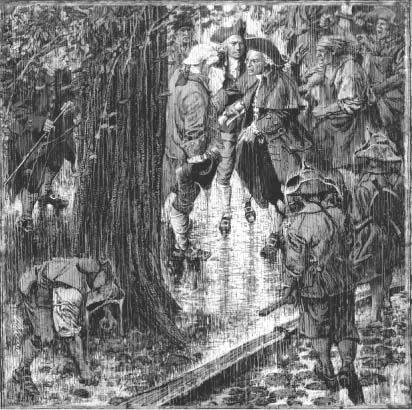
An illustration by Louis S. Glanzman showing Samuel Adams and other patriots forcing a stamp official to resign.
Further Reading
- Loading...
Get a 30 day FREE TRIAL
-
 Watch videos from a variety of sources bringing classroom topics to life
 -
Read modern, diverse business cases
-
Explore hundreds of books and reference titles

Read next

More like this
Sage Recommends
We found other relevant content for you on other Sage platforms.
Have you created a personal profile? Login or create a profile so that you can save clips, playlists and searches