
Entry
Reader's guide
Entries A-Z
Subject index
Comic Books
Gag-based humor was the hallmark of the earliest American newspaper comic strips from their origins in the mid-1890s. Strips like Buster Brown (Richard F. Outcault) and The Katzenjammer Kids (Rudolph Dirks) created the grammar of the daily strip, which was refined by early-20th-century works like Krazy Kat (George Herriman), Mutt and Jeff (Bud Fisher), Bringing Up Father (George McManus), Blondie (Chic Young), and Li’l Abner (Al Capp). The earliest comic books were an attempt to cash in on the success of these strips by collecting them as magazine-size periodicals. When the easy supply of prepublished strips dissipated, packagers turned to original material. Titles like Famous Funnies and New Comics emerged in the mid-1930s as clear imitators of the comic strip tradition.
In the 1940s, Dell Comics solidified the children's comic book market when it secured the rights to produce comic book versions of Disney's animation stars. Walt Disney's Comics and Stories was launched in 1940 and ran for 22 years, publishing the adventures of Mickey Mouse, Donald Duck, and other characters known from the silver screen. The success of this title opened the door for works based on the characters from the Warner Brothers studio Looney Tunes and Merrie Melodies (1941), as well as Walter Lantz and Hanna-Barbera. By the 1950s, the leading publisher of comics for young children was Harvey Comics, who had a string of hits, including Little Audrey (1952), Casper the Friendly Ghost (1952), and Richie Rich (1960). The profusion of anthropomorphic characters and animation visual styles largely defined children's comics in the post-War period, an era in which some of the most notable comic book humorists plied their trade (Carl Barks on Donald Duck, Floyd Gottfredson on Mickey Mouse, and John Stanley on Little Lulu).
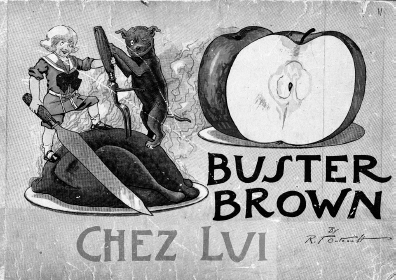
The early syndicated comic strip Buster Brown was translated and published in book form in France in the early 20th century.
Source: Richard Felton Outcault/Wikimedia Commons.
Humor comic books addressed to an audience of teenagers have their origins with Archie (1942). The adventures of the clean-cut, all-American boy and his friends in Riverdale became a cultural sensation, not only spinning off a variety of titles— Archie's Girls Betty and Veronica (1950), Archie's Pal Jughead (1949)—but launching a raft of copycat titles such as Andy (1948), Ernie (1948) and Dudley (1949). Though they reached their sales peak in the late 1960s, Archie comics have continued to be published uninterrupted to the present, the longest running comic book character other than superheroes Superman, Batman, and Wonder Woman.
The 1950s witnessed a dramatic tonal shift in the area of humor comics. While previous comics for children and teens had featured innocent situations and gags, the creation of MAD in 1952 ushered in a new kind of biting satire. Created and initially edited by the influential humor cartoonist Harvey Kurtzman, MAD began as a full-color comic book before changing its format in 1954 to become a black-and-white magazine. MAD cast a skeptical eye on American media culture, regularly lampooning film, television, and advertising. With its distinctive satiric tone, MAD fundamentally altered the landscape of humor comic books, ushering in an era of cynicism and irony. The success of MAD made it ripe for imitations, including Crazy (1953), Eh! (1953), Wild (1954), Panic (1954), Trump (1957), Cracked (1958), and Help! (1960).
...
- Anthropology, Folklore, and Ethnicity
- Blason Populaire
- Philogelos
- Animal-Related Humor
- Anthropology
- Anti-Proverb
- Carnival and Festival
- College Humor
- Dialect Humor
- Ethnic Jokes
- Ethnicity and Humor
- Feast of Fools
- Folklore
- Fools
- Foolstowns
- Hoax and Prank
- Insult and Invective
- Jewish Humor
- Joke Cycles
- Joking Relationship
- National and Ethnic Differences
- Practical Jokes
- Race, Representations of
- Rituals of Laughter
- Social Network
- Stereotypes
- Targets of Humor
- Trickster
- Urban Legends
- Verbal Dueling
- Xeroxlore
- Antiquity
- Components of Humor
- Culture
- Xiangsheng, History of
- Xiangsheng
- Anthropology
- Carnival and Festival
- Cross-Cultural Humor
- Culture
- Education, Humor in
- Fools
- Foolstowns
- Gallows Humor
- High-Context Humor
- Humorous Names
- Intercultural Humor
- Jewish Humor
- Obscenity
- Puppets
- Race, Representations of
- Ritual Clowns
- Rituals of Inversion
- Scatology
- Sick Humor
- Sports
- Stereotypes
- Verbal Dueling
- Entertainment Industry
- History
- Forest of Laughter and Traditional Chinese Jestbooks
- Huaji-ists, The
- Philogelos
- Xiangsheng, History of
- Ancient Egypt, Humor in
- Arabic Culture, Humor in
- Assyrian and Babylonian Humor
- Biblical Humor
- Buddhism
- Christianity
- Confucianism
- Fabliau
- Feast of Fools
- Greek Visual Humor
- History of Humor: 19th-Century Europe
- History of Humor: Classical and Traditional China
- History of Humor: Early Modern Europe
- History of Humor: Medieval Europe
- History of Humor: Modern and Contemporary China
- History of Humor: Modern and Contemporary Europe
- History of Humor: Modern Japan
- History of Humor: Premodern Japan
- History of Humor: Renaissance Europe
- History of Humor: U.S. Frontier
- History of Humor: U.S. Modern and Contemporary
- Islam
- Jest, Jestbooks, and Jesters
- Magazines and Newspapers Outside the United States
- Magazines and Newspapers, U.S.
- Masks
- Medieval Visual Humor
- Menander
- Mock Epic
- Molière
- Plautus
- Rabelais, François
- Sanskrit Humor
- Satire
- Shakespearean Comedy
- Sitcoms
- Sketch Comedy Shows
- Slapstick
- Stand-Up Comedy
- Tall Tale
- Tragicomedy
- Travesty
- Humor Theory
- 3 WD Humor Test
- Aristotelian Theory of Humor
- Arousal Theory (Berlyne)
- Benign Violation Theory
- Bergson's Theory of the Comic
- Bisociation
- Evolutionary Explanations of Humor
- Framing Theory
- Freudian/Psychoanalytic Theory
- Hobbesian Theory
- Humor Theories
- Humor, Forms of
- Inversion, Topsy-Turvy
- Pattern Recognition
- Platonic Theory of Humor
- Release Theories of Humor
- Reversal Theory
- Simple Form
- Uses and Gratifications Theory
- Linguistics
- Pointe
- Witz
- Xiehouyu
- Ambiguity
- Anti-Proverb
- Aphorism
- Audiovisual Translation
- Computational Humor
- Conversation
- Cross-Cultural Humor
- Culture
- Dialect Humor
- Epigram
- Exaggeration
- Failed Humor
- Gender Roles in Humor
- Humor Markers
- Humor, Computer-Generated
- Humor, Etymology of
- Humor, Forms of
- Humorist
- Incongruity and Resolution
- Irony
- Jokes
- Joking Relationship
- Laugh, Laughter, Laughing
- Linguistic Theories of Humor
- Linguistics
- Maxim
- Mechanisms of Humor
- Metaphor
- Misdirection
- Phonological Jokes
- Politeness
- Punch Line
- Puns
- Reactions to Humor, Non-Laughter
- Rhetoric and Rhetorical Devices
- Riddle
- Second Language Acquisition
- Semantics
- Speech Play
- Teasing
- Tom Swifty
- Translation
- Verbal Humor
- Wellerism
- Literature and Major Literary Figures
- Commedia dell’Arte
- Forest of Laughter and Traditional Chinese Jestbooks
- Kyōgen
- Rakugo
- Senryū
- Share
- Witz
- Absurdist Humor
- Ancient Greek Comedy
- Ancient Roman Comedy
- Anecdote, Comic
- Aphorism
- Aristophanes
- Boccaccio, Giovanni
- Carnivalesque
- Cervantes, Miguel de
- Comedy
- Comic Relief
- Doggerel
- Epigram
- Exaggeration
- Fabliau
- Farce
- Genres and Styles of Comedy
- Goldoni, Carlo
- High Comedy
- Humorous Names
- Inversion, Topsy-Turvy
- Jest, Jestbooks, and Jesters
- Lampoon
- Limericks
- Literature
- Low Comedy
- Menander
- Mime
- Mock Epic
- Molière
- Nonsense
- Parody
- Pastiche
- Pirandello, Luigi
- Plautus
- Poetry
- Postmodern Irony
- Puns
- Rabelais, François
- Rhetoric and Rhetorical Devices
- Satire
- Satyr Play
- Schwank
- Science, Science Fiction, and Humor
- Shakespearean Comedy
- Simple Form
- South American Literature, Humor in
- Tall Tale
- Tragicomedy
- Travesty
- Trickster
- Mathematics, Computer Science, and the Internet
- Africa
- Americas
- Asia
- E’gao: Culture of Internet Spoofing in China
- Forest of Laughter and Traditional Chinese Jestbooks
- Huaji-ists, The
- Kyōgen
- Rakugo
- Senryū
- Share
- Xiangsheng, History of
- Xiangsheng
- Xiehouyu
- Buddhism
- Confucianism
- History of Humor: Classical and Traditional China
- History of Humor: Modern and Contemporary China
- History of Humor: Modern Japan
- History of Humor: Premodern Japan
- Islam
- Southeast Asia, Cartooning in
- Taoism
- Europe
- Commedia dell’Arte
- Lazzi
- Pointe
- Witz
- Ancient Greek Comedy
- Ancient Roman Comedy
- Byzantine Humor
- Fabliau
- Greek Visual Humor
- History of Humor: 19th-Century Europe
- History of Humor: Early Modern Europe
- History of Humor: Medieval Europe
- History of Humor: Modern and Contemporary Europe
- Medieval Visual Humor
- Satyr Play
- Schwank
- Middle East
- Performing Arts
- Commedia dell’Arte
- Lazzi
- Ancient Greek Comedy
- Ancient Roman Comedy
- Burlesque
- Carnivalesque
- Clowns
- Comedy
- Comedy Ensembles
- Comic Opera
- Farce
- Gag
- High Comedy
- Improv Comedy
- Low Comedy
- Masks
- Mime
- Music
- Music Hall
- Musical Comedy
- Parody
- Pastiche
- Puppets
- Satyr Play
- Shakespearean Comedy
- Sketch Comedy Shows
- Slapstick
- Stand-Up Comedy
- Tragicomedy
- Travesty
- Variety Shows
- Philosophy and Religion
- Aesthetics
- Aphorism
- Aristotelian Theory of Humor
- Bergson's Theory of the Comic
- Biblical Humor
- Buddhism
- Christianity
- Clergy
- Comic Frame
- Comic Versus Tragic Worldviews
- Comic World
- Confucianism
- Epigram
- Feast of Fools
- Hobbesian Theory
- Islam
- Jewish Humor
- Judaism
- Paradox
- Philosophy of Humor
- Platonic Theory of Humor
- Religion
- Rituals of Laughter
- Taoism
- Physiology and Biology
- Politics
- Business World
- Education
- Law
- Clinical and Counseling Psychology
- Cognition
- Developmental Psychology
- General Psychology
- Appreciation of Humor
- Failed Humor
- Humor Detection
- Humor Production
- Humor Styles
- Humorous Stimuli, Characteristics of
- Identity
- Laugh, Laughter, Laughing
- Pattern Recognition
- Psychological Distance
- Psychology
- Reactions to Humor, Non-Laughter
- Reception of Humor
- Release Theories of Humor
- Sense of Humor, Components of
- Smiling and Laughter: Expressive Patterns
- Health Psychology
- Interpersonal Relationships
- Motivation and Emotion
- Neuropsychology
- Personality and Social Psychology
- Tests and Measurement
- Sociology
- Aggressive and Harmless Humor
- Carnivalesque
- Conversation
- Cross-Cultural Humor
- Culture
- Dialect Humor
- Ethnic Jokes
- Ethnicity and Humor
- Failed Humor
- Gallows Humor
- Gender Roles in Humor
- High-Context Humor
- Homosexuality, Representation of
- Humor Group
- Identity
- Insult and Invective
- National and Ethnic Differences
- Obscenity
- Play and Humor
- Presidential Humor
- Race, Representations of
- Reactions to Humor, Non-Laughter
- Reception of Humor
- Roman Visual Humor
- Scatology
- Sick Humor
- Social Interaction
- Social Network
- Sociology
- Stereotypes
- Targets of Humor
- Teasing
- Visual Humor
- Loading...
Get a 30 day FREE TRIAL
-
 Watch videos from a variety of sources bringing classroom topics to life
 -
Read modern, diverse business cases
-
Explore hundreds of books and reference titles

Read next

More like this
Sage Recommends
We found other relevant content for you on other Sage platforms.
Have you created a personal profile? Login or create a profile so that you can save clips, playlists and searches