
Entry
Reader's guide
Entries A-Z
Subject index
Early Warning Systems
Early warning systems are sometimes referred to as warning systems or emergency broadcast systems. They provide people with emergency information before or during crisis situations so that protective actions can be taken. The phrase early warning system (EWS) is often interpreted to mean the technological tools used by scientists to detect threats and communicate information through audible and written channels to emergency managers and to the public. However, EWSs are much more complex. They involve information links between the environment and people and between different groups of people. Information is communicated from multiple sources through multiple channels, ranging from sirens and reverse 911 calls to seeing or hearing cues from the environment. D. S. Mileti and L. Peek describe three basic subsystems of an EWS—hazard detection, emergency management, and public response—yet EWS models focus largely on the first two and much less on the public response subsystem. That is, the models do not accurately reflect the significance of the linkages between people and their observations of the environment and how these observations initiate the warning process and hence response to it. These linkages are, however, well described in the disaster research literature.
Specific elements are required for development of an effective EWS for crisis management. Characteristics of the environment interact with characteristics of society to produce an effective response. The following sections focus on technology used in crisis management, crisis decision making, and interagency relationships, including training and exercises. The case study describes New Zealand's experience with tsunamis from 1960 to 2010.
Early Warning Systems
Traditionally, scientists and emergency managers developed linear models to identify key parties and information channels in EWSs. Models predicted that the flow of information starts when scientists observe a hazard above a threshold (earthquake magnitude). Scientists analyze the data and contact emergency managers to issue an alert if a critical threshold is reached. Emergency managers then make decisions about whether to notify the media and public of the threat and recommend actions. The ultimate receiver of the message is generally considered to be the “public.” Such linear models usually misrepresent the warning process in two ways. First, they highlight technology by focusing on the detection and emergency management subsystems, minimizing the public subsystem. This detracts from research findings that the public's first source of information and hence the beginning of response efforts is often human sensory experience with “natural warnings” or “environmental cues” that often precede the hazard (“feeling” ground motion in earthquakes). Moreover, research has shown that people's first source of warning is often “informal warnings,” received and disseminated through multiple channels (face-to-face contact, cell phones, TV). Additionally, through the use of “social cues,” people look to what others are doing to decide how to respond. Second, warnings meant for and disseminated to emergency managers are sometimes simultaneously received by media and the public. This means that messages are being acted on by the media and public before emergency managers have reviewed a warning and coordinated their response recommendations.
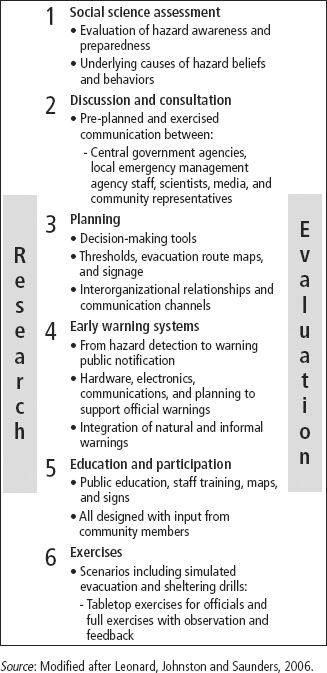
Figure 1 Model of an effective warning system
Another problem with many EWSs is that responsibility for providing warnings is divided between federal and local government agencies whose mandates are sometimes different. Scientists often have the mandate to provide warnings to emergency management, but recommendations for protective action are the responsibility of local and state emergency managers. This particular division of responsibility for the management of crises requires that warnings or recommended responses are issued at multiple levels of government, at differing times, and by different entities. Predicting social response is made even more difficult when one acknowledges that prior to receipt of official warnings, people are responding to (1) initial natural warnings or environmental cues, (2) informal warnings from each other and the media, and (3) social cues. Moreover, official warning messages are rewritten by numerous government agencies and redisseminated to multiple receivers. This leads to numerous message sources, which has been shown to improve response to warnings by decreasing the time taken to confirm warnings, but this is contingent on the content of the messages being the same. Some argue that there is simply a digital information overload. Furthermore, rewriting messages increases the likelihood of human error in translation, which delays response because people seek additional information to sort out any discrepancies, offsetting the positive effect provided by multiple message sources.
...
- Agencies, United Nations
- Bureau for Crisis Prevention and Recovery, UN (UNDP/BCPR)
- Environment Programme, UN (UNEP)
- Food and Agriculture Organization of the United Nations (FAO)
- International Children's Fund, UN (UNICEF)
- International Strategy for Disaster Reduction, UN (UNISDR)
- Interregional Crime and Justice Research Institute, UN (UNICRI)
- Office for the Coordination of Humanitarian Affairs (OCHA), UN
- World Health Organization (WHO), UN
- Agencies, U.S.
- Centers for Disease Control and Prevention (CDC)
- Department of Homeland Security (DHS)
- Emergency Management Agencies, City and County
- Federal Bureau of Investigation (FBI)
- Federal Emergency Management Agency (FEMA)
- National Oceanic and Atmospheric Administration (NOAA)
- State Emergency Management Agencies
- U.S. Geological Survey (USGS)
- Categories of Crises: Engineering and Technological
- Air Traffic Control
- Air Travel
- Biological Engineering Risk
- Bridges
- Buildings
- Chemical Risk
- Cyber Crime
- Cyber Security
- Cyber Warfare
- Dams, Levees, and Seawalls
- Electronics Waste
- Environmental Contamination
- Hazardous Materials
- Hazardous Waste Disposal
- Improvised Explosive Devices
- Manufacturing Risks
- Marine Shipping
- Marine Travel
- Mining
- Nanotechnology
- Nuclear Risks
- Ozone Layer Depletion
- Petrochemical Risk
- Sewage Spill
- Smog
- Spaceflight
- Transportation Systems, Vulnerability
- Y2K Bug
- Categories of Crises: Financial and Business
- Categories of Crises: Natural Disasters
- Categories of Crises: Politics, International Relations, and Civil Violence
- Arms Control
- Biological Weapons
- Border Disputes
- Cabinet Office, UK
- Chemical Weapons
- Civil War
- Ethnic Cleansing
- Failed States
- Foreign Policy Crises
- Hijackings
- Hostage Taking and Negotiation
- Human Trafficking
- Interstate War
- Land Mines
- Missiles
- Nuclear and Radiological Weapons
- Nuclear Proliferation
- Peacekeeping
- Protest
- Religious Violence
- Revolution
- Riots
- Suicide Bombings
- Terrorism
- Transportation Security
- War Crimes
- Weapons Trafficking
- Categories of Crises: Population and Demographics
- Disaster Information Databases
- Nongovernmental Organizations
- Risk Management Standards
- Theory, Issues, and Techniques: Civil
- Agency Notification and Mobilization
- Civil Protection
- Civilian Protection, Post-Conflict
- Contingency Planning
- Continuity of Government
- Crisis Information Management Systems
- Debris Management
- Decision Making
- Decision Support Tools
- Disaster Assessment
- Disaster Declaration
- Disaster Risk Reduction
- Documentation
- Emergency Alert Systems
- Emergency Management System
- Emergency Manager
- Emergency Support Functions
- Financial Risk Management in Higher Education
- Hazard Mitigation
- Incident Action Plans
- National Incident Management System (NIMS)
- National Preparedness Goal
- National Response Framework
- Operational Plans
- Operational Readiness
- Perimeter Control
- Policy Setting
- Political and Organizational Leadership
- Preparedness
- Prevention
- Protection
- Search and Rescue
- Situational Analysis
- Stafford Act
- Sustainability
- Threat Detection
- Theory, Issues, and Techniques: Corporate
- Alternate Site, Corporate
- Auditing
- Backup Facility
- Backup Media
- Backup Strategy
- Business Continuity Management
- Business Continuity Planning
- Business Continuity Planning Life Cycle
- Business Impact Analysis
- Business Resumption Planning
- Classification of Systems
- Cluster
- Cold Site
- Continual Improvement
- Critical Applications
- Critical Business Functions
- Criticality Assessment
- Data Mirroring
- Data Recovery
- Dedicated Site
- Disaster Declaration Officer
- Disaster Recovery
- Disaster Recovery Life Cycle
- Disaster Recovery Plan Test Cycle
- Downtime
- Electronic Vaulting
- Failover
- Fink's Crisis Life Cycle
- Impact Analysis
- Incident Management
- Incident Response
- Insurance
- Journaling
- Losses, Quantitative Versus Qualitative
- Maximum Acceptable Outage
- Minimum Business Continuity Objective
- Mirroring
- Mitroff's Five Stages of Crisis Management
- Mobile Recovery Site
- Reciprocal Agreement
- Reciprocal Site
- Recovery Time Objective
- Reinsurance
- Reputational Risk
- Response Team
- Strengths, Weaknesses, Opportunities, and Threat (SWOT) Analysis
- Supply Chain
- Vital Records
- Warm Site
- Theory, Issues, and Techniques: General
- All-Hazards
- Cascading Crisis
- Catastrophe, Definition of
- Climate Change Adaptation
- Collaboration
- Command and Control
- Contingent Coordination
- Coordination
- Coping Capacity and Response Capability
- Credibility
- Crisis Communications
- Crisis Management, Emerging Trends in
- Crisis Simulations
- Crisis, Definition of
- Critical Infrastructure
- Damage Assessment
- Damage Containment
- Debriefing
- Decision Making Under Stress
- Disaster Drills
- Disaster, Definition of
- Disruption of Organizations
- Early Warning Systems
- Electronic Media
- Emergency Management, Principles of
- Emergency Medical Care
- Emergency Operations Center
- Emergency Public Information
- Emergency Responders
- Emergency, Definition of
- Evacuation
- Exercises
- Fusion Center
- Hazard Vulnerability Analysis
- Hazard, Definition of
- Historical Analogies, Use of
- Impact, Definition of
- Improvising
- Incidents Versus Crises
- Interdependence
- Interoperability
- Legal Liability
- Logistics
- Mass Care
- Mass Fatality Management
- Mass Media
- Mental Models
- Methods, Qualitative
- Methods, Quantitative
- Multiple Disaster Problem
- News Media
- Nongovernmental Organizations
- Nonlinearity
- Panic, Nature and Conditions of
- Pre-Crisis Training and Planning
- Pre-Impact Planning Process
- Public Awareness and Education
- Public Image
- Public Relations
- Recovery
- Residual Risk
- Resiliency
- Resource Management
- Response
- Risk Analysis
- Risk Assessment
- Risk Treatment
- Routine Emergencies Versus True Crises
- Safety Policies
- Scapegoating
- Scenario Planning
- Shelter-in-Place
- Simulations
- Social Media
- Spokesperson, Designating and Utilizing
- Stakeholders
- Strategic Plans
- Training
- Trauma
- Trigger Events
- Uncertainty
- Volunteer Coordination
- Vulnerability
- Warning
- Whistle Blowers
- Worker Error
- Theory, Issues, and Techniques: Public Health
- Cholera
- Drug Resistance
- Ebola Virus
- Emergency Medicine
- Epidemics
- Health and Medical Response Scenarios
- HIV/AIDS Epidemic
- Hospital Emergency Room
- Infectious Disease
- Infestations, Parasite
- Influenza
- Living Modified Organisms
- Malaria
- Measles
- Mental Illness
- Noncommunicable Diseases
- Pandemics
- Post-Traumatic Stress Disorder
- Public Health Surveillance
- Public Safety Canada
- Quarantine
- Severe Acute Respiratory Syndrome (SARS)
- Smallpox
- Social Distancing
- Surge Capacity, Hospitals
- Triage
- Tuberculosis
- Vaccinations
- Theory, Issues, and Techniques: Social Sciences
- Blame, Politics of
- Bounded Rationality
- Bureaucracy
- Chaos Theory
- Cognitive Novelty, Engaging in
- Cosmology Episode
- Coupling
- Decision Making, Theories of
- Decision Stream
- Groupthink
- High Reliability Organization Theory
- Information Asymmetry
- Information Vacuums
- Normal Accident Theory
- Normalization of Deviance
- Organizational Failure
- Paradigm Blindness
- Practical Drift
- Risk Society
- Structural Secrecy
- Loading...
Get a 30 day FREE TRIAL
-
 Watch videos from a variety of sources bringing classroom topics to life
 -
Read modern, diverse business cases
-
Explore hundreds of books and reference titles

Read next

More like this
Sage Recommends
We found other relevant content for you on other Sage platforms.
Have you created a personal profile? Login or create a profile so that you can save clips, playlists and searches