
Entry
Entries A-Z
Two-Thirds Rule
Candidates for the democratic presidential or vice presidential nomination faced an especially high hurdle during the party's first century. Unlike other major parties, the Democrats used a controversial rule that required a two-thirds majority vote of the national party convention to obtain either nomination.
The party adopted the rule at its first convention, in 1832 and followed it until 1936. During those 104 years, the rule denied the presidential nomination to two candidates—Martin Van Buren in 1844 and James Beauchamp “Champ” Clark in 1912—who received majorities on early ballots but never achieved the two-thirds vote required for nomination.
Van Buren had won one four-year term as president in 1836 but was defeated for reelection in 1840 by the Whig ticket headed by William Henry Harrison. Seeking a comeback in 1844, he won 146 of the 266 convention votes, or a 54.9 percent majority, on the first ballot. His total fell below a simple majority on succeeding roll calls, however, and on the ninth ballot the nomination went to former Tennessee governor James K. Polk. Polk thus became the first dark-horse presidential candidate.
Ironically, Van Buren had benefited twice from the two-thirds rule since its inception. At the 1832 convention, President Andrew Jackson wanted the rule adopted because it ensured the nomination of Van Buren in place of Vice President John C. Calhoun of South Carolina, who had clashed with Jackson on several issues, notably Calhoun's support of southern states' rights to nullify federal laws they deemed unconstitutional. After being dumped from the ticket, Calhoun returned to South Carolina to continue his fight against Jackson as a U.S. senator. He was the first vice president to resign.
Jackson decided to retire after two terms as president and did not run again in 1836. Van Buren, the incumbent vice president, was Jackson's choice to succeed him. Again the two-thirds rule favored Van Buren, who won the nomination and the election. His defeat for reelection in 1840 made him the first incumbent president denied a second term after first completing a full term as vice president. Republican George H.W. Bush in 1992 became the second such person when he lost to Democrat Bill Clinton.
In 1912, Missouri representative Champ Clark, the House Speaker, entered the Democratic convention with more support than any other candidate, though he was well short of the necessary two-thirds vote. He received a bare 50.8 percent majority on the tenth ballot with 556 of the 1,094 convention votes. He received even smaller majorities through the sixteenth ballot. The nomination ultimately went on the forty-sixth ballot to New Jersey governor Woodrow Wilson, who went on to win the general elections in that November and in 1916.
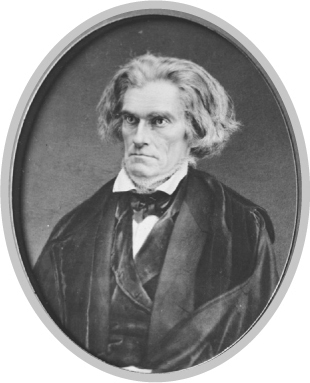
Vice President John C. Calhoun, celebrated in the South for his eloquent advocacy of slavery and states' rights, was ousted from the ticket at the instigation of ardent nationalist Andrew Jackson. Library of Congress
The republican party never adopted the two-thirds rule. In contrast to the typical GOP convention, Democratic conventions often were characterized by turbulence and multiballot contests over nominations. In 1924, it took Wall Street lawyer John W. Davis 103 roll calls to win the Democratic nomination.
...
Get a 30 day FREE TRIAL
-
 Watch videos from a variety of sources bringing classroom topics to life
 -
Read modern, diverse business cases
-
Explore hundreds of books and reference titles

Read next

More like this
Sage Recommends
We found other relevant content for you on other Sage platforms.
Have you created a personal profile? Login or create a profile so that you can save clips, playlists and searches