
Entry
Entries A-Z
Proportional Representation
Democratic theorists have for a long time argued that the winner-take-all system of elections used in the United States and in other democracies fails to satisfy the requirements of the nature of representation. They contend that in a single-member constituency system persons who did not vote for the winner are not truly represented.
To these theorists, notably John Stuart Mill, each vote in a democracy should result in an equal share in the legislature; each voter, so to speak, should have a representative fully and honestly speaking for him or her. But in the U.S. electoral system, the majority and the minority are not legislatively represented in any proportion that reflects their actual strength in the district. Small minorities are not represented in any way, giving rise to a question: If 50.1 percent of voters elect a representative, are the other 49.9 percent of voters really represented by that person?

If 50.1 percent of voters elect a representative, are the other 49.9 percent of voters really represented by that person?
Proportional representation would make the legislature an exact mirror of the voting strength of the multiple interests within the electorate. To do this requires a multiple-member constituency system. Instead of one representative serving a congressional district, there might be eight or fifteen, or any likely number arising from a system that encourages more than two parties. What is of paramount importance to the advocates of proportional representation is that the legislature be, in essence, a photographic “snapshot” of the electorate—providing a “mathematically exact representation of the various segments of opinion among the electorate,” as one political analyst writes.
multimember districts are still found in some cities and states, and they once existed as congressional districts in some states until Congress abolished them in 1842. African American and other minority groups have argued that multiple-member districts, instead of guaranteeing their representation, actually deny it by submerging them into the district majority. The Supreme Court has agreed that a multimember district may be unconstitutional if it discriminates against a minority, and the 1965 voting rights act contained protection against such districting. (See racial redistricting; reapportionment and redistricting.)
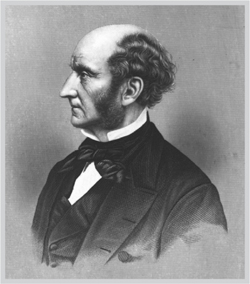
John Stuart Mill (1806–1873), an English philosopher, economist, political theorist, journalist, and member of Parliament, believed that the United States was a false democracy in which the numerical majority ruled despotically. Library of Congress
Complex Formulas
Two basic forms of proportional representation exist: the predominant “party list” system, in which political parties are awarded seats in the legislature in proportion to the number of votes cast for their differing party rosters (or “lists”) on the ballot; and the single transferable vote system, used in some American cities, in which voters cast ballots for individual candidates instead of party lists.
In the single transferable vote system, where voters choose individual candidates, the question becomes one of determining how candidates rank in terms of voter preference, then using a quota to determine, say, the three winners out of five candidates.
It is obvious that whatever formula determines the winners of seats in proportional representation electoral systems, the systems themselves encourage the formation of multiple parties to faithfully represent the varied interests and concerns of the electorate as a whole and of its absolutely essential component, the individual voter. In the American two-party system, the democratic and republican parties attempt to draw these varied interests, with varying degrees of success, into mass party organizations with competing wings, for example “moderate Republicans” and “liberal Democrats.” The mass party organizations vie with one another for legislative success, and the factions within them contend for control of the party's agenda and ideology.
...
Get a 30 day FREE TRIAL
-
 Watch videos from a variety of sources bringing classroom topics to life
 -
Read modern, diverse business cases
-
Explore hundreds of books and reference titles

Read next

More like this
Sage Recommends
We found other relevant content for you on other Sage platforms.
Have you created a personal profile? Login or create a profile so that you can save clips, playlists and searches