
Entry
Entries A-Z
New Hampshire Primary
The ritual of presidential candidates trooping to New Hampshire to campaign in the state's first-in-the-nation primary has become such an accepted feature of U.S. political culture that there are few people who remember it any other way. New Hampshire established itself during the early part of the twentieth century as one of the first states to reject the traditional system of having party leaders choose presidential nominees; by the early 1950s, its primary had emerged as a key first test of popular support among the often crowded field of White House contenders.
From the 1970s into the first decade of the twenty-first century, New Hampshire's pace-setting role was challenged only by the major parties' precinct caucuses in Iowa. As late as 1980, these events were held five weeks apart, but by 1996, the gap had been reduced to eight days, which became customary. For many years, the New Hampshire primary was held in mid-March, launching a relatively small round of primaries that culminated in June primaries in more populous states such as California.
But presidential selection reforms aimed at empowering rank-and-file voters over party bosses, instituted as a result of the political turmoil of the 1960s, spurred a proliferation of primaries and open caucuses, which in turn kicked off a competition among states to hold their events earlier and earlier in hope of gaining influence over the parties' candidate choice. This practice, known as front-loading, has had two major and not necessarily positive impacts on the New Hampshire primary.
First, in order to keep ahead of the front-loading frenzy, New Hampshire has in successive elections moved the date of its primary from the cusp of spring to the dead of New England winter. By state law, New Hampshire must hold its primary ahead of other states. In 2008 New Hampshire held its primary on January 9. But then two states—in violation of national party rules—moved their primaries into January (Michigan on January 15 and Florida on January 29) in order to increase their influence on the candidate selection. Both were threatened with loss of seating at the summer conventions, but most delegates were later allowed to participate.
One other primary, in South Carolina, was moved into January with party approval. That was held on January 29. All other primaries were held in the following months, starting with Alabama on February 5 and ending with several states on June 3.
Second, and even more serious for defenders of New Hampshire's spot at the top of the calendar, there have been longstanding complaints from other states that New Hampshire's clout in the nominating process is excessive. To address criticisms that New Hampshire is too small (as the forty-second most populous state) and too homogenous (95 percent white, 1 percent African American) to reflect the diversity of the U.S. electorate, the Democratic National Committee in 2006 decided to add to the calendar two events that would compete for attention with New Hampshire: one was the South Carolina primary and the other was a January caucus in Nevada.
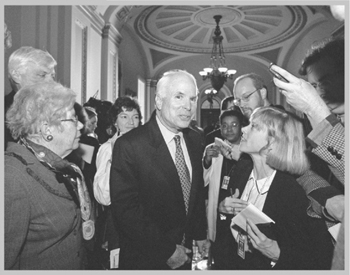
In an unusual turn of events, Sen. John McCain won the 2000 New Hampshire presidential primary but lost the Republican nomination to George W. Bush. CQ Photo/Scott J.
...
Get a 30 day FREE TRIAL
-
 Watch videos from a variety of sources bringing classroom topics to life
 -
Read modern, diverse business cases
-
Explore hundreds of books and reference titles

Read next

More like this
Sage Recommends
We found other relevant content for you on other Sage platforms.
Have you created a personal profile? Login or create a profile so that you can save clips, playlists and searches