
Entry
Entries A-Z
Iowa Caucus
From the 1970s well into the first decade of the twenty-first century, the Iowa precinct caucus shared with the new hampshire primary special status as the first major delegate selection events in presidential election years.
For many years, these two relatively lightly populated states were the only ones given permission by the two major national parties to hold their contests before the “window” that existed for all other states. But this led to widespread complaints from officials and political activists, particularly Democrats, in other states, who said Iowa and New Hampshire were too small to rate the primacy they held and were not representative of the diversity of the nation as a whole. For example, according to the 2000 census, Hispanics made up 13 percent of the nation's population but just 3 percent of Iowa's and 2 percent of New Hampshire's. Blacks, representing 12 percent of the nation's population, were at 2 percent in Iowa and 1 percent in New Hampshire.
Defenders of Iowa's first-in-the-nation status argue, however, that the state's relatively small and accessible population tests candidates' “retail” political skills and is therefore a better early trial of their personal appeal than the media-heavy campaigns necessary to reach voters in the more populous states.
Even though the Democratic National Committee (DNC) added two new states to the earliest part of the nominating contest schedule for the 2008 presidential elections, it did so without nudging Iowa from its place at the top. The Iowa caucuses were held January 3, with one of the added events, the Nevada caucuses, on January 19. New Hampshire held its primary on January 8, less than a week after Iowa. A primary in South Carolina was added for January 26.
The Democratic caucuses in Iowa played an especially significant role in 2004 in shaping the campaign to choose the challenger to President George W. Bush, who was unopposed for the Republican nomination. Massachusetts senator John Kerry's victory in Iowa installed him as the solid front-runner for the Democratic nomination. On the other hand, a poor performance by longtime representative Richard A. Gephardt of neighboring Missouri prompted him to leave the race. In 2008 Barack Obama beat his principal opponent, Hillary Rodham Clinton, in Iowa, a victory that foretold his success in many later caucuses that helped pile up delegates in his eventual successful capture of the nomination.
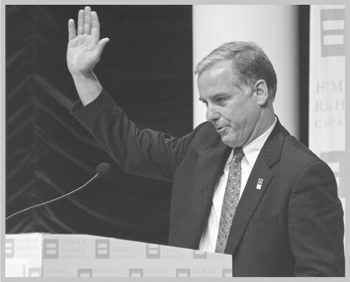
A poor showing in the Iowa caucuses severely hurt Howard Dean's chances of securing the Democratic nomination in 2004. CQ Photo/Scott J. Ferrell
Today, the Iowa caucuses are routinely seen as an early maker or breaker of presidential aspirations. But the event is a relative newcomer to the important place it now holds in the nominating process.
The New Hampshire primary has been around since 1913, but the Iowa caucus event as it evolved sprang from the new politics that captured the democratic party in the late 1960s and early 1970s. The grassroots activism of Iowa's precinct caucuses provided fertile ground for that new breed of politics.
For decades Iowans held precinct caucuses in January every four years to begin the process of selecting delegates to the Democratic and Republican national conventions. But in the old days the process was firmly in the hands of party regulars, pragmatic politicians who selected delegates to county conventions and therefore controlled eligibility for national convention delegates.
...
Get a 30 day FREE TRIAL
-
 Watch videos from a variety of sources bringing classroom topics to life
 -
Read modern, diverse business cases
-
Explore hundreds of books and reference titles

Read next

More like this
Sage Recommends
We found other relevant content for you on other Sage platforms.
Have you created a personal profile? Login or create a profile so that you can save clips, playlists and searches