
Entry
Entries A-Z
Forecasting Election Results
In the highly competitive news industry, timely reporting is essential. Nowhere is this more evident than in the predicting of electoral outcomes.
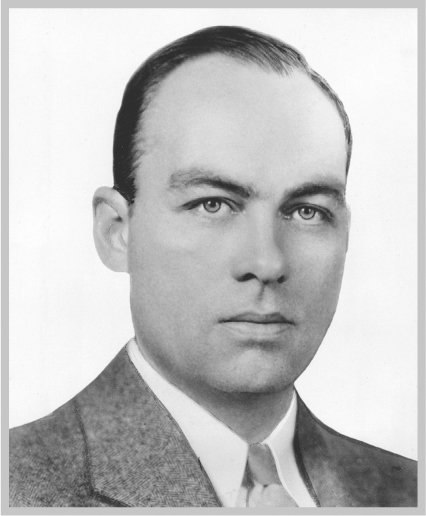
American statistician George Gallup pioneered methods for measuring public opinion and forecasting election results. AP Images
At intervals before an election, the news media use various polling techniques to help them determine who is ahead in the race and report that information to their readers, viewers, or listeners. Candidates and their parties, interest groups, political consultants, as well as large segments of the general public, follow the poll reports closely—sometimes out of curiosity and sometimes because they have a vested interest in how the election turns out.
The scientific sampling methods used today are far more sophisticated than those once used by newspapers, but complete accuracy remains an elusive goal.
Participants in the lively segment of the news media known as election handicapping—performed by such outlets as National Journal's The Cook Political Report, as well as veteran analysts such as Stuart Rothenberg and Larry Sabato—take polls into consideration but integrate their own knowledge of demographics, voting history, and the issues of the day in making their election predictions.
Evolution of Polling
Old-time reporters relied on their instincts and “seat-of-the-pants journalism” to help them identify the likely winners. They were assisted at times by their newspapers, which early in the nineteenth century began taking what came to be known as a straw vote before elections. The straw vote or poll began simply, with reporters asking train or steamship passengers about their candidate preferences. By the 1930s some straw votes had become elaborate affairs, involving extensive mailings of returnable ballots.
At about the same time an Agriculture Department analyst named Jerzy Heyman developed the systematic sampling techniques that are at the heart of modern polling. The Survey Research Center of the Inter-university Consortium for Political and Social Research at the University of Michigan is an outgrowth of the agriculture program. (See national election studies.)
Pioneer pollsters George Gallup, Elmo Roper, and Archibald Crossley soon adopted the sampling methodology and used it successfully to predict Franklin D. Roosevelt's landslide victory over Alfred M. Landon in 1936. Twelve years later the still-young polling industry received a black eye with its almost unanimous prediction that Thomas E. Dewey would unseat President Harry S. Truman in the 1948 election.
The setback was only temporary; pollsters learned from their mistakes, and the activity grew into a respected and valued profession. It would be another two decades, however, before the news media began taking full advantage of the professional pollsters' generally successful methods of forecasting election results. Washington Post political reporter David S. Broder recalls in his 1987 book Behind the Front Page that in 1960 he camped out for a week in Beckley, West Virginia, to try to sense public opinion in the crucial presidential primary between Democrats John F. Kennedy and Hubert H. Humphrey. Although Humphrey was expected to defeat Kennedy in the state, which had only a 5 percent Catholic population, Broder found considerable support for Kennedy, and he reported it in the paper he was then working for, the Washington Star.
...
Get a 30 day FREE TRIAL
-
 Watch videos from a variety of sources bringing classroom topics to life
 -
Read modern, diverse business cases
-
Explore hundreds of books and reference titles

Read next

More like this
Sage Recommends
We found other relevant content for you on other Sage platforms.
Have you created a personal profile? Login or create a profile so that you can save clips, playlists and searches