
Entry
Entries A-Z
Nature of Representation
The word representation has come to mean “to present again by standing in the place of another.” The British political philosopher John Stuart Mill described representative government as what “the whole people, or some numerous portion of them, exercise through deputies [representatives] periodically elected by themselves, the ultimate controlling power.”
Although the concept of representation is ancient and was considered a common political mechanism by the Middle Ages, historians have noted that it was interest groups, not individuals, that were being represented. Three groups, called estates—the church, the nobles, and the commoners—were the bases of the medieval community.
Representative assemblies of the three estates existed in, among other countries, France and Anglo-Saxon England. The concept of the individual as the fundamental building block of the community—and therefore the element that should be represented—first emerged in seventeenth-century Britain. The theorists who evolved it were considered the proselytizers of a dangerous political heresy that had the potential to destroy the established order.
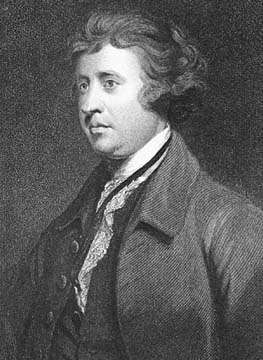
Library of Congress
Political thinkers such as Mill, John Locke, and Jean Jacques Rousseau had already moved beyond the concept of pure democracy (embodied in the town-meeting idealization of direct rule arising from face-to-face meetings of all citizens) to the awareness that the emerging nation-states were too large, too scattered, and too diverse to allow for this sort of participatory government.
Disregarding undemocratic alternatives (the rule of a benign despot, for example), these philosophers and others reluctantly came to the conclusion that some form of representation was called for if there was to be democracy. But while the people's will remained the paramount concern of these theorists, they agonized over how best it could be realized. Was satisfactory representation even possible?
To these theorists, the individual is the basic element of the community, not the estates or corporate interests, and the individual members of the community must be given equal representation in any political body empowered to make that community's laws. Each elected representative should express the will of the group (the constituency) that sent him to the political body, and all the members of that body should, in theory, express the will of all the constituencies in the nation-state—that is, all the people. In the words of the French political writer Honoré Mirabeau, the assembly of representatives should be “a map to scale…an exact working model of the mass of people in action.”
If, for example, a majority of the people desired that a particular course of action be taken on behalf of the entire community, a like proportion of the representatives also should want it. The democratic theory of representation therefore rested on the beliefs that an election is a more or less trustworthy expression of public opinion; that while the persons chosen may not hold precisely the same views as their constituents on all the questions that arise, they will reflect the general tone of thought of the electorate and its party complexion with some degree of accuracy.
Delegate or Agent?
The most perplexing of the questions involving representation involves the rights, duties, and obligations of the elected representative to the electors and the constituency. In his Social Contract, Rousseau argued that any kind of representation is basically incompatible with the ideal of democracy. But when he had to get down to practicalities Rousseau could not escape the existence and function of representatives in the emerging nation-state, and he grudgingly acquiesced to it as almost a necessary evil.
...
Get a 30 day FREE TRIAL
-
 Watch videos from a variety of sources bringing classroom topics to life
 -
Read modern, diverse business cases
-
Explore hundreds of books and reference titles

Read next

More like this
Sage Recommends
We found other relevant content for you on other Sage platforms.
Have you created a personal profile? Login or create a profile so that you can save clips, playlists and searches