
Entry
Entries A-Z
Lieutenant Governor
The lieutenant governor of a state is roughly the equivalent of the U.S. vice president. His or her most important duty is to be prepared to take over as chief executive should the governorship become vacant.
As the “standby” governor, the lieutenant governor has been the butt of jokes about the job's lack of substance. “I'm the lieutenant governor,” Calvin Coolidge once told a Massachusetts woman who asked his occupation. When she excitedly asked him to tell her all about it, Coolidge replied, “I just did.”
But as it was for “Silent Cal,” the lieutenant governorship can be a steppingstone to higher office. In his 1983 study of the 357 governors in office from 1951 to 1981, political scientist Larry Sabato found that sixty-two lieutenant governors had become chief executive through election or, less frequently, through succession. Since 1980 several lieutenant governors have won election as governors. Among them, elected in 1996, was Frank L. O'Bannon, Democrat, in Indiana. But moving up is hardly a guarantee for the nation's lieutenant governors. Kenneth “Buddy” MacKay of Florida and Kathleen Kennedy Townsend of Maryland are two former lieutenant governors who lost hard-fought contests for the governor's mansion in recent years.
Even for lieutenant governors who do not aspire to anything higher, the job in most states today is more rewarding and challenging than it was in Coolidge's day. States have added to the lieutenant governor's duties and responsibilities, just as modern presidents have found more meaningful tasks for their vice presidents than flying to funerals of foreign dignitaries.
One of O'Bannon's predecessors as governor of Indiana, Paul McNutt, began the practice of delegating executive functions to the lieutenant governor. In 1933 McNutt placed his lieutenant in charge of the state's Commerce and Industries Department. Now, according to Sabato, thirty states empower the governor to assign executive tasks to the lieutenant governor. Governors in other states have done the same on their own authority.
In contrast to the past when lieutenant governor was a part-time job in the legislative branch, it is now a full-time job in most of the states that have the position. Twelve states have placed the lieutenant governor entirely in the executive branch. Like the vice president, who is president of the U.S. Senate, the lieutenant governor in most states presides over the state senate and votes only to break a tie.
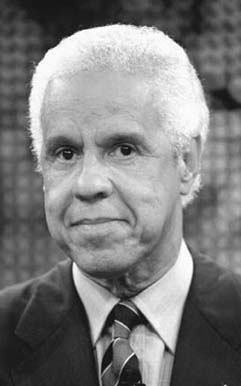
Mannie Garcia, Reuters
Eight states have no elected lieutenant governor: Arizona, Maine, New Hampshire, New Jersey, Oregon, Tennessee, West Virginia, and Wyoming. In Arizona and Wyoming the secretary of state is designated the lieutenant governor. In Maine and Oregon, the state senate president succeeds the governor. In Tennessee the state senate elects one of its members as the dual lieutenant governor and senate Speaker. The remaining three states without lieutenant governors fill gubernatorial vacancies through acting governors, legislative elections, or special elections.
Almost half the states jointly elect the governor and lieutenant governor, as a team by themselves or a team in combination with other elective officers such as the attorney general. Team elections offer greater prospects of harmony between the two highest officers in their working relationship, as well as policy continuity if the governor dies or otherwise leaves office.
...
Get a 30 day FREE TRIAL
-
 Watch videos from a variety of sources bringing classroom topics to life
 -
Read modern, diverse business cases
-
Explore hundreds of books and reference titles

Read next

More like this
Sage Recommends
We found other relevant content for you on other Sage platforms.
Have you created a personal profile? Login or create a profile so that you can save clips, playlists and searches