
Entry
Entries A-Z
Lame Duck
An officeholder weakened by the impending expiration of his or her term is said to be a lame duck. incumbents defeated, not seeking reelection, or barred by law from succeeding themselves fall into this category.
The term originated with the British as an uncharitable description of bankrupt business owners. By the early nineteenth century it was being applied in the United States to “politically bankrupt” elected officials. Patronage jobs they hand out shortly before leaving office are called “lame-duck” appointments.
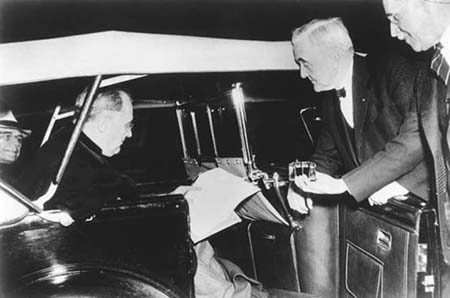
Senate Historical Office
The Twentieth Amendment to the Constitution, ratified in 1933, was named the “lame-duck amendment.” It eased the lame-duck problem by shortening the intervals after presidents and members of Congress are elected and actually take office. (See President, nominating and electing; Senate, electing; Vice president.)
Formerly, presidents and vice presidents had to wait about four months, from election day in November until inauguration on March 4, before they were sworn in. The Twentieth Amendment moved up the swearing-in to January 20, beginning in 1937.
The waiting period for newly elected members of Congress was even longer—thirteen months, from election day to the first Monday in December of the following year. The Twentieth Amendment specified that both sessions of each two-year Congress would begin on January 3, greatly reducing the postelection lame-duck period.
Reelected presidents in effect are lame ducks through out their whole second term. Under the Twenty-second Amendment, ratified in 1951, no president can serve more than two terms. Even if reelected in a landslide, the president must deal with a Congress that is aware the president cannot run again and therefore is hampered in building popular support for initiatives and programs that many in Congress oppose. The situation is even more difficult for the second-term president if the opposing party controls Congress, as happened to President Bill Clinton beginning with the midterm election of 1994 and continuing after his reelection in 1996.
- Twentieth Amendment
- vice president
- elections
- senate
- offices
Get a 30 day FREE TRIAL
-
 Watch videos from a variety of sources bringing classroom topics to life
 -
Read modern, diverse business cases
-
Explore hundreds of books and reference titles

Read next

More like this
Sage Recommends
We found other relevant content for you on other Sage platforms.
Have you created a personal profile? Login or create a profile so that you can save clips, playlists and searches