
Entry
Entries A-Z
House of Representatives, Qualifications
Article I, section 2, of the Constitution set few requirements for election to the U.S. House of Representatives: a member had to be at least twenty-five years of age, have been a U.S. citizen for seven years, and be an inhabitant of the state from which elected. Qualifications for Senate membership are similar. (See Senate, electing; Senate, qualifications.)
Besides age, citizenship, and residency, there were other de facto requirements for House election in the early days of the Republic. They included race, sex, and property. Because the Constitution left it to the states to determine who could vote, this in effect limited House membership to propertied white males.
At first, most states had some kind of property requirement for voting. But the democratic trend of the early nineteenth century swept away most property qualifications, producing practically universal white male suffrage by the 1830s. It would be about forty more years, however, before anyone other than a white male citi-zen could gain membership in the House.
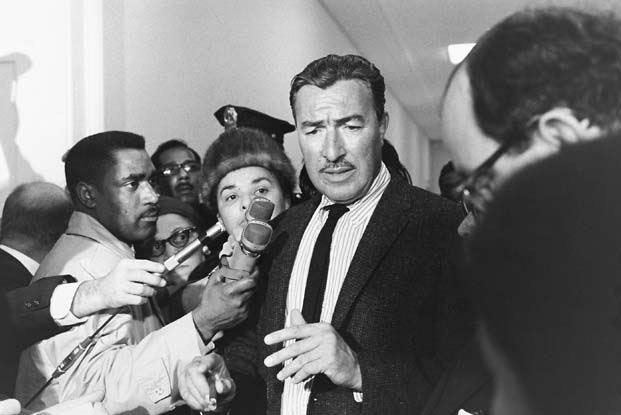
Powell v. McCormack Library of Congress
Gradually, several changes in the Constitution broadened the franchise (the right to vote) in ways that affected House elections. The Fifteenth Amendment (1870) extended the franchise to newly freed slaves; the Nineteenth Amendment (1920) granted women's suffrage; the Twenty-fourth Amendment (1964) abolished the poll tax; and the Twenty-sixth Amendment (1971) broadened youth suffrage, lowering the voting age to eighteen from twenty-one. In 1965 Congress passed the Voting Rights Act to remove barriers several states and localities had erected to keep blacks and other minorities from voting. Other laws and Supreme Court decisions affected black suffrage and racial redistricting.
House Characteristics
Most House members in the 107th Congress (2001–2003) were in their forties and fifties. But over the years the age of individual U.S. representatives has ranged from below the legal minimum to almost eighty-five.
The youngest representative was William Charles Cole Claiborne of Tennessee, who took office in 1797 when he was three years under the minimum age of twenty-five. Apparently no one challenged his being underage.
The oldest representative was Jamie L. Whitten, Mississippi Democrat, who served longer in the House (more than fifty-three years) than anyone else. He was eighty-four years and eight months old when he retired in January 1995. He died nine months later.
A close second to Whitten in age was William H. Natcher, Kentucky Democrat, who was also eighty-four when he died in office on March 29, 1994. Natcher was best known for having an unbroken string of 18,401 House votes, a record number, until he became inactive because of illness shortly before his death.
The first African American representative was Joseph H. Rainey, South Carolina Republican, who served from 1870 to 1879. Another black, John W. Menard of Louisiana, had won a seat in 1868, but the House excluded him because of an election dispute.
Jeannette Rankin, Montana Republican, was the first woman elected to Congress. She served in the House twice, 1917–1919 and 1941–1943, and was the only member of Congress to vote against U.S. entry into both World Wars.
The first African American woman in the House was Shirley Chisholm, New York Democrat, who served from 1969 to 1983. The first Jewish woman member was Bella S. Abzug, New York Democrat, who served three terms after being elected in 1970.
...
Get a 30 day FREE TRIAL
-
 Watch videos from a variety of sources bringing classroom topics to life
 -
Read modern, diverse business cases
-
Explore hundreds of books and reference titles

Read next

More like this
Sage Recommends
We found other relevant content for you on other Sage platforms.
Have you created a personal profile? Login or create a profile so that you can save clips, playlists and searches