
Entry
Entries A-Z
Election Fraud
Fraud is an ever-present danger in elections. Authorities go to great lengths to prevent it through voter registration and other restrictions, yet allegations of vote fraud arise in virtually every election cycle.
Absentee voting is particularly vulnerable to abuse, despite stringent requirements in all the states to en-sure that the ballots are mailed to the proper voter, signed on the outside of the envelope to protect privacy of the vote, and returned by the specified deadline. Absentee ballots have been central to the settling of numerous contested elections.
If the Supreme Court had not intervened to settle the exceedingly close 2000 Florida race between Republican George W. Bush and Democrat Al Gore, several hundred disputed absentee ballots might have been the deciding factor in that election as well. But the Court's 5–4 decision in Bush v. Gore halted the recounts and effectively certified Bush as the winner.
Four days before the Court announced its decision on December 12, 2000, lower courts ruled against Gore in his suits charging absentee ballot illegalities in Florida's Seminole and Martin Counties. There, officials had allowed Republican operatives to correct flaws on absentee ballot applications that had been printed without voter identification numbers. Gore's lawyers argued that the mistake invalidated the ballots. But on December 8 both judges handling the separate cases agreed that although “irregularities” happened the voters were not at fault and that the ballots fairly reflected their will.
American Antiquarian Society
An earlier example of litigation over absentee voting in Florida was Miami's 1997 mayoral race, in which a grand jury found “outright fraud” used against the incumbent mayor. Absentee ballots allegedly were tampered with or sold, voted in the names of dead persons or nonresidents, cast for confused elderly voters, or given to persons who were paid to vote.
Overturning a lower court that ordered a new election, an appeals court invalidated all four thousand absentee ballots and reinstated Miami mayor Joe Carollo, who had lost a close runoff election to Xavier L. Suarez. To do otherwise, the court said, “would be sending out the wrong message that the worst that would happen in the face of voter fraud would be another election.”
Ballot access rules pose another opportunity for election fraud. In a notable case, the 2002 reelection campaign of Washington, D.C., mayor Anthony A. Williams was fined $277,700 for massive fraud and forgery in his nominating petitions to get on the Democratic primary ballot. Ruled off the ballot, Williams won the primary as a write-in candidate and later won reelection. City officials said there were “5,465 obvious forgeries” on Williams's petitions, including names of actor Kelsey Grammer, singer Billy Joel, and United Nations Secretary-General Kofi Annan. Fraudulent signatures included those of persons who circulated the petitions and were supposed to witness every voter's signature.
Reforms and Technology
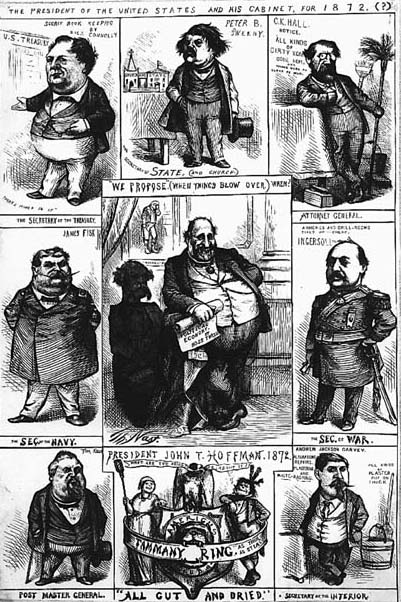
Fraud in conventional voting at the polling place is less common than it was in the late nineteenth and early twentieth centuries during the heyday of big city political bosses such as William M. “Boss” Tweed in New York, James M. Curley in Boston, and Frank Hague in Jersey City. In those days, tales were told of underlings instructed to “vote early and often,” of jobless men paid a dollar or two for each vote, obituary pages used as voting lists, and wardens entering voting booths in the guise of giving assistance and pulling the lever for the party in power. (See Split- and straight-ticket voting.)
...
Get a 30 day FREE TRIAL
-
 Watch videos from a variety of sources bringing classroom topics to life
 -
Read modern, diverse business cases
-
Explore hundreds of books and reference titles

Read next

More like this
Sage Recommends
We found other relevant content for you on other Sage platforms.
Have you created a personal profile? Login or create a profile so that you can save clips, playlists and searches