
Entry
Entries A-Z
Contested Elections
Voter turnout is low in many elections, partly because of a common belief that an individual's vote does not make a difference. Yet U.S. elections occasionally are so close that a few votes one way or the other could change the outcome. In such cases losing candidates frequently contest the result, sometimes successfully.
Library of Congress
The recount may show that election officials mistabulated the paper ballot or voting machine totals. Or there may be evidence of election fraud, with a change of result if enough votes are invalidated. absentee voting may be the deciding factor in a close vote, and the counting of absentee ballots may take days or weeks as the disputants and their lawyers pore over each vote.
Even presidential elections can be extremely close. Although the two-party system and the electoral college almost guarantee that every president and vice president can claim an electoral vote majority, eighteen presidents have been elected with less than 50 percent of the popular vote. They included Bill Clinton in both 1992 and 1996. Four of those eighteen presidents actually lost the popular vote, including George W. Bush in 2000.
Other presidents attained a slight majority, including John F. Kennedy in 1960, but won by such slim margins that a few thousand votes difference in four or five pivotal states could have changed the result. The 1968 and 1976 elections also were in that category.
In 1960 the vote was 34.2 million for Kennedy and 34.1 million for Richard Nixon, a margin of about one-tenth of 1 percent or 115,000 votes. It was so close that Nixon delayed his concession until the afternoon of the next day. But after considering the option during a vacation, Nixon decided against demanding a recount, saying it would take “at least a year and a half” and would throw the federal government into turmoil.
Below the presidential level, contested elections are commonplace. The House and Senate, invoking their constitutional authority to judge the qualifications and elections of their own members, have settled hundreds of contested elections—usually in favor of the candidate of the party in power.
The House, with 435 elections every two years, is governed in elections disputes by the Federal Contested Election Act of 1969. The act defines candidates as those listed on the ballot or as bona fide write-in candidates, thereby eliminating challenges from most candidates denied ballot access by their state. Primary elections are not covered by the act. The Senate, which elects one-third of its one hundred members every two years, has no comparable legislation.
Several disputes arose from congressional, state, and local races in the 1996–1998 election cycle. In the Miami mayoral race such a dispute ended with a reversal of the initial result.
Tightened federal and state laws have reduced the likelihood of vote fraud as a factor in close elections. More recent cases of contested elections have centered on racial and ethnic bias rather than outright fraud as a possible distorting factor.
President
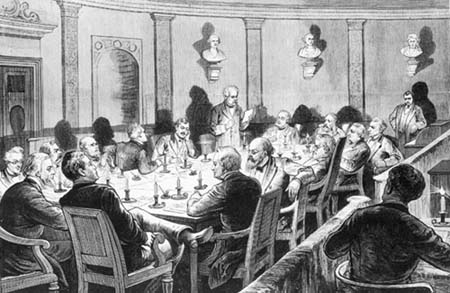
Only twice in U.S. history have popular vote irregularities been at the heart of a contested presidential election. The first time was in the race between Republican Rutherford B. Hayes of Ohio and Democrat Samuel J. Tilden of New York in 1876. The dispute centered on rival sets of electoral votes that resulted from popular vote controversies in three southern states.
...
Get a 30 day FREE TRIAL
-
 Watch videos from a variety of sources bringing classroom topics to life
 -
Read modern, diverse business cases
-
Explore hundreds of books and reference titles

Read next

More like this
Sage Recommends
We found other relevant content for you on other Sage platforms.
Have you created a personal profile? Login or create a profile so that you can save clips, playlists and searches