
Entry
Reader's guide
Entries A-Z
Subject index
Ecstasy
The principal chemical component of ecstasy is MDMA, or 3,4-methylenedioxymethamphetamine. MDMA is a phenethylamine related structurally to amphetamines and mescaline. Having been isolated and experimented with at least a decade previously, MDMA was first described and prepared for patent submission in December 1912. Its patent was issued two years later in Germany to E. Merck Pharmaceuticals. Once manufactured mostly in the laboratories of Holland and Belgium, ecstasy is now also made in the United States, Canada, Germany, Mexico, Brazil, east Asia, and southeast Asia, and is sometimes laced with methamphetamine or other substances. In its pure forms, MDMA's effects combine the loss of inhibitions of alcohol, the auditory intensification of marijuana, the hallucinogenic effects of mild LSD, and the sleep-defying, energy-boosting effects of amphetamines. Because of the somatic and psychological effects it induces, MDMA has been dubbed an “entactogen,” which means “to touch within” in Greek.
In the 1960s and 1970s, psychiatrists, clinicians and users had called MDMA “Adam,” “Empathy,” and “penicillin for the soul.” By the 1980s and 1990s it was called “E,” “X,” and “XTC,” before “ecstasy” was settled upon. Since then, locally specific terms for ecstasy have proliferated as the manufacturing process has been broken into constituent parts and expanded into several countries. Ecstasy tablets are now generally the size of aspirin tablets and come in a variety of shapes and colors, most of them being imprinted with likenesses of butterflies, hearts, doves, arrows, birds, Playboy bunnies, automobiles, Hollywood movies, and cartoon superheroes.
In the late 1970s and early 1980s the Berkeley chemist Alexander Shulgin recorded the results of his and others’ experimentation with MDMA and helped popularize the drug. Medical doctors, psychiatrists, and interested onlookers also occasionally used MDMA to treat clinical symptoms and syndromes including suicidal thoughts, clinical depression, phobias, post-traumatic stress disorder (PTSD), and drug addiction. A leading proponent of the clinical psychological use of MDMA is the South Carolina-based Dr. Michael Mithoefer. In 2001 the U.S. Food and Drug Administration approved his research protocol that proposed to enroll 20 American women who had suffered sexual violence and to provide MDMA and nondrug psychotherapy to 12 women and a placebo and nondrug psychotherapy to another eight. However, it took until 2004 before an Institutional Review Board would sanction his study. From 2004 to 2008, and alongside his psychiatric nurse wife Linda Mithoefer and other colleagues, he carried out this study. They found a high rate of clinical response (10/12, 83 percent) in those who received preparatory nondrug psychotherapy, two eight-hour experimental sessions of MDMA and then follow-up, nondrug psychotherapy, compared with those who received no MDMA (2/8, 25 percent). Study participants experienced no serious adverse events, no significant increases in blood pressure, and no neurocognitive side effects. Having been funded by the Multidisciplinary Association for Psychedelic Studies (MAPS), the Mithoefers have since enrolled 16 military service veterans (male and female) who have been diagnosed with PTSD in the past decade.
The amount of ecstasy in the average tablet, which is likely adulterated with other chemicals, is about 70–100 milligrams.
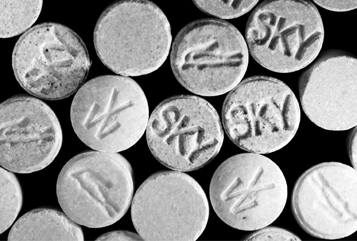
MDMA was experimented with in a number of clinical settings until 1985, when it was classified a Schedule I drug (classed with LSD, cocaine, and heroin as warranting no medical use thereof) after lengthy and acrimonious legal debate. Its eventual illegality has greatly restricted its manufacture and use, but has also changed its cultural status, led to rising prices and wholesale rearrangements in its manufacturing and distribution and perhaps to its growing abuse. Increases in ecstasy use occurred throughout the 1990s in the wake of social movements, the arrival and spread of human immunodeficiency virus and acquired immune deficiency syndrome (HIV and AIDS), technological innovations, accelerated travel, and political developments. Seeming declines in ecstasy use in the United States began to occur at the turn of the millennium and were for several years reported widely. Globally, fewer than one percent of the population between the ages of 16 and 65 use ecstasy; however, rates of use appear to be increasing. Based on United Nations data, Australia has the highest rates of use, with approximately 4 percent of the adult population using ecstasy annually. Additionally, ethnographic, clinical and other evidence suggests that there has been an upsurge in use in the United States since then and that it has spread into new groups, including African American and Hispanic youth. General Population Surveys (GPS) conducted throughout Europe support contentions that ecstasy use has stabilized, perhaps even declined. Nearly 6 percent of young Europeans claim ever to have used it, and 1.7 percent reported having used it in the past year. Only in Sweden and Finland do females report greater use than males. In the United States, estimates of prevalence of use made by the Monitoring the Future surveys suggest declining use but perhaps also sharply declining perceptions of risks of its use between 2008 and 2009. The National Survey on Drug Use and Health reported a steep increase from 2005 to 2008 in first-use, engaged in by 615,000 Americans in the former year but 894,000 American in the latter.
...
- Employment Division v. Smith (1990)
- Gonzales v. O Centro Espirita Beneficente União do Vegetal (2006)
- Gonzales v. Oregon
- Gonzales v. Raich (2005)
- Gore v. United States (1958)
- Indianapolis v. Edmond (2000)
- Jin Fuey Moy v. United States (1920)
- Leary v. United States (1967)
- Lewis v. United States (1966)
- Linder v. United States (1925)
- People v. Woody (1964)
- United States v. Doremus (1919)
- United States v. Jeffers (1951)
- United States v. Kuch (1968)
- United States v. Sanchez (1950)
- United States v. Warner (1984)
- Convention on Psychotropic Substances, 1971
- Narcotics Limitation Convention of 1931
- National Commission on Marijuana and Drug Abuse (1972)
- 1909 Shanghai Conference
- 1912 Hague Conference
- 1925 Geneva Convention on Opium and Other Drugs
- 1946 Revision of the Harrison Act
- Single Convention on Narcotic Drugs, 1961
- United Nations Convention Against the Illicit Traffic in Narcotic Drugs
- Afghanistan
- Algeria
- Argentina
- Australia
- Azerbaijan
- Bahamas
- Bangladesh
- Belarus
- Belize
- Benin
- Bolivia
- Brazil
- Cambodia
- Canada
- Chile
- China
- Colombia
- Congo
- Costa Rica
- Cuba
- Denmark
- Dominican Republic
- Ecuador
- Egypt
- El Salvador
- France
- Germany
- Ghana
- Greece
- Guatemala
- Haiti
- Honduras
- Hong Kong
- India
- Indonesia
- Iran
- Iraq
- Ireland
- Israel
- Italy
- Jamaica
- Japan
- Jordan
- Kazakhstan
- Kenya
- Korea, South
- Kyrgyzstan
- Lao PDR
- Lebanon
- Libya
- Malaysia
- Mexico
- Morocco
- Myanmar
- Netherlands
- New Zealand
- Nicaragua
- Nigeria
- Pakistan
- Panama
- Papua New Guinea
- Paraguay
- Peru
- Philippines
- Poland
- Portugal
- Romania
- Russia
- Saudi Arabia
- Senegal
- Singapore
- South Africa
- Spain
- Sweden
- Switzerland
- Tajikistan
- Thailand
- Tunisia
- Turkey
- Uganda
- Ukraine
- United Kingdom
- United States
- Uruguay
- Uzbekistan
- Venezuela
- Vietnam
- Yemen
- Anti-Drug Operations, Pre-1960s
- Anti-Drug Operations, 1960s
- Anti-Drug Operations, 1970s
- Anti-Drug Operations, 1980s
- Anti-Drug Operations, 1990s
- Anti-Drug Operations, 2000s
- Asset Forfeiture
- Cocaine Cartels
- Data Collection Systems
- Drug Trafficking and Political Movements
- Drugs and Money Laundering
- Drugs and Terrorism
- Drugs-Crime Connection
- Golden Crescent
- Golden Triangle
- Prices and Volumes in Illicit Markets, Theories of
- Set and Setting
- Alabama Laws and Programs
- Alaska Laws and Programs
- Alcohol and Drug Abuse Education Amendments (1978)
- Analogue (Designer Drug) Act
- Anti-Drug Abuse Act (Drug-Free America Act)
- Anti-Drug Abuse Amendment Act
- Anti-Drug War Movement
- Arizona Laws and Programs
- Arkansas Laws and Programs
- Aviation Drug-Trafficking Control Act
- Boggs Act
- California Laws and Programs
- Colorado Laws and Programs
- Community Mental Health Centers Act
- Comprehensive Crime Control Act of 1984
- Comprehensive Drug Abuse Prevention and Control Act
- Comprehensive Methamphetamine Control Act
- Connecticut Laws and Programs
- Controlled Substance Registrant Protection Act
- Controlled Substances Import and Export Act
- Controlled Substances Penalties Amendments Act
- Criminal Justice/Enforcement Strategies of Drug Control
- Dangerous Drug Diversion Control Act
- Delaware Laws and Programs
- Demand-Side Policies
- Diversion Programs
- Drug Abuse Control Amendments (1965)
- Drug Courts
- Drug Policies: General Strategies
- Drug Policy Effects on Rates of Crime
- Drug Policy Effects on Rates of Drug-Related Illnesses
- Drug Policy Effects on Rates of Drug-Related Injuries
- Drug Policy Effects on Rates of Incarceration
- Drug Policy Effects on Rates of Use
- Drug-Free Communities Act
- Drugs and the Death Sentence
- Durham-Humphrey Act
- Ecstasy Anti-Proliferation Act
- Eighteenth Amendment to the U.S. Constitution
- Elite Model of Drug Laws
- Elite-Engineered Moral Panics
- Florida Laws and Programs
- Food and Drug Administration
- Georgia Laws and Programs
- Grassroots Model of Drug Laws
- Grassroots Moral Panics
- Group Model of Drug Laws
- Harrison Act
- Hawaii Laws and Programs
- Heroin Trafficking Act
- Idaho Laws and Programs
- Illicit Drug Anti-Proliferation Act
- Illinois Laws and Programs
- Indiana Laws and Programs
- International Drug Policies: Eradication of Narcotic Crops
- International Drug Policies: Interdiction and Law Enforcement
- International Drug Policies: International Cooperation
- International Drug Policies: Sanctions/Economic Assistance
- Iowa Laws and Programs
- “Just Say No”
- Kansas Laws and Programs
- Kentucky Laws and Programs
- Louisiana Laws and Programs
- Maine Laws and Programs
- Mandatory Sentencing
- Marihuana Tax Act (1937)
- Maryland Laws and Programs
- Massachusetts Laws and Programs
- Methadone Control Act
- Michigan Laws and Programs
- Minnesota Laws and Programs
- Mississippi Laws and Programs
- Missouri Laws and Programs
- Montana Laws and Programs
- Moral Panics and Drug Laws
- Narcotic Addict Rehabilitation Act
- Narcotic Control Act
- Narcotic Drug Act
- Narcotic Drug Import and Export Act
- Narcotics Manufacturers Act
- National Narcotics Act
- Native Races Act
- Nebraska Laws and Programs
- Nevada Laws and Programs
- New Hampshire Laws and Programs
- New Jersey Laws and Programs
- New Mexico Laws and Programs
- New York Laws and Programs
- 1946 Revision of Harrison Act
- North Carolina Laws and Programs
- North Dakota Laws and Programs
- Office of National Drug Control Policy Reauthorization Act
- Ohio Laws and Programs
- Oklahoma Laws and Programs
- Omnibus Drug Abuse Act
- Opium Poppy Control Act
- Oregon Laws and Programs
- Pennsylvania Laws and Programs
- Policies Regulating Alcohol, U.S.
- Policies Regulating Pharmaceutical Drugs, U.S.
- Policies Regulating Tobacco, U.S.
- Policing Techniques in the War on Drugs
- Porter Narcotic Farm Act
- Pure Food and Drug Act
- Reducing Americans' Vulnerability to Ecstasy Act (RAVE Act)
- Religious Freedom and Drug Laws
- Rhode Island Laws and Programs
- Rockefeller Laws
- Schedule of Controlled Substances
- South Carolina Laws and Programs
- South Dakota Laws and Programs
- Supply-Side Policies
- Tennessee Laws and Programs
- Testing and Sanctions
- Texas Laws and Programs
- Twenty-First Amendment to the U.S. Constitution
- Uniform State Narcotics Act
- Utah Laws and Programs
- Vermont Laws and Programs
- Virginia Laws and Programs
- Volstead Act
- “War on Drugs”
- Washington Laws and Programs
- Webb-Kenyon Act
- West Virginia Laws and Programs
- Wisconsin Laws and Programs
- Workplace: Drug-Free Policy
- Workplace: Role, Prevention, and Programs
- Wyoming Laws and Programs
- Zero Tolerance
- Alcoholics Anonymous
- Anti-Drug Grassroots Organizations
- Anti-Tobacco Campaigns
- Armed Forces
- Bureau of Drug Abuse Control
- Bureau of Narcotics and Dangerous Drugs
- D.A.R.E.
- Drug Enforcement Administration
- Drug Treatment Programs
- Federal Bureau of Narcotics
- International Drug Agencies
- International Narcotics Control Board
- Narcotics Anonymous
- National Organization for Reform of Marijuana Laws
- Office of Drug Abuse Law Enforcement
- Office of National Drug Control Policy
- Office of National Narcotics Intelligence
- Partnership for a Drug-Free America
- President's Advisory Commission on Narcotics and Drug Abuse (Prettyman)
- Secular Organizations for Sobriety
- Social Movements Against Drunken Driving
- Temperance Movement
- United Nations Office on Drugs and Crime
- U.S. Department of State Bureau of International Narcotics and Law Enforcement Affairs
- Women for Sobriety
- Ambrose, Myles
- Anslinger, Harry
- Bartels, John
- Bennett, William
- Bensinger, Peter
- Bonner, Robert
- Bourne, Peter
- Brown, Lee
- Constantine, Thomas
- Dupont, Robert
- Giordano, Henry
- Greene, Stephen
- Hutchinson, Asa
- Ingersoll, John
- Kerlikowske, Gil
- Lawn, John
- Leonhart, Michele
- Lindesmith, Alfred
- Marshall, Donnie
- Martinez, Bob
- McCaffrey, Barry R.
- Mill, John Stuart
- Mullen, Francis
- Sullivan, William
- Tandy, Karen
- Turner, Carlton
- Walters, John
- Bush Administration, George H. W.
- Bush Administration, George W.
- Carter Administration, James
- Clinton Administration, William
- Coolidge Administration, Calvin
- Eisenhower Administration, Dwight
- Ford Administration, Gerald
- Harding Administration, Warren
- Hoover Administration, Herbert
- Johnson Administration, Lyndon
- Kennedy Administration, John F.
- Nixon Administration, Richard
- Obama Administration, Barack
- Presidential Administrations Prior to Federal Drug Regulation
- Reagan Administration, Ronald
- Roosevelt Administration, Franklin D.
- Roosevelt Administration, Theodore
- Taft Administration, William Howard
- Truman Administration, Harry
- Wilson Administration, Woodrow
- Addiction Maintenance
- Coerced Drug Treatment
- Disease Model of Use
- Drug Abuse Warning Network
- Drug Testing
- Drug Treatment Programs
- Evaluative Evidence of Prevention Programs
- Evaluative Evidence of Rehab/Treatment Programs
- Group Therapy
- Harm Reduction
- Inpatient Treatment Programs
- Laboratory Techniques
- Needle Exchange Programs
- Prescription Drug Abuse
- Prevention Programs
- Rational Addiction Model of Drug Use
- Rehabilitation/Treatment Programs
- Safe Injection Rooms
- Single Distribution Theory of Consumption
- SMART Recovery
- 12-Step Recovery Programs
- Alcohol
- Amphetamines
- Antagonist Medications
- Barbiturates
- Caffeine
- Club Drugs
- Cocaine
- Crack
- Ecstasy
- Freebase
- Hallucinogens
- Heroin
- Inhalants
- Ketamine
- Khat
- LSD
- Marijuana
- Methadone
- Methamphetamine
- Morphine
- Over-the-Counter Drugs
- Salvia Divinorum
- Sedatives
- Steroids
- Synthetic Narcotics
- Tobacco
- Loading...
Get a 30 day FREE TRIAL
-
 Watch videos from a variety of sources bringing classroom topics to life
 -
Read modern, diverse business cases
-
Explore hundreds of books and reference titles

Read next

More like this
Sage Recommends
We found other relevant content for you on other Sage platforms.
Have you created a personal profile? Login or create a profile so that you can save clips, playlists and searches