
Entry
Reader's guide
Entries A-Z
Subject index
Afghanistan
Afghanistan has served throughout its history as a vital point for human migration and international trade. As a result of its geographic location bordering China, Iran, Pakistan, Tajikistan, Turkmenistan, and Uzbekistan, Afghanistan has long been the target of potential invasions and conquests by those nations eager to control it. Many of these invasions have been spurred by Afghanistan's numerous natural resources. Afghanistan has rich deposits of gold, silver, zinc, and iron ore in the southeast area of the nation. Petroleum and natural gas are found in the north. A collection of natural riches including uranium, coal, sulfur, and lead exist throughout the rest of the nation. As a result of the Soviet intervention of the 1980s, the subsequent civil war, and conflict with the United States, many of these natural resources remain untapped. One of the poorest nations in the world, poppy cultivation and opium production represent over one-third of Afghanistan's gross domestic product. Although Soviet authorities, the United States, various Afghan governments, and others have attempted to eradicate opium production since 1980, these efforts have proved mostly unsuccessful. As a result, Afghanistan remains the largest producer of illegal opium.
The population of Afghanistan is approximately 28 million. This population is composed of a multiethnic and multilingual society that has emerged because of its historical location between popular trade routes. The official languages are Pashto and Persian. Despite the multiple languages and ethnicities within the country, 99 percent of the country remains of the Islamic faith, with 80 percent belonging to the Sunni branch and 19 percent adhering to the Shia group. The influence of Islam grew during the Soviet invasion and served as the basis for opposition to the invaders. Islamic traditions, codes, and practices serve as the main means for enforcing personal conduct and settling legal disputes.
Golden Crescent
The Golden Crescent is the name given to Asia's principal area of opium production. This area spans three different countries—Afghanistan, Iran, and Pakistan. The geography of this region suggested the name, with the mountainous peripheries forming the boundaries of the golden crescent. In this area, Afghanistan and Pakistan are the sole producers of opium, with Iran being a transnational transporter for the smuggled opiates. In 1991 Afghanistan became the world's leading opium producer. The Golden Crescent's rise to dominance came from government-imposed eradication and poor growing seasons in Myanmar, which historically had been the primary source of opium. The Golden Crescent's history is short; emerging in the 1970s as an opium production entity, it came to surpass the more well-known Golden Triangle of southeast Asia that began producing large amounts of opium during the 1950s. Due to domestic political instability, and the demand in surrounding regions, Afghanistan now produces 90 percent of the world's opium. In addition, Afghanistan is also the largest producer of hashish, more commonly known as hash, which is a form of cannabis containing the same active ingredients, but in a higher concentration.
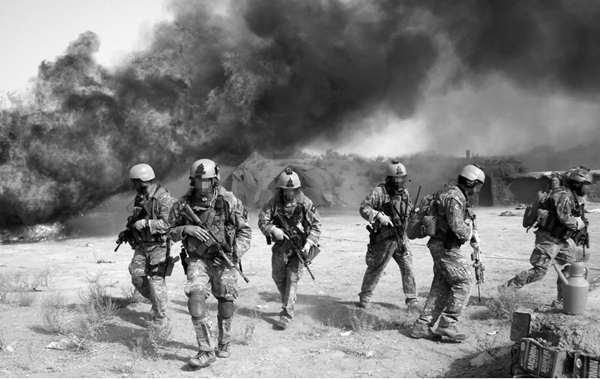
This Drug Enforcement Administration photo shows Afghan troops and DEA special agents (whose identities have been obscured) destroying bunkers filled with 262 tons of hashish during a joint operation in Spin Boldak, Kandahar Province, in June 2008.
Afghanistan's Opium Production
Afghanistan has a long history of producing opium poppies. The cultivation of poppies grew beginning in 1979, when the Union of Soviet Socialist Republics (USSR) invaded Afghanistan. As a result of this struggle, the Afghan government was able to exercise less control over its provinces. This decreased central government authority resulted in the growing strength of various warlords who roamed the provinces. As the warlords sought money necessary to purchase weapons to resist the Soviet-funded government troops, opium production increased as a means to finance the resistance. The United States opposed Soviet intervention in Afghanistan and provided military and other support to insurgents opposed to the Soviet-supported Afghan government. As part of its support of anti-Soviet operations, the U.S. Central Intelligence Agency (CIA) was alleged to have participated in the smuggling of opium to assist the warlords to gain needed funds.
...
- Employment Division v. Smith (1990)
- Gonzales v. O Centro Espirita Beneficente União do Vegetal (2006)
- Gonzales v. Oregon
- Gonzales v. Raich (2005)
- Gore v. United States (1958)
- Indianapolis v. Edmond (2000)
- Jin Fuey Moy v. United States (1920)
- Leary v. United States (1967)
- Lewis v. United States (1966)
- Linder v. United States (1925)
- People v. Woody (1964)
- United States v. Doremus (1919)
- United States v. Jeffers (1951)
- United States v. Kuch (1968)
- United States v. Sanchez (1950)
- United States v. Warner (1984)
- Convention on Psychotropic Substances, 1971
- Narcotics Limitation Convention of 1931
- National Commission on Marijuana and Drug Abuse (1972)
- 1909 Shanghai Conference
- 1912 Hague Conference
- 1925 Geneva Convention on Opium and Other Drugs
- 1946 Revision of the Harrison Act
- Single Convention on Narcotic Drugs, 1961
- United Nations Convention Against the Illicit Traffic in Narcotic Drugs
- Afghanistan
- Algeria
- Argentina
- Australia
- Azerbaijan
- Bahamas
- Bangladesh
- Belarus
- Belize
- Benin
- Bolivia
- Brazil
- Cambodia
- Canada
- Chile
- China
- Colombia
- Congo
- Costa Rica
- Cuba
- Denmark
- Dominican Republic
- Ecuador
- Egypt
- El Salvador
- France
- Germany
- Ghana
- Greece
- Guatemala
- Haiti
- Honduras
- Hong Kong
- India
- Indonesia
- Iran
- Iraq
- Ireland
- Israel
- Italy
- Jamaica
- Japan
- Jordan
- Kazakhstan
- Kenya
- Korea, South
- Kyrgyzstan
- Lao PDR
- Lebanon
- Libya
- Malaysia
- Mexico
- Morocco
- Myanmar
- Netherlands
- New Zealand
- Nicaragua
- Nigeria
- Pakistan
- Panama
- Papua New Guinea
- Paraguay
- Peru
- Philippines
- Poland
- Portugal
- Romania
- Russia
- Saudi Arabia
- Senegal
- Singapore
- South Africa
- Spain
- Sweden
- Switzerland
- Tajikistan
- Thailand
- Tunisia
- Turkey
- Uganda
- Ukraine
- United Kingdom
- United States
- Uruguay
- Uzbekistan
- Venezuela
- Vietnam
- Yemen
- Anti-Drug Operations, Pre-1960s
- Anti-Drug Operations, 1960s
- Anti-Drug Operations, 1970s
- Anti-Drug Operations, 1980s
- Anti-Drug Operations, 1990s
- Anti-Drug Operations, 2000s
- Asset Forfeiture
- Cocaine Cartels
- Data Collection Systems
- Drug Trafficking and Political Movements
- Drugs and Money Laundering
- Drugs and Terrorism
- Drugs-Crime Connection
- Golden Crescent
- Golden Triangle
- Prices and Volumes in Illicit Markets, Theories of
- Set and Setting
- Alabama Laws and Programs
- Alaska Laws and Programs
- Alcohol and Drug Abuse Education Amendments (1978)
- Analogue (Designer Drug) Act
- Anti-Drug Abuse Act (Drug-Free America Act)
- Anti-Drug Abuse Amendment Act
- Anti-Drug War Movement
- Arizona Laws and Programs
- Arkansas Laws and Programs
- Aviation Drug-Trafficking Control Act
- Boggs Act
- California Laws and Programs
- Colorado Laws and Programs
- Community Mental Health Centers Act
- Comprehensive Crime Control Act of 1984
- Comprehensive Drug Abuse Prevention and Control Act
- Comprehensive Methamphetamine Control Act
- Connecticut Laws and Programs
- Controlled Substance Registrant Protection Act
- Controlled Substances Import and Export Act
- Controlled Substances Penalties Amendments Act
- Criminal Justice/Enforcement Strategies of Drug Control
- Dangerous Drug Diversion Control Act
- Delaware Laws and Programs
- Demand-Side Policies
- Diversion Programs
- Drug Abuse Control Amendments (1965)
- Drug Courts
- Drug Policies: General Strategies
- Drug Policy Effects on Rates of Crime
- Drug Policy Effects on Rates of Drug-Related Illnesses
- Drug Policy Effects on Rates of Drug-Related Injuries
- Drug Policy Effects on Rates of Incarceration
- Drug Policy Effects on Rates of Use
- Drug-Free Communities Act
- Drugs and the Death Sentence
- Durham-Humphrey Act
- Ecstasy Anti-Proliferation Act
- Eighteenth Amendment to the U.S. Constitution
- Elite Model of Drug Laws
- Elite-Engineered Moral Panics
- Florida Laws and Programs
- Food and Drug Administration
- Georgia Laws and Programs
- Grassroots Model of Drug Laws
- Grassroots Moral Panics
- Group Model of Drug Laws
- Harrison Act
- Hawaii Laws and Programs
- Heroin Trafficking Act
- Idaho Laws and Programs
- Illicit Drug Anti-Proliferation Act
- Illinois Laws and Programs
- Indiana Laws and Programs
- International Drug Policies: Eradication of Narcotic Crops
- International Drug Policies: Interdiction and Law Enforcement
- International Drug Policies: International Cooperation
- International Drug Policies: Sanctions/Economic Assistance
- Iowa Laws and Programs
- “Just Say No”
- Kansas Laws and Programs
- Kentucky Laws and Programs
- Louisiana Laws and Programs
- Maine Laws and Programs
- Mandatory Sentencing
- Marihuana Tax Act (1937)
- Maryland Laws and Programs
- Massachusetts Laws and Programs
- Methadone Control Act
- Michigan Laws and Programs
- Minnesota Laws and Programs
- Mississippi Laws and Programs
- Missouri Laws and Programs
- Montana Laws and Programs
- Moral Panics and Drug Laws
- Narcotic Addict Rehabilitation Act
- Narcotic Control Act
- Narcotic Drug Act
- Narcotic Drug Import and Export Act
- Narcotics Manufacturers Act
- National Narcotics Act
- Native Races Act
- Nebraska Laws and Programs
- Nevada Laws and Programs
- New Hampshire Laws and Programs
- New Jersey Laws and Programs
- New Mexico Laws and Programs
- New York Laws and Programs
- 1946 Revision of Harrison Act
- North Carolina Laws and Programs
- North Dakota Laws and Programs
- Office of National Drug Control Policy Reauthorization Act
- Ohio Laws and Programs
- Oklahoma Laws and Programs
- Omnibus Drug Abuse Act
- Opium Poppy Control Act
- Oregon Laws and Programs
- Pennsylvania Laws and Programs
- Policies Regulating Alcohol, U.S.
- Policies Regulating Pharmaceutical Drugs, U.S.
- Policies Regulating Tobacco, U.S.
- Policing Techniques in the War on Drugs
- Porter Narcotic Farm Act
- Pure Food and Drug Act
- Reducing Americans' Vulnerability to Ecstasy Act (RAVE Act)
- Religious Freedom and Drug Laws
- Rhode Island Laws and Programs
- Rockefeller Laws
- Schedule of Controlled Substances
- South Carolina Laws and Programs
- South Dakota Laws and Programs
- Supply-Side Policies
- Tennessee Laws and Programs
- Testing and Sanctions
- Texas Laws and Programs
- Twenty-First Amendment to the U.S. Constitution
- Uniform State Narcotics Act
- Utah Laws and Programs
- Vermont Laws and Programs
- Virginia Laws and Programs
- Volstead Act
- “War on Drugs”
- Washington Laws and Programs
- Webb-Kenyon Act
- West Virginia Laws and Programs
- Wisconsin Laws and Programs
- Workplace: Drug-Free Policy
- Workplace: Role, Prevention, and Programs
- Wyoming Laws and Programs
- Zero Tolerance
- Alcoholics Anonymous
- Anti-Drug Grassroots Organizations
- Anti-Tobacco Campaigns
- Armed Forces
- Bureau of Drug Abuse Control
- Bureau of Narcotics and Dangerous Drugs
- D.A.R.E.
- Drug Enforcement Administration
- Drug Treatment Programs
- Federal Bureau of Narcotics
- International Drug Agencies
- International Narcotics Control Board
- Narcotics Anonymous
- National Organization for Reform of Marijuana Laws
- Office of Drug Abuse Law Enforcement
- Office of National Drug Control Policy
- Office of National Narcotics Intelligence
- Partnership for a Drug-Free America
- President's Advisory Commission on Narcotics and Drug Abuse (Prettyman)
- Secular Organizations for Sobriety
- Social Movements Against Drunken Driving
- Temperance Movement
- United Nations Office on Drugs and Crime
- U.S. Department of State Bureau of International Narcotics and Law Enforcement Affairs
- Women for Sobriety
- Ambrose, Myles
- Anslinger, Harry
- Bartels, John
- Bennett, William
- Bensinger, Peter
- Bonner, Robert
- Bourne, Peter
- Brown, Lee
- Constantine, Thomas
- Dupont, Robert
- Giordano, Henry
- Greene, Stephen
- Hutchinson, Asa
- Ingersoll, John
- Kerlikowske, Gil
- Lawn, John
- Leonhart, Michele
- Lindesmith, Alfred
- Marshall, Donnie
- Martinez, Bob
- McCaffrey, Barry R.
- Mill, John Stuart
- Mullen, Francis
- Sullivan, William
- Tandy, Karen
- Turner, Carlton
- Walters, John
- Bush Administration, George H. W.
- Bush Administration, George W.
- Carter Administration, James
- Clinton Administration, William
- Coolidge Administration, Calvin
- Eisenhower Administration, Dwight
- Ford Administration, Gerald
- Harding Administration, Warren
- Hoover Administration, Herbert
- Johnson Administration, Lyndon
- Kennedy Administration, John F.
- Nixon Administration, Richard
- Obama Administration, Barack
- Presidential Administrations Prior to Federal Drug Regulation
- Reagan Administration, Ronald
- Roosevelt Administration, Franklin D.
- Roosevelt Administration, Theodore
- Taft Administration, William Howard
- Truman Administration, Harry
- Wilson Administration, Woodrow
- Addiction Maintenance
- Coerced Drug Treatment
- Disease Model of Use
- Drug Abuse Warning Network
- Drug Testing
- Drug Treatment Programs
- Evaluative Evidence of Prevention Programs
- Evaluative Evidence of Rehab/Treatment Programs
- Group Therapy
- Harm Reduction
- Inpatient Treatment Programs
- Laboratory Techniques
- Needle Exchange Programs
- Prescription Drug Abuse
- Prevention Programs
- Rational Addiction Model of Drug Use
- Rehabilitation/Treatment Programs
- Safe Injection Rooms
- Single Distribution Theory of Consumption
- SMART Recovery
- 12-Step Recovery Programs
- Alcohol
- Amphetamines
- Antagonist Medications
- Barbiturates
- Caffeine
- Club Drugs
- Cocaine
- Crack
- Ecstasy
- Freebase
- Hallucinogens
- Heroin
- Inhalants
- Ketamine
- Khat
- LSD
- Marijuana
- Methadone
- Methamphetamine
- Morphine
- Over-the-Counter Drugs
- Salvia Divinorum
- Sedatives
- Steroids
- Synthetic Narcotics
- Tobacco
- Loading...
Get a 30 day FREE TRIAL
-
 Watch videos from a variety of sources bringing classroom topics to life
 -
Read modern, diverse business cases
-
Explore hundreds of books and reference titles

Read next

More like this
Sage Recommends
We found other relevant content for you on other Sage platforms.
Have you created a personal profile? Login or create a profile so that you can save clips, playlists and searches