
Entry
Reader's guide
Entries A-Z
Subject index
Homeschooling and Diversity
Homeschooling refers to the education of a school-aged child mainly by parents in an educational environment other than a public school system or a private institutional school. The practice of home-based education is millennia old, but it experienced a renaissance beginning in the late 20th century. For about 20 years after it reemerged in the 1980s, observers associated homeschooling with either left-leaning counter-culturists or right-tending conservative Christians. Some assume that children who are home-schooled will have inadequate instruction in math, or that gifted children who are home-schooled will be socially hindered. Some German government officials are worried that home-schooling will cause parallel societies to exist and create social disunity. However, the home-educating community is diverse in many ways. Homeschool research and observation of this population tells a different story from the limited experience-based stereotypes and philosophical biases some have regarding those involved in home-based education. One might ask what research tells the world about this age-old pedagogical practice. What is the extent and nature of diversity among home-educating households and homeschool communities, and the children and youth within them?
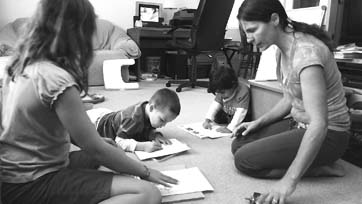
These parents use lesson plans from the Excellence in Education Resource Center in Monrovia, California, which is the largest homeschooling bookstore and resource center in the state.
Brief History and “Typical” Demographics
Although home-based education has existed for thousands of years, only about 13,000 students in grades kindergarten to 12 were being home-schooled in the United States by the late 1970s. The practice of homeschooling was rekindled during the 1980s, promoted by individual parents and educational thinkers with a variety of backgrounds in pedagogical philosophies and religious world-views. Growing to an estimated 1,730,000 to 2,350,000 students by spring 2010, home-based education is perhaps the fastest-growing form of education, compared to public and private institutional schooling.
Much research has addressed why parents and youth choose home education. According to the National Home Education Research Institute, the most common reasons are the following:
customize the curriculum and learning environment for each child,
accomplish more academically than in schools,
use pedagogical approaches other than those typical in institutional schools,
enhance intra-family relationships,
provide guided and reasoned social interactions with peers and adults,
provide a safer environment for children, and
teach and impart a particular set of values, beliefs, and worldviews to children different from those taught in public schools.
Although measures of central tendency mask the variety of people involved in home education, the following descriptions give a glimpse of the current homeschool population in the United States:
- Father and mother are actively involved in home education, with the mother usually the main academic teacher.
- A married, male–female couple head the large majority of families.
- The learning program is flexible and highly individualized, using a variety of materials.
- Home-educated students generally have little interaction with state-run schools or their services.
- Children study a wide range of conventional subjects, with an emphasis on reading, writing, math, science, and faith.
- Most students are engaged in activities outside the home such as volunteer community work, learning cooperatives, internships, travel, and sports.
- Most of the children are home-educated for at least 5 years; most parents intend to home-school their children through secondary school.
- Homeschool families are typically larger than average, with three or more children.
- Male and female students are equally represented.
- Homeschool students score, on average, 15 to 30 percentile points above public-school students on standardized academic achievement tests.
- Home-educated children and youth perform, on average, as well as or better than institutional school students on measures of social, emotional, and psychological development.
- About half of homeschool parents have earned a bachelor's degree or higher.
- The median household income is close to the median for U.S. families with school-age children.
- Over 75% of the parents regularly attend religious services. The majority are Christians who place a strong emphasis on orthodox and conservative Biblical doctrine.
- About 85% are White/non-Hispanic.
An Assortment of Variables
Although accurate, the summary above obscures the rich variety to be found in homeschool households and communities. The following sections reveal the diversity in homeschooling.
...
- Alternative Assessments
- Charter Schools and Minority Achievement
- Criminal Justice System, Schools in the
- Distance Education and Diversity
- E-Learning and Underserved Students
- Freedom of Speech, Fundamentalist Schools and
- Homeschooling and Diversity
- International Schools and Cultural Diversity
- Magnet Schools and Resegregation
- Online Assessment and Diverse Learners
- Privatization and Minority Student Achievement
- Tuition Tax Credits and Equity
- Vouchers and Equal Opportunity
- African-Centered Education
- Afrocentricity
- Agency and Empowerment
- Aging, Social and Cultural Perspectives
- Agricultural Education, Diversity in
- Arts in Education, Impact and Inequalities
- Business, Diversity, and Education
- Children's Literature, Diversity, and Education
- Complex Instruction
- Critical Pedagogy
- Critical Perspectives on Race and Schooling
- Cross-Cultural Competence in Education
- Cultural Competence
- Cultural Competence and Youth Literature
- Cultural Consciousness
- Cultural Content
- Cultural Contextuality
- Cultural Hybridity
- Cultural Modeling
- Culturally Anchored Liberal Education
- Culture and Education
- Culture and Literacy
- Curriculum Transformation, Higher Education
- Curriculum Transformation, K–12
- Cyberbullying
- Demographic Divide in U.S. Schools
- Diversity: A Contested Concept
- Diversity in Curricula in the Middle East
- Ethnic and Cultural Diversity in Education, Historical Perspectives
- Ethnomathematics
- Eurocentricism in the United States
- Facing History and Ourselves
- Gender Bias and Curriculum
- Gender Equity and Mathematics Education
- Historiography, Diversity, and Education
- Indigenous Knowledge and Science Education
- Indigenous Knowledge and Skills
- Informal Learning
- Knowledge, Types of
- Learning Science in Informal Environments
- Learning Styles
- Life-Long, Life-Wide, and Life-Deep Learning
- Linguistic Hybridity
- Low-Income Students, Education of
- Marginality in Education
- Mathematics, Collaborative Learning in
- Mathematics Education and Diversity
- Math–Gender Stereotypes in Elementary School Children
- Media, Curriculum, and Teaching
- Multicultural Education, Definitions and Curriculum Standards
- Music Education and Diversity
- Nomadic Populations in the Middle East, Curriculum for
- Popular Culture and Curriculum
- Positioning, Situated Learning, and Identity Formation
- Postmodernism
- Race, Teaching About
- Religion, Curriculum Issues
- Religion in Public School Curricula in the Middle East
- Resiliency, Identity, and Competence
- Resistance Theory
- SEED (Seeking Educational Equity and Diversity) Project on Inclusive Curriculum
- Social Context
- Social Justice and Power, Teaching About
- Social Reconstruction and Education
- Student Activism
- Success for All
- Talent Development Model of Schooling
- Teacher Expectations
- Teaching, Learning, and Schooling in Social Contexts
- Third Space and Sociocritical Literacy
- United States, Multicultural Education in
- Urban Schools, Effective Practices in
- Voice and Visibility
- White Privilege and Education
- World-Mindedness and Global Citizenship
- Americans with Disabilities Act of 1990
- Assessment in Special and Inclusive Education
- Assistive Technology in Special Education
- Attention Deficit Hyperactivity Disorder
- Children With Special Needs in the Middle East
- Culturally Responsive Teaching and Special Education
- Deafness and Hearing Loss
- Disabilities, Physical and Health-Related
- Disabilities, Severe and Multiple
- Disability Policy
- Disability Studies
- Diversity, Exceptionality, and Knowledge Construction
- Emotional and Behavioral Disabilities
- Free Appropriate Public Education
- Gifted and Talented Students
- Gifted Education in Asia
- Gifted Education, Diversity, and Underrepresentation
- Gifted Students and Gender
- Inclusion and Inclusive Practices in Special Education
- Inclusive Education, International Perspectives
- Individualized Education Program (IEP)
- Individuals with Disabilities Education Act (IDEA)
- Intellectual Disability and Mental Retardation
- Learners With Special Needs, Teaching Strategies for
- Learning Disabilities, Social Categories, and Educational Practices
- Learning Disability
- Least Restrictive Environment (LRE)
- Mainstreaming
- Multicultural Special Education
- Racial/Ethnic Disproportionality in Special Education
- Response to Intervention/Response to Instruction (RTI)
- Section 504 of the Rehabilitation Act of 1973
- Special Education
- Special Education and Inclusive Education in Europe
- Special Education and Students of Color
- Special Education in Europe, Overrepresentation of Minority Students
- Special Education, Teacher Education, and Diversity
- Students With Disabilities, Accommodations for in Testing
- Students With Disabilities, Testing of
- Students With Special Needs, Teacher Preparation for Diversity
- Transition From Adolescence to Adulthood, Disability and
- Visual Impairments
- African American Families and Education
- Children With Disabilities, Families, and Public Institutions
- Civic Engagement in the Community
- Community in the Classroom
- Community-Based Supports for Urban Youth
- Community–School Partnerships
- Demography, Family
- Divorce, Effects on Children
- Education and Family Diversity
- Empowerment Zones and Student Achievement
- Families and Schools
- Families of Children With Disabilities
- Family, the
- Family Diversity
- Family Diversity and School–Family Relationships
- Family Structure and Academic Achievement
- Fathers, Role in Families and Education
- Foster and Adoptive Families
- Homework in Diverse Families
- Latin American Families in the United States
- Literacy Practices in Minority Families and Communities
- Out-of-School Learning and Family Involvement
- Parenting Young Children
- Parent–Teacher Communication
- Poverty, Families, and Schools
- Raising Children in a Diverse Society
- Socialization and Education
- Stepfamilies, Effects on the Education of Children
- African American Males, Education of
- African Americans and Gender
- Aggression
- Athletics, Sports, Physical Education, and Gender Equity
- Black Women's Studies
- China, Educational Equality for Ethnic Women
- Coed Higher Education
- Early Childhood Education and Gender
- Eating Disorders and Body Image
- Education and Transgender Diversity in Asia
- Educational Leadership and Gender
- Fag Discourse
- Feminist Movement
- Feminization of Teaching
- Gay, Lesbian and Straight Education Network (GLSEN)
- Gender and Civic Education
- Gender and Learning
- Gender and Teacher–Student Interaction
- Gender Bias and Curriculum
- Gender Equitable Education
- Gender Equity and Diverse Populations
- Gender Equity and Mathematics Education
- Gender Issues in Higher Education
- Gender Similarities Hypothesis
- Gifted Students and Gender
- Guyland
- Homophobia
- Inclusive Higher Education for Sexual and Gender Minorities
- International Gender Equity Education
- Latinos, Gender, and Education
- Lesbian, Gay, Bisexual, and Transgender Identity: Overview and Concepts
- Lesbian, Gay, Bisexual, and Transgender Issues in Higher Education
- Lesbian, Gay, Bisexual, and Transgender Issues in K–12 Education
- Lesbian, Gay, Bisexual, and Transgender Students: Conceptual Approaches in Research Literature
- Lesbian, Gay, Bisexual, and Transgender Students: Teacher Preparation for Diversity
- Math Anxiety and Gender
- Math–Gender Stereotypes in Elementary School Children
- National Coalition for Women and Girls in Education (NCWGE)
- Queer Studies
- Race, Gender, and Skin Tone
- Science, Technology, Engineering, and Math (STEM) Majors and Women
- Sex and Gender Differences
- Sex Role Stereotypes and Gender Differences
- Social Class and Gender
- Social Construction of Gender
- South Asian Women and Girls, Education of
- Special Education and Gender
- West Indies, Gender and Academic Achievement in
- Women's Studies
- Young Men of Color, Educational Experiences of
- Achievement Gap and Tracking, International Evidence
- Citizenship Education and Diversity
- Comparative Multicultural Education
- Educational Best Practices From High-Achieving Nations
- Flexible Citizenship
- Globalization, Diversity, and Education
- Globalization and Intercultural Education
- Human Rights and Education
- International Gender Equity Education
- International Schools and Cultural Diversity
- International Students in Colleges and Universities
- Internationalization of Teacher Education
- Multicultural Education Policies and Institutionalization Across Nations
- Reconciliation, Politics of, and Excluded Groups
- Universal Declaration of Human Rights
- World-Mindedness and Global Citizenship
- Ghana, Diversity and Education in
- Kenya, Education and Diversity in
- South Africa, Higher Education and Diversity in
- South Africa, Multicultural Education in
- Asia, Colonialism and Education in
- Asian Indigenization of Knowledge
- Bilingual Education in China
- Boarding Schools for Ethnic Minorities in Laos
- China, Educational Equality for Ethnic Women
- China, Ethnic Autonomous Regions
- China, Minority Languages
- China, Multicultural Education in
- Citizenship Education in Asia
- Confucian Societies, Education in
- Confucianism and Higher Education
- Culturally Responsive Counseling, Hong Kong
- Culture and Learning in Asian Societies
- Demographic Divide in Asian Nations
- Education and Transgender Diversity in Asia
- Educational Diversity in Inner Asia
- Gifted Education in Asia
- Hong Kong, Education and National Identity
- Hong Kong, Education of Ethnic Minorities in
- Hong Kong, Education of South Asians in
- Hong Kong and the United States, Diversity and Education in
- India, Multicultural Education in
- Islam in Asian Education
- Japan, Multicultural Education in
- Korea, Multicultural Education in
- Language and Education in Asia
- Malaysia, Bilingual Education in
- Philippines, Education of Ethnic Minorities in
- Singapore, Education and Ethnic Diversity in
- South Asian Women and Girls, Education of
- Tibetan Diaspora, Education in
- Vietnam, Ethnic Education in
- Australia, Multicultural Education in
- Māori, Education of
- Trinidad and Tobago, Diversity and Education in
- West Indies, Gender and Academic Achievement in
- African Caribbean Students, Achievement in U.K. Schools
- Albania, Diversity, Education, and Democratization in
- Assimilation and Education in England
- Citizenship Education and Laïcité in France
- Citizenship Education in Europe
- Cyprus, Intercultural Education in
- Germany, Multicultural Education in
- Greece, Multicultural Education in
- Immigration to European Nations
- Intercultural Education and Intercultural Learning in Europe
- Intercultural Teacher Training in Europe
- Islamophobia and Anti-Semitism in Europe, Educational Responses to
- Language Policies and Bilingual Schooling in Europe
- Linguistic Diversity in European Schools
- Minority Languages and Protection of National Minorities in Europe
- Minority Schooling in Europe
- Religious Instruction, Religious Symbols, and Prayer in Public Schools in Europe
- Religious Minorities and Religious Schools in Europe
- Roma in Europe, Education of
- Russia, Education of Ethnic Groups
- Russia, Multicultural Education in
- Special Education and Inclusive Education in Europe
- Special Education in Europe, Overrepresentation of Minority Students
- Sweden, Multicultural Education in
- Turkey, Kurdish Education in
- United Kingdom, Multicultural Education in
- United Kingdom, Race and Education in
- Xenophobia and Antidiscrimination in Europe
- Brazil, Indigenous Education in
- Brazil, Racial Diversity and Education in
- Mexico, Intercultural Universities in
- Mexico, Multicultural Education in
- School Reform and Use of English in Latin America: Mexico, Costa Rica, and Peru
- Bilingual Schools in Israel
- Children With Special Needs in the Middle East
- Colonial Education Systems, Influence on Middle Eastern Educational Development
- Diversity in Curricula in the Middle East
- Educational Reform in the Middle East
- Iran, Minority Education in
- Israel, Arab Education in
- Lebanon, Diversity and Education in
- Middle East, Education of Working Children in
- Middle East, Population Pressure on Education in
- Middle East, Private Operation of Public Schools in
- Nomadic Populations in the Middle East, Curriculum for
- Private Religious Schools (Non-Muslim) in the Middle East
- Privatization of Education in the Middle East
- Refugees, Education of in the Middle East
- Religion in Public School Curricula in the Middle East
- Bilingual Education Policy in the United States
- Canada, Citizenship Education and Multiculturalism in
- Canada, Multicultural Education in
- Demographics in the United States, Trends and Developments
- Eurocentrism in the United States
- Immigration to the United States
- Jewish Education in the United States
- Nativism in the United States
- Religion, Culture, and Education in the United States
- Second Language Speakers (L2 Users) in the United States
- United States: Educational Inequality
- United States, Education of Immigrants in
- United States, Intercultural/Intergroup Education in
- United States, Islamic Schools in
- United States, Multicultural Education in
- Accommodation, Reasonable
- Acculturation
- African Americans, Education of New Immigrant Groups
- Amerasian Homecoming Act of 1988
- Amerasian Identity
- Asian American Pedagogy
- Asian American Youth in Poverty
- Asian Americans, Diversity Among
- Assimilation and Education in England
- Barrio Youth
- Bilingualism
- Chinese Parachute Kids
- Citizenship Education and Diversity
- Citizenship Education and Global Migration
- Cultures in Transition
- Diversity of Language Skills Among Children From Language-Minority Homes
- Ethnic System of Supplementary Education
- Filipino Americans and Cultural Maintenance
- Generation 1.5, Educational Experiences of
- Globalization and International Education
- Hawaii, Asian American Hierarchy in
- Hmong Americans, Education of
- Hong Kong Chinese Students Studying in the United States
- “Honorary White”
- Immigrant Children, Education of
- Immigrant Populations, Teacher Preparation for Diversity
- Immigration and Citizenship Education
- Immigration and Education
- Immigration to European Nations
- Immigration to the United States
- International Migration to the United States
- Mexican Americans, Education of
- Micronesians in the United States
- Migration
- Nativism in the United States
- New Immigrants, Diversity of
- Pilipino Cultural Nights
- Plyler v. Doe (1982)
- Refugees, Children of
- Refugees, Education of in the Middle East
- Second-Generation Identities
- South Asian Americans
- South Asian Muslim Youth in the United States
- Undocumented Students
- Undocumented Students in Higher Education
- United States, Education of Immigrants in
- Vietnamese American Youth
- A WORLD OF DIFFERENCE® Institute
- Achievement Gap
- Achievement Gap and Tracking, International Evidence
- Anti-Oppressive Education
- Appalachian Education
- Assimilation, Cultural and Structural
- Caring in Education
- Catholic Schools, Diversity and Equity in
- Child Labor and Education
- Civic Engagement and Youth, Research on
- Colonial Education Systems, Influence on Middle Eastern Educational Development
- Comer School Development Program
- Controversy and Diversity in the Classroom
- Critical Literacy
- Cultural Discontinuities and Education
- Cultural Ecology Explanation of School Failure
- Curriculum and Diversity, K–12
- Deculturalization
- Deficit Thinking Paradigm
- Democracy, Diversity, and Schooling
- Democratic Theory and Education
- Developmental Education: Overview and Concepts
- Developmental Education and Ethnic Minorities
- Diversity: Concepts and Terminology
- Diversity and Student Perceptions of Famous Americans
- Diversity-Responsive Schools
- Early Childhood Multicultural Education
- Educational Diversity in Inner Asia
- E-Inclusion and the Digital Divide
- Elementary Education, Teacher Preparation for Diversity in
- Environmental Education
- Ethnic Studies, Integration Into K–12 Curriculum
- Gender and Teacher–Student Interaction
- Hazelwood School District v. Kuhlmeier (1988)
- Head Start
- Human Rights and Education
- Identity, School Textbooks, and Rebuilding Memory
- Identity-Safe School Environments, Creating
- Inclusive Education
- Inclusive Education, International Perspectives
- Informal Learning
- Jencks Report
- K–16 Educational Pipeline
- Lau v. Nichols (1974)
- Learning, Schooling, Culture, and Identity
- Lesbian, Gay, Bisexual, and Transgender Issues in K–12 Education
- Life-Long, Life-Wide, and Life-Deep Learning
- Low-Income Students, Education of
- Low-Income Youth, Access to Education
- Mathematics, Collaborative Learning in
- Middle East, Education of Working Children in
- Middle East, Private Operation of Public Schools in
- Multiethnic Schools, Creating Effective
- Multiliteracies
- Multiple Intelligences
- No Child Left Behind Act of 2001
- Parents Involved in Community Schools v. Seattle School District No. 1 (2007)
- Political Literacy and Education
- Positioning, Situated Learning, and Identity Formation
- Preservice and Inservice Diversity Courses
- Racism in Schools
- Refugees, Children of
- Religion, Teaching About in Schools
- Remembering Brown: Silence, Loss, Rage, and Hope
- Resistance Theory
- School Discipline, Race, and Ethnicity
- School-to-Prison Pipeline
- Science Education and Diversity
- Student Activism
- Subtractive Schooling
- Success for All
- Talent Development Model of Schooling
- Third Space and Sociocritical Literacy
- Tracking in U.S. Schools
- Urban Schools: New Teachers
- Urban Schools, Essential Supports for Reform
- White Teachers in Multicultural Education
- Youth Participatory Action Research
- Academic English
- African American Vernacular English (Ebonics)
- Bilingual Charter Schools
- Bilingual Education
- Bilingual Education in China
- Bilingual Education Policy in the United States
- Bilingual Schools in Israel
- Bilingualism
- Center for Applied Linguistics
- China, Minority Languages
- Contact Varieties of Language: Spanglish, Chinglish, Finglish
- Diversity of Language Skills Among Children From Language-Minority Homes
- English as a Second Language, Domestic and International Issues
- English Language Learners
- English Language Learners, Redesignated
- English Language Speakers, Fluent and Limited
- English Language Variations, Teaching About
- First-Language and Second-Language Learning
- Heritage Language Learners
- Indigenous Language Revitalization
- Language, Speech, and Communication Disorders
- Language and Content Instruction (English Immersion, SIOP, SDAIE)
- Language and Education in Asia
- Language and Identity
- Language Assessment
- Language Policies and Bilingual Schooling in Europe
- Language Proficiency
- Language Socialization
- Linguistic Diversity in European Schools
- Linguistically Responsive Teacher Education
- Literacy Education and Diversity
- Literacy Practices in Minority Families and Communities
- Malaysia, Bilingual Education in
- Minority Languages and Protection of National Minorities in Europe
- New Literacies and Learners From Diverse Communities
- Race, Ability, and Language, Intersections of
- Second Language Acquisition
- Second Language Learning
- Second Language Speakers (L2 Users) in the United States
- Two-Way Immersion Education
- Abington School District v. Schempp (1963)
- Affirmative Action
- Americans with Disabilities Act of 1990
- Bilingual Education
- Bilingual Education Policy in the United States
- Brown v. Board of Education (1954)
- Civil Rights Act of 1964
- DREAM Act
- Engel v. Vitale (1962)
- Equal Educational Opportunities Act of 1974
- Everson v. Board of Education (1947)
- GI Bills
- Grutter v. Bollinger (2003)
- Hazelwood School District v. Kuhlmeier (1988)
- Individuals with Disabilities Education Act (IDEA)
- Lau v. Nichols (1974)
- Lemon v. Kurtzman (1971)
- McKinney Act of 1987
- Milliken v. Bradley I and II (1974, 1977)
- No Child Left Behind Act of 2001
- Parents Involved in Community Schools v. Seattle School District No. 1 (2007)
- Plessy v. Ferguson (1896)
- Plyler v. Doe (1982)
- Pregnancy Discrimination
- Regents of the University of California v. Bakke: An Academic Issue, a Civil Rights Defeat
- Remembering Brown: Silence, Loss, Rage, and Hope
- San Antonio Independent School District v. Rodriguez (1973)
- Section 504 of the Rehabilitation Act of 1973
- Sexual Harassment
- Sherbert v. Verner (1963)
- Socioeconomic Integration and Segregation
- Tinker v. Des Moines Independent Community School District (1969)
- Title I of the Elementary and Secondary Education Act of 1965
- Title III of the Elementary and Secondary Education Act of 1965
- Title IX of the Education Amendments of 1972
- Title VI of the Civil Rights Act of 1964
- Title VII of the Civil Rights Act of 1964
- United States v. Virginia (1996)
- Alternative Admissions Practices
- Asian American Native American Pacific Islander–Serving Institutions (AANAPISI)
- Asian American Studies
- Asian Americans and Pacific Islanders in Higher Education
- Athletics and Diversity
- Black Colleges, Founding of
- Black Studies
- Black Women's Studies
- Campus Balkanization and Segregation
- Classroom Pedagogy and Diversity in Higher Education
- College Choice
- Community Colleges, Diversity Issues
- Confucianism and Higher Education
- Critical Moments Project in Higher Education
- Curriculum Transformation, Higher Education
- Diversity Course Requirements in Colleges and Universities
- Diversity in Medical Schools
- Doctoral Training Programs, Racial/Ethnic Diversity in
- Educational Benefits of Diversity
- Equity Scorecard for Higher Education
- Ethnic Student Organizations
- Ethnic Studies in Higher Education
- Faculty Diversity in Colleges and Universities
- First-Generation College Students
- Fraternities, Sororities, and Diversity
- Free Speech and Diversity
- Gender Issues in Higher Education
- GI Bills
- Grutter v. Bollinger (2003)
- Higher Education, Access to
- Hispanic-Serving Institutions
- Historically Black Colleges and Universities
- Hong Kong Chinese Students Studying in the United States
- Inclusive Higher Education for Sexual and Gender Minorities
- Intercultural Higher Education Campus, Creating the
- International Students in Colleges and Universities
- Lesbian, Gay, Bisexual, and Transgender Issues in Higher Education
- Lesbian, Gay, Bisexual, and Transgender Students: Teacher Preparation for Diversity
- Linguistically Responsive Teacher Education
- Living Learning Communities
- Mexican American Studies/Chicana/o Studies
- Mexico, Intercultural Universities in
- Multiracial Student Issues in Colleges and Universities
- Organizational Context for Promoting Diversity in Higher Education
- Proprietary Colleges and Diversity
- Puerto Rican Studies
- Race-Conscious Admissions, Referenda to Ban
- Religious Orientation and Diversity
- Retention and Diversity in Higher Education
- Science, Technology, Engineering, and Math (STEM) and Diversity
- Single-Sex Colleges
- South Africa, Higher Education and Diversity in
- Undergraduate Readiness for Diversity
- Undocumented Students in Higher Education
- Acculturation
- African American Families and Education
- African American Males, Education of
- African American Students: Creating Excellence
- African American Vernacular English (Ebonics)
- African Americans, Education of
- African Americans, Education of New Immigrant Groups
- African Americans and Gender
- African Caribbean Students, Achievement in U.K. Schools
- African-Centered Education
- Afrocentricity
- Agricultural Education, Diversity in
- Albania, Diversity, Education, and Democratization in
- Amerasian Identity
- American Indian Identity and Education
- American Indians, Education of
- Antiracist and Multicultural Education
- Antiracist Teaching
- Antiracist Training for Educators
- Asian American Native American Pacific Islander–Serving Institutions (AANAPISI)
- Asian American Pedagogy
- Asian American Studies
- Asian American Youth in Poverty
- Asian Americans, Diversity Among
- Asian Americans, Education of
- Asian Americans and Pacific Islanders in Higher Education
- Asian Indigenization of Knowledge
- Assimilation, Segmented
- Association for the Study of African American Life and History
- Australia, Multicultural Education in
- Barrio Youth
- Black Church, Youth, and the Civil Rights Movement
- Black Schools in the Segregated South
- Black Studies
- Black Women's Studies
- Boarding Schools for Ethnic Minorities in Laos
- Brazil, Indigenous Education in
- Brazil, Racial Diversity and Education in
- Business, Diversity, and Education
- Cambodian Americans, Education of
- Canada, Citizenship Education and Multiculturalism in
- Canada, Multicultural Education in
- Center for Multicultural Education
- China, Ethnic Autonomous Regions
- China, Multicultural Education in
- Chinese Parachute Kids
- Citizenship Education and Diversity
- Citizenship Education and Global Migration
- Citizenship Education and Laïcité in France
- Civic Engagement and Diversity
- Civil Rights Act of 1964
- Coleman Report
- Color-Blind Perspective
- Color-Blind Perspective, Research Findings
- Comparative Multicultural Education
- Compensatory Education
- Complex Instruction
- Contact Theory
- Cooperative Learning
- Counseling Children and Adolescents From Diverse Groups
- Courageous Conversations About Race
- Critical Multiculturalism and Education
- Critical Race Theory and Education
- Critical Theory and Multicultural Education
- Cultural Competence and Youth Literature
- Cultural Gifts Movement
- Cultural Identity, Stages of
- Culturally Anchored Liberal Education
- Culturally Responsive Counseling, Hong Kong
- Culturally Responsive Leadership
- Culturally Responsive Pedagogy
- Culturally Responsive Teaching and Special Education
- Culture, Diversity, and Education
- Culture and Learning
- Culture and Learning in Asian Societies
- Curriculum Transformation, Higher Education
- Curriculum Transformation, K–12
- Cyprus, Intercultural Education in
- Democracy, Diversity, and Schooling
- Demographics in the United States, Trends and Developments
- Developmental Education and Ethnic Minorities
- Diversity: A Contested Concept
- Diversity, Exceptionality, and Knowledge Construction
- Diversity and Student Perceptions of Famous Americans
- Diversity in Curricula in the Middle East
- Diversity-Responsive Schools
- Dysconscious Racism and Teacher Education
- Early Childhood Multicultural Education
- Empowerment and Education
- Equity, Educational
- Essentializing Racial and Ethnic Identity
- Ethnic and Cultural Diversity in Education, Historical Perspectives
- Ethnic and Racial Identity, Educational Implications
- Ethnic and Racial Identity Development
- Ethnic Diversity in Teacher Education
- Ethnic Stratification and Diversity
- Ethnic Student Organizations
- Ethnic Studies, Integration Into K–12 Curriculum
- Ethnic Studies, Research on
- Ethnic Studies in Higher Education
- Ethnicity, Persistence of
- Ethnocentrism in Education
- Ethnomathematics
- Filipino Americans and Cultural Maintenance
- Flexible Citizenship
- Funds of Knowledge
- Gender Equity and Diverse Populations
- Germany, Multicultural Education in
- Ghana, Diversity and Education in
- Gifted Education, Diversity, and Underrepresentation
- Globalization and Intercultural Education
- Hawaii, Asian American Hierarchy in
- Hip Hop and Education
- Hispanic-Serving Institutions
- Historically Black Colleges and Universities
- Hmong Americans, Education of
- Holidays, School
- Hong Kong, Education of Ethnic Minorities in
- Hong Kong, Education of South Asians in
- Hong Kong and the United States, Diversity and Education in
- Hong Kong Chinese Students Studying in the United States
- India, Multicultural Education in
- Indian Boarding Schools in the United States
- Indigenous Knowledge and Science Education
- Indigenous Knowledge and Skills
- Indigenous Language Revitalization
- Indigenous Populations, Education of
- Intercultural Communication
- Intercultural Education
- Intercultural Education and Intercultural Learning in Europe
- Intercultural Teacher Training in Europe
- Intergroup Contact and Social Justice
- Intergroup Dialogue
- International Association for Intercultural Education
- Interracial Friendship, Dating, and Marriage
- Intersectionality and Education
- Intersectionality of Race, Class, Gender, and Ethnicity
- Intragroup Diversity
- Iran, Minority Education in
- Islamophobia and Anti-Semitism in Europe, Educational Responses to
- Israel, Arab Education in
- Jencks Report
- Jewish Education in the United States
- Kenya, Education and Diversity in
- Knowledge, Types of
- Language and Identity
- Latin American Families in the United States
- Latino Identity, Philosophy of
- Latinos, Education of
- Latinos, Gender, and Education
- Learning, Schooling, Culture, and Identity
- Lebanon, Diversity and Education in
- Literacy Education and Diversity
- Māori, Education of
- Mathematics Education and Diversity
- Mexican American Studies/Chicana/o Studies
- Mexican Americans, Education of
- Mexico, Intercultural Universities in
- Microaggressions, Racial
- Middle Eastern Americans, Education of
- Minority Group
- Minority Schooling in Europe
- Model Minorities and the Model Minority Myth
- Multicultural Citizenship
- Multicultural Citizenship and Intercultural Education
- Multicultural Counseling
- Multicultural Education, Approaches to Curriculum Reform
- Multicultural Education, Development of: An Eyewitness Account
- Multicultural Education, Dimensions of
- Multicultural Education, Purposes and Goals
- Multicultural Education Policies and Institutionalization Across Nations
- Multicultural Education Series
- Multicultural Special Education
- Multiculturalism and Sociocultural Identity
- Multiethnic Schools, Creating Effective
- Multiracial and Multiethnic Identities
- Multiracial Students in K–12 Schools
- Music Education and Diversity
- National Association for Multicultural Education
- Native American Studies
- Nativism in the United States
- New Literacies and Learners From Diverse Communities
- Nomadic Populations in the Middle East, Curriculum for
- Objectivity and Diversity
- Pacific Islander Americans, Education of
- Patriotism, Diversity, and Education
- People of Color
- Philippines, Education of Ethnic Minorities in
- Pilipino Cultural Nights
- Positionality and Knowledge Construction
- Prejudice and Discrimination
- Prejudice Reduction
- Privatization and Minority Student Achievement
- Professional Development for Cultural Competence
- Puerto Rican Americans, Education of
- Puerto Rican Studies
- Race, Ability, and Language, Intersections of
- Race, Gender, and Skin Tone
- Race, Teaching About
- Race and Education
- Race and Human Genome Variation
- Racial/Ethnic Disproportionality in Special Education
- Racialization, Process of
- Racism in Schools
- REACH Center
- Reconciliation, Politics of, and Excluded Groups
- Regents of the University of California v. Bakke: An Academic Issue, a Civil Rights Defeat
- Remembering Brown: Silence, Loss, Rage, and Hope
- Resilience and Efficacy in Urban Schools
- Resiliency, Identity, and Competence
- Roma in Europe, Education of
- Russia, Education of Ethnic Groups
- Russia, Multicultural Education in
- School Discipline, Race, and Ethnicity
- Science Education and Diversity
- Segregation, Desegregation, and Resegregation
- Service Learning, Diversity, and Teacher Education
- Singapore, Education and Ethnic Diversity in
- Social Justice and Education in Europe
- Social Protest and Education
- Social Studies Education and Diversity
- South Africa, Multicultural Education in
- South Asian Americans
- South Asian Muslim Youth in the United States
- Special Education and Students of Color
- Stereotype Threat
- Student Diversity: Clarifying Meanings
- Subtractive Schooling
- Sweden, Multicultural Education in
- Tibetan Diaspora, Education in
- Turkey, Kurdish Education in
- Two-Faced Racism: Whites in the Backstage and Frontstage
- Undergraduate Readiness for Diversity
- United Kingdom, Multicultural Education in
- United Kingdom, Race and Education in
- United States: Educational Inequality
- United States, Intercultural/Intergroup Education in
- United States, Multicultural Education in
- Universal Declaration of Human Rights
- Vietnam, Ethnic Education in
- Vietnamese American Youth
- White Privilege and Education
- Xenophobia and Antidiscrimination in Europe
- Young Men of Color, Educational Experiences of
- Abington School District v. Schempp (1963)
- Anti-Semitism in Schools and Society
- Black Church, Youth, and the Civil Rights Movement
- Christian Privilege in Schools and Society
- Common Schools Movement
- December Dilemma
- Engel v. Vitale (1962)
- Everson v. Board of Education (1947)
- Freedom of Speech, Fundamentalist Schools and
- Hate Crimes, Religion and
- Hate Crimes After September 11, 2001
- Houses of Worship, Terminology for
- Islam in Asian Education
- Islamophobia in U.S. Society and Schools, Recognizing and Countering
- Lemon v. Kurtzman (1971)
- New-England Primer, The
- Pluralism Project, The
- Private Religious Schools (Non-Muslim) in the Middle East
- Religion, Culture, and Education in the United States
- Religion, Curriculum Issues
- Religion, Teaching About in Schools
- Religion, the Courts, and Public Schools
- Religion and Sexuality, Intersections of
- Religion and Teaching in the College Classroom
- Religion in Public School Curricula in the Middle East
- Religious Holidays in U.S. Schools
- Religious Instruction, Religious Symbols, and Prayer in Public Schools in Europe
- Religious Minorities and Religious Schools in Europe
- Religious Orientation and Diversity
- Religious Pluralism
- Separation of Church and State
- Sherbert v. Verner (1963)
- United States, Islamic Schools in
- World's Parliament of Religions, 1893
- Achievement Gap
- Asian American Youth in Poverty
- At-Risk Students
- Cultural Capital
- Cultural Reproduction
- Culture of Poverty
- Digital Divide, Digital Learning, and Equal Access
- Diversity as a Class and Caste Issue
- Dropout
- Educational Stratification
- Empowerment Zones and Student Achievement
- Financial Aid and Access to Higher Education
- First-Generation College Students
- Hawaii, Asian American Hierarchy in
- Homeless Students
- Inequality of Educational Opportunity, Persistence of
- Intergenerational Transmission of Wealth
- Intersectionality of Race, Class, Gender, and Ethnicity
- Low-Income Students, Education of
- Low-Income Youth, Access to Education
- Middle East, Education of Working Children in
- Parental Human Capital and Education
- Private Schools and Equal Educational Opportunity, United States and South Africa
- Social Capital
- Social Class and Education
- Social Class and Gender
- Social Class Privilege and Education
- Social Hierarchy
- Social Reproduction
- Socioeconomic Integration and Segregation
- Suburban Schooling
- Undocumented Immigrants, Children of
- Unequal Childhoods
- United States, Education of Immigrants in
- Urban Underclass
- A WORLD OF DIFFERENCE® Institute
- Activity Theory, Teacher Education, and Diversity
- Administrator/Staff Training and Supervision for Schools With Diverse Student Populations
- Alternative Pathways Into Teaching
- Antiracist Training for Educators
- Bridging Cultures, Teacher Training Project
- Critical Race Theory, Teacher Education, and Diversity
- Culturally Responsive Assessment
- Diversifying the Teacher Workforce
- Diversity and Teacher Education Policy
- Diversity Training for Faculty, Staff, and Administrators
- Dysconscious Racism and Teacher Education
- Early Childhood Education, Teacher Preparation for Diversity in
- Elementary Education, Teacher Preparation for Diversity in
- English Language Learners, Teacher Preparation for Diversity
- Ethnic Diversity in Teacher Education
- Identity Theory, Teacher Education, and Diversity
- Immigrant Populations, Teacher Preparation for Diversity
- Indigenous Populations, Teacher Preparation for Diversity
- Internationalization of Teacher Education
- Literacy, Teacher Preparation for Diversity
- Mathematics, Teacher Preparation for Diversity
- Mentoring, Teacher Preparation Pedagogy
- Multicultural Teacher Education
- REACH Center
- Research on Diversity and Teacher Education
- Rural Schools, Teacher Preparation for Diversity
- School Leadership for Diversity
- Science and Technology, Teacher Preparation for Diversity
- Social Justice and Teacher Education: Issues, Challenges, and a Theory
- Social Justice Teacher Education
- Special Education, Teacher Education, and Diversity
- Students With Special Needs, Teacher Preparation for Diversity
- Teacher Accreditation Programs: Accreditation and Diversity
- Teacher Education in the United States: Approaches to Improvement
- Teacher Educator Preparation for Diversity
- Teacher Preparation for Diversity
- Teacher Preparation for Diversity, History and Social Studies
- Teacher Preparation Pedagogy, Child Study Approach
- Teacher Preparation Pedagogy, Community-Based
- Teacher Preparation Pedagogy, Critical Reflection and
- Teacher Preparation Pedagogy, Practitioner Research
- Urban Schools, Teacher Preparation for Diversity
- White Teachers, Teacher Preparation for Diversity
- Academic Standards
- Achievement Gap
- Achievement Gap and Tracking, International Evidence
- Achievement Tests
- Advanced Placement Tests
- Alternative Assessments
- Aptitude Tests
- Assessment in Special and Inclusive Education
- Attitudes of Preschool Children, Implicit Measures of
- Basic Skills Testing
- Bias, Testing, and Assessment
- Campbell's Law
- Classroom Assessment and Diversity
- English Language Learners, Accommodations for in Testing
- Equity in Assessment
- Flynn Effect
- High-Stakes Testing
- Intelligence Testing
- Merit-Based and Need-Based College Admissions
- Opportunity-to-Learn Standards
- Standardized Testing and Standards
- Standards for Educational and Psychological Testing
- Students With Disabilities, Accommodations for in Testing
- Students With Disabilities, Testing of
- Test Scores, Validity and Validation of
- Testing, Historical Development of
- Testing, Judicial Decisions on
- Testing, State Versus National
- Tests, Translation of
- Loading...
Get a 30 day FREE TRIAL
-
 Watch videos from a variety of sources bringing classroom topics to life
 -
Read modern, diverse business cases
-
Explore hundreds of books and reference titles

Read next

More like this
Sage Recommends
We found other relevant content for you on other Sage platforms.
Have you created a personal profile? Login or create a profile so that you can save clips, playlists and searches