
Entry
Reader's guide
Entries A-Z
Subject index
Panic
Panic is an intense and sudden feeling of fear in reaction to a perceived danger. This fear is usually accompanied by immediate flight to escape the perceived threat, whether real or illusory. Panic is commonly understood as the natural response to disasters and life-threatening situations, but this assumption has been contested by numerous disaster researchers who have found little evidence of panic in studies of disastrous events. The calm and orderly evacuation of the World Trade Center towers on September 11, 2001, provides a clear example of how people are able to respond effectively in the face of a crisis.
Panic is often associated with impulsive, irrational behavior and reckless action, caused by an inability to think rationally and react logically to a situation due to panic's overriding of these processes. It is considered to be highly contagious, in that the panic of an individual can spread through an entire group, creating widespread fear, confusion, and chaos. Self-interest is often added to definitions of panic, and it is believed that a person panicking may put their own safety before that of others, to the extent of sacrificing or putting others at risk in order to save oneself.
While panic is assumed by the general public to be the natural response to disaster and life-threatening situations, extensive research over more than half a century and in numerous countries supports the notion that panic behavior is actually a very rare occurrence. Even in the devastating and highly fatal cases of the 1942 Cocoanut Grove nightclub fire in Boston and the 1979 The Who concert stampede in Cincinnati, researchers have found few instances of actual panic. What is often equated with panic is simply increased fear or stress, which are normal responses to potential or imminent danger and are often necessary states to motivate proper and timely reaction through increased alertness and focus. When under such extreme stress, humans rarely lose control, and actually maintain order, norms, and role relations. In contrast to notions of irrational and antisocial behavior, there is ample evidence for rational responses in crisis situations, and responses to danger are often marked by cooperation and helping behavior.
This was the case in the evacuation of the World Trade Center towers on September 11, 2001. Despite the 10,000–15,000 people estimated to be in the towers that morning, approximately 3,000 individuals lost their lives, a relatively small percentage, especially considering the short time period during which evacuation was possible. Ninety-nine percent of the individuals in each tower who were below the level of the plane crashes at the time of impact survived. Many survivors recounted the logical and organized decision-making processes they went through as individuals or in groups before deciding to evacuate. Contrary to the notion that extreme stress overrides thought and decision-making processes, survivor accounts demonstrate that the greater the perceived danger, the quicker people responded by making the decision to evacuate.
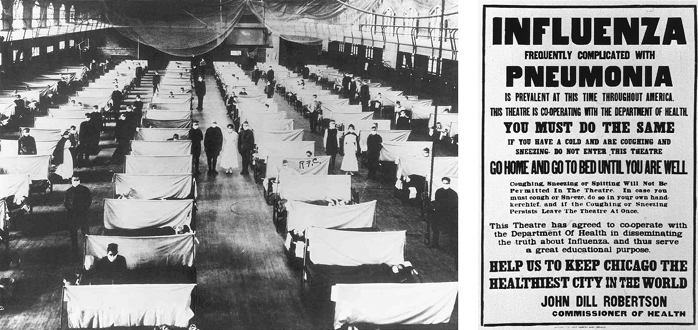
During the influenza pandemic of 1918–19, doctors, nurses, and pharmacists were at a loss when it came to treating the sheer volume of patients (left). This Chicago Health Department poster warned sick people to stay away from public places (right)
The evacuation process in each tower was calm and orderly. Despite the narrow width of the stairwells, those descending kept to one side in order to allow rescue workers to quickly ascend the staircases. According to survivor accounts, helping behavior was prevalent during the evacuation of both towers, most often between strangers. Individuals unable to evacuate themselves, such as an asthmatic woman and a woman in a wheelchair, were assisted by others. As they were descending, evacuees passed up bottled water and other essential supplies to those above.
...
- Africa, North
- Africa, Sub-Saharan
- Asia, East
- Asia, West, Central, and South
- Australia and Pacific Region
- Canada
- Caribbean Island Region
- China
- Desertification
- Earthquake Zones
- Europe, Eastern
- Europe, Western
- Evacuation Routes
- Glacial Melt
- Hurricane Zones
- Japan
- Mediterranean Region
- Mexico
- Middle East
- Ring of Fire
- Russia
- South America
- United Kingdom
- United States, California and West Coast
- United States, Great Lakes
- United States, Hawaii and Pacific Territories
- United States, Mid-Atlantic
- United States, Midwest
- United States, Mountain States
- United States, National
- United States, Northeast
- United States, Northwest and Northern Plains
- United States, Southeast and Gulf Coast
- United States, Southwest
- American Red Cross
- Center for International Disaster Information (CIDI)
- Centers for Disease Control and Prevention (CDC)
- ChildFund International
- Coast Guard, U.S.
- Cooperative for Assistance and Relief Everywhere (CARE)
- Defense, U.S. Department of Direct Relief
- Disaster Preparedness and Emergency Response Associations
- Doctors Without Borders
- Federal Emergency Management Agency (FEMA)
- Food and Agriculture Organization of the United Nations (FAO)
- Habitat for Humanity
- Homeland Security, U.S. Department of Institutional Coordination
- InterAction
- International Law in the Prevention and Mitigation of Disasters
- International Medical Corps
- International Red Cross
- Interpol
- Lutheran World Federation
- Mercy Corps
- National Governments
- Peace Corps
- Red Crescent Society
- Relief International
- Relief Rules
- Salvation Army
- St. Vincent de Paul
- State Governments
- United Nations
- United Nations Children's Fund (UNICEF)
- United Nations Development Programme (UNDP)
- United Nations High Commissioner for Refugees (UNHCR)
- United States Agency for International Development (USAID)
- World Concern
- World Emergency Relief
- World Food Program
- World Health Organization (WHO)
- World Relief
- World Vision
- History of Disaster Relief, Africa
- History of Disaster Relief, Ancient World
- History of Disaster Relief, China and East Asia
- History of Disaster Relief, Europe
- History of Disaster Relief, India
- History of Disaster Relief, Middle East
- History of Disaster Relief, North America
- History of Disaster Relief, Pacific Region
- History of Disaster Relief, Russia
- History of Disaster Relief, South America
- Chemical Disasters
- Cyberattacks
- Economic Disasters
- Food Contamination Disasters
- Gulf Coast Oil Spill (2010)
- Pandemic/Biological Accidents
- Poverty and Disasters
- Radiation Disasters
- Terrorism
- Wars
- Air Transport
- Food Distribution Infrastructure
- Internet
- Mass Transit
- Ports
- Railroads
- Roads
- Schools
- Utilities
- Water Systems
- Community Preparedness
- Community Response
- Evacuation
- Fire Departments
- Home Preparedness
- Local Hazards
- Municipal Offices of Emergency Management
- Personal Preparedness
- Police Departments
- Private Sector Preparedness
- Public Agency Preparedness
- Public-Private Partnerships
- University Preparedness
- Warnings
- Bubonic Plague
- HIV/AIDS
- Malaria (20th Century-Present)
- Measles (1850-Present)
- Severe Acute Respiratory Syndrome (SARS)
- Smallpox (20th Century)
- Tuberculosis (20th Century-Present)
- Earthquakes
- Famine
- Fire
- Floods
- Hurricanes
- Terrorist Attacks
- Tsunami
- Volcanoes
- Wars
- First Aid
- Hysteria
- Pandemic Planning
- Panic
- Panic
- Psychology, Mass
- Psychology, Personal
- Social Work
- Stress Syndromes
- Survivor Guilt
- Working With the Bereaved
- Agricultural Production
- Business Continuity Planning
- Citizen Preparedness Programs
- Cooperation Between Civilian and Military Agencies
- Crisis Management
- Education
- Emergency Response Guidelines and Regulations
- Emergency Rooms
- Evacuation Planning
- Evacuation, Types of
- Exercise Planning
- Food Distribution Systems
- Healthcare
- Hospital Preparedness
- International Standards
- Language Issues and Barriers
- Levels of Nutrition
- Mass Casualty Management
- Media
- National Incident Management System (NIMS)
- National Standards
- Packaging and Tracing of Food
- Paramedics
- Political Economy of Food
- Provision of Food in Disasters
- Refugee Policy
- Refugees, Care of
- Reserve Storage and Transport
- Transportation
- Vulnerable Populations
- Incentives, Intergovernmental and Intersystem
- Mitigation, Benefits and Costs of
- Private Sector, Role in Mitigation
- Public Sector, Role in Mitigation
- Public-Private Interactions in Mitigation
- Regulatory Approaches to Mitigation
- Risk, Government Assumption of
- Risk, Individual Assumption of
- Structural (Engineering) Options for Mitigation
- Avalanches
- Diseases
- Droughts
- Earthquakes
- Fires, Forest
- Fires, Urban
- Floods
- Heat Waves
- Hurricanes/Typhoons
- Landslides
- Pest Invasions
- Sea Surges
- Tornadoes
- Tsunamis
- Volcanoes
- Winter Storms
- Bilateral Versus Multilateral Aid
- Domestic Corruption in International Disasters
- Domestic Politics in International Disasters
- Donations, National
- Donations, Personal
- Funding of International Relief
- Fundraising Cycles
- Politics in International Funding
- Rejection of International Aid
- Intergovernmental Relations and Preparedness
- Planning for Disasters, International
- Planning for Disasters, Local
- Planning for Disasters, National
- Political Support for Preparedness
- Preparedness, Function of
- Preparedness Policy Implementation
- Private Sector, Role in Preparedness
- Research-Based Disaster Planning
- Private Sector, Role in Recovery
- Recovery, International
- Recovery, Local
- Recovery, National
- Recovery, Phases of
- Recovery, Role of Governments in
- Private Sector, Role in Response
- Response, Management Strategies
- Response, Operational Strategies
- Response, Stress Impacts of
- Data Processing
- Early Warning and Prediction Systems
- Funding, U.S.
- Global Warming
- Modeling
- National Oceanic and Atmospheric Administration (NOAA)
- Real-Time Communications
- Research
- Technology
- Technology, Military
- Causes of Complex Emergencies
- Cross-Cultural Interactions
- Cycles of a Disaster
- Disaster Experience
- Education
- Emergency Management Resources
- Ethics of Charity Relief
- Ethnicity and Minority Status Effects on Preparedness
- Gender and Disasters
- Human Rights
- Humanitarian Intervention Versus Humanitarian Action
- Income Inequality and Disaster Relief
- Laws
- Personal Preparedness
- Politics, Domestic
- Politics in International Funding
- Protection of Civilians in Conflict Zones
- Public Policy
- Refugees
- Relief Versus Development
- Risk Communications
- Risk Management
- Risk Perceptions
- Social Impact of Disasters
- Training for Disasters
- Victimology
- United States, California and West Coast
- United States, Great Lakes
- United States, Hawaii and Pacific Territories
- United States, Mid-Atlantic
- United States, Midwest
- United States, Mountain States
- United States, National
- United States, Northeast
- United States, Northwest and Northern Plains
- United States, Southeast and Gulf Coast
- United States, Southwest
- Loading...
Get a 30 day FREE TRIAL
-
 Watch videos from a variety of sources bringing classroom topics to life
 -
Read modern, diverse business cases
-
Explore hundreds of books and reference titles

Read next

More like this
Sage Recommends
We found other relevant content for you on other Sage platforms.
Have you created a personal profile? Login or create a profile so that you can save clips, playlists and searches