
Entry
Entries A-Z
Subject index
Stanley Elkin, from The Magic Kingdom (1985)
Elkin's novel exposes the absurdities lurking beneath charity efforts to treat terminally ill children to fantasy vacations in order to lessen their “suffering.” Instead, the trip descends into sentimental nightmare that benefits no one other than the resort owners. In this excerpt, the group's aptly named personal assistant, Colin Bible, uses the Disneyland parade as an opportunity for a lesson about human variation across body types.
“Come, children,” Colin said.
“We already seen that parade,” said Benny Maxine.
“I want you to see it again.”
“Where are you taking them?” Nedra Carp asked.
“You needn't come, Miss Carp, if you don't wish to.”
“Oh, I couldn't let you go by yourself. Who'd push the girl's wheelchair?”
“I'll push it. Benny can handle Mudd-Gaddis's.”
Maxine looked at the nurse.
“Anyway, I don't see what the rush is. The parade don't start for nearly an hour yet.”
There were frequent parades in the Magic Kingdom. Mr. Moorhead had given them permission to stay up one night to watch the Main Street Electrical Parade, a procession of floats outlined in lights like the lights strung across the cables, piers, spans, and towers of suspension bridges. There were daily “character” parades in which the heroes and heroines of various Disney films posed on floats, Alice perched on her mushroom like the stem on fruit; Pinocchio in his avatar as a boy, his strings fallen away, absent as shed cocoon; Snow White flanked by her dwarfs; Donald Duck, his sailor-suited, nautical nephews. They'd seen this one, too. There'd been high school marching bands, drum majors, majorettes, pom-pom girls, drill teams like a Swiss Guard. Tall, rube-looking bears worked the crowd like advance men, parade marshals. Some carried balloons in the form of Mickey Mouse's trefoil-shaped head, vaguely like the club on a playing card. (Pluto marched by, a Mickey Mouse pennant over his right shoulder like a rifle. “Dog soldier!” Benny Maxine had shouted through his cupped hands. The mutt turned its head and, in spite of its look of pleased, wide-eyed, and fixed astonishment, had seemed to glare at him.) Everywhere there were Mickey Mouse banners, guerdons, pennants, flags, color pikes, devices, and standards, the flash heraldics of all blazoned envoy livery. Music blared from the floats, from the high-stepping tootlers: Disney's greatest hits, bouncy and martial as anthems. It could almost have been a triumph, the bears, ducks, dogs, and dwarfs like slaves, like already convert captives from exotic far-flung lands and battlefields. The Mouse stood like a Caesar in raised and isolate imperiality on a bandbox like a decorated cake. He was got up like a bandmaster in his bright red jacket with its thick gold braid, his white, red-striped trousers. His white gloves were held stiff and high as a downbeat against his tall, white-and-red shako. His subjects cheered as he passed. (You wouldn't have guessed that Minnie was his concubine. In her polka dot dress that looked almost like homespun, and riding along on a lower level of a lesser float, she could have been another pom-pom girl.)
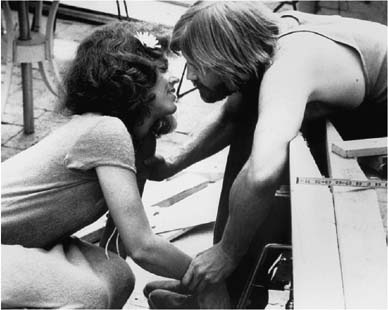
In Coming Home, Jane Fonda portrays a woman who is married to a man fighting in Vietnam. After volunteering to work at a local veteran's hospital, she falls in love with a paralyzed veteran who becomes an active antiwar protester.
...
- Loading...
Get a 30 day FREE TRIAL
-
 Watch videos from a variety of sources bringing classroom topics to life
 -
Read modern, diverse business cases
-
Explore hundreds of books and reference titles

Read next

More like this
Sage Recommends
We found other relevant content for you on other Sage platforms.
Have you created a personal profile? Login or create a profile so that you can save clips, playlists and searches