
Entry
Entries A-Z
Subject index
DOUBLE PLANATION SURFACES
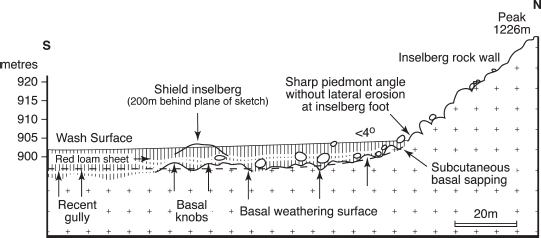
The two surfaces of levelling (the wash surface and the subsurface basal surface of weathering) considered by Julius Büdel to be operating concurrently in landscapes in seasonally wet tropical environments [German: Doppelten Einebnungsflächen]. Along the basal surface of weathering (weathering front), chemical weathering works downwards; while in the rainy season, finely worked material is correspondingly removed from above by highly effective sheetwash (see Figure). The separation of the upper wash surface from the weathering front by a thick layer of decomposed rock (saprolite) creates a major contrast with a temperate climate, where weathering and erosion are sometimes considered to proceed together. Tropical plains exhibiting such surfaces form gently concave etchplains studded with inselbergs over long intervals of geological time. Büdel considered that rivers played little role in such landscapes, but later workers regard fluvial action as playing an integral part in the lowering of the wash surface and in the fashioning of etchplains.
Double planation surfacesA double planation surface (upper wash surface and basal weathering surface) and associated landforms with the concentration of weathering at the piedmont angle and beneath the etchplain that surrounds the inselberg (Büdel, 1982).
[See alsodivergent weathering, landscape evolution]
- Loading...
Get a 30 day FREE TRIAL
-
 Watch videos from a variety of sources bringing classroom topics to life
 -
Read modern, diverse business cases
-
Explore hundreds of books and reference titles

Read next

More like this
Sage Recommends
We found other relevant content for you on other Sage platforms.
Have you created a personal profile? Login or create a profile so that you can save clips, playlists and searches