
Entry
Reader's guide
Entries A-Z
Subject index
Detection of Deception
Detection of deception is a broad term covering a variety of techniques. Many areas of society have an interest in detecting deception: For example, medical personnel, social workers, and mental health workers all interview clients who, for various reasons, may lie or withhold information from the interviewer to conceal the truth. Not surprisingly, detection of deception is a key issue in criminal investigation, although criminal interrogation is not the same thing as interviewing designed to detect deception. Criminal interrogation normally involves a set of circumstances in which the authorities have decided that a specific suspect is the most likely perpetrator of a crime. Interrogation of this sort uses techniques designed to convince the suspect that a confession is an appropriate response to the encounter. Interviewing for purposes of detecting deception often means that there is a group of possible suspects, and the interviewer is attempting to narrow down the possibilities from a majority of innocent people to one or two suspects who may have actually committed a crime. Techniques for the detection of deception fall into two broad categories: those that are psychophysiologically based and those that are not.
Psychophysiological Techniques
The common element of all approaches to psychophysiological detection of deception is the recognition that external stimuli such as verbal questions may induce physiological reactions in the interviewee. These approaches combine practical applications of psychology with practical applications of biology. Hence, the term psychophysiology is used.
Polygraph testing is the most widely known of these techniques. During an interview, polygraph instruments make continuous recordings of physiological reactions from the interviewee's autonomic nervous system. The polygraph examiner reviews a short set of questions (about ten) with the examinee prior to putting the instrument attachments on the person for recording the physiological data. The attachments monitor changes of at least three types: changes in respiration during the question set, changes in blood pressure, and changes in sweat gland activity. There are no physiological reactions that the polygraph examiner can specifically associate with the telling of a lie. The reactions being recorded and evaluated are stress or fear reactions caused by what medical experts call the “fight-or-flight syndrome.” The autonomic nervous system responds to a perceived threat by rapidly making changes in the body that are somewhat predictable in their form if not in their magnitude. Questions that directly inquire whether the subject has committed the act under investigation (called relevant questions) pose a serious threat to the subject who is lying. of course, these questions also provoke reactions for the truthful or innocent subject, because of the threat posed by being falsely accused or fear that the examiner may make an error. So, the question set has comparison questions, as well as irrelevant questions, which allow the examiner to distinguish between liars and truth tellers with a high degree of accuracy.
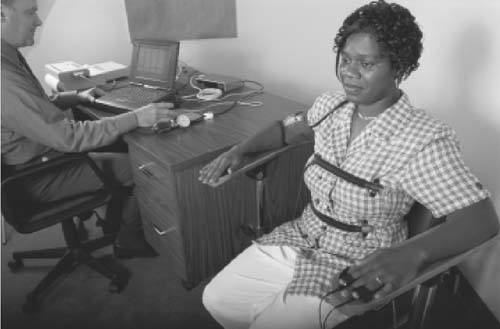
An FBI recruit undergoing a polygraph test at the FBI Academy in Quantico, Virginia, showing that the test is used to detect deception in all aspects of criminal justice work.
Of the psychophysiological techniques used for forensic detection of deception, polygraph testing is the only one that has been subjected to large-scale scientific scrutiny. Hundreds of studies on the validity and reliability of polygraph testing have been completed, and U.S. government agencies (as well as those in other nations) continue to conduct and contract out additional research. Other techniques, such as computerized voice stress analysis, kinesic interviewing, or scientific content analysis, have yet to establish a body of supporting research to form a scientific basis necessary for expert witness testimony in a courtroom
...
- Crimes and Related Behaviors
- Antisocial Behavior
- Armed Robbery
- Arson
- Art Theft and Fraud
- Assassination
- Assault
- Banditry
- Barroom Violence
- Blackmail
- Bribery
- Bullying
- Burglary
- Campus Crime
- Capital Crimes
- Career Criminals
- Carjacking
- Child Homicide
- Child Maltreatment
- Child Neglect
- Child Physical Abuse
- Child Sexual Abuse
- Civil Disobedience
- Civil Order Crime
- Collective Violence
- Consumer Fraud
- Corporate Crime
- Crime Classification Systems
- Crime Reports and Statistics
- Crimes Against Persons With Disabilities
- Criminal History
- Cybercrime
- Delinquency
- Digital Crime
- Driving Under the Influence
- Drug Millionaires
- Drug Trafficking
- Elder Abuse
- Environmental Crime
- Euthanasia
- Family Violence
- Fencing
- Feuding
- Forgery
- Fraud
- Gambling
- Gangs
- Genocide
- Graffiti
- Hate Crimes
- Homicide and Murder
- Identity Theft
- Illicit Antiquities
- Infanticide
- Juvenile Crime and War
- Kidnapping
- Mass Murder
- Militias
- Missing Children
- Modus Operandi
- Money Laundering
- Obscenity and Pornography
- Organized Crime—Global
- Organized Crime—United States
- Piracy, Intellectual Property
- Piracy, Sea
- Political Corruption
- Prostitution
- Race and Violence
- Rape
- Rape, Date and Marital
- Recidivism
- Religious Deviance
- Riots
- Road Rage
- Robbery
- Same-Sex Abuse
- School Violence
- Scientific Misconduct
- Securities Fraud
- Sexual Violence
- Shoplifting
- Sibling Violence
- Smuggling
- Spectator Violence
- Sport Violence
- Spree Murder
- Stalking
- Stranger Violence
- Student Threats
- Suicide
- Terrorism
- Vagrancy
- War Crimes
- Witchcraft
- Women as Offenders
- Women Who Kill
- Workplace Violence
- Law and Justice
- Adversarial Justice
- Alternative Dispute Resolution
- Appeal/Appellate
- Arraignment
- Arrestee Drug Abuse Monitoring (ADAM) Program
- Assembly-Line Justice
- Bail and Bond
- Cameras in the Courtroom
- Charge Attrition
- Child Witness
- Civil Law Legal Traditions
- Clemency
- Common Law Legal Traditions
- Community Justice Programs
- Community Prosecution
- Comparative Law and Justice
- Competency to Stand Trial
- Court Structure, Federal
- Court Structure, State
- Court Unification
- Criminal Defenses
- Criminal Insanity
- Criminal Justice
- Criminal Law
- Criminal Trial
- Customary Law
- Death Sentence Outcomes
- Defense Counsel Systems
- Determinate Sentences
- Differentiated Case Management
- Discretionary Justice
- Diversion Programs
- Domestic Violence Courts
- Drug Courts
- Drug Legalization
- Drug Treatment
- Due Process
- Entrapment
- Exclusionary Rule
- Expert Witness
- Eyewitness Testimony
- Family Court
- Family Strengthening Programs
- Fines
- Get-Tough Initiatives
- Grand Jury
- Gun Control
- Habitual Felony Laws
- Harm Reduction
- Human Rights
- Indeterminate Sentences
- Inquisitorial Justice
- Intensive Probation Supervision
- International Criminal Court
- Judicial Selection Process
- Jury Nullification
- Jury System
- Justice
- Juvenile Court
- Juvenile Justice
- Juvenile Offenders in Adult Courts
- Mandatory Sentencing
- Mercy
- Military Justice
- Miranda Rights
- Online Victimization of Youth
- Pardon
- Plea Bargaining
- Probation
- Procedural Justice
- Prosecutorial Discretion
- Public Defender
- Race and Sentencing
- Rehabilitation Model
- Reintegration Model
- Release on Own Recognizance
- Restorative Justice
- Retributive Justice
- Revenge, Retribution, and Rehabilitation
- Scared Straight Programs
- Selective Incapacitation
- Sentencing
- Sentencing Guidelines
- Speedy Trial Legislation
- Split Sentence
- United States Supreme Court
- Whistle-Blowing
- Wickersham Commission
- Wrongful Convictions
- Zero Tolerance Policing
- Policing
- Alcohol, Tobacco and Firearms, Bureau of
- Arrest Clearance
- Arrest Practices
- Broken Windows Theory
- Citizen Review
- Community Policing
- Comparative Policing
- Confession
- Counterterrorism
- Criminal Investigation
- Deadly Force
- Detective Work
- Federal Bureau of Investigation
- Foot Patrol
- Geographic Information Systems
- Geographic Profiling
- Homicide Investigation
- Hot Spot Policing
- House Arrest
- Informants
- Interrogation
- KGB
- Mandatory Arrest
- Neighborhood Watch Programs
- Net Widening
- Police Attitudes and Behavior
- Police Corruption
- Police Information Systems
- Police Organizations
- Police Privatization
- Police Pursuits
- Police Strategies and Operations
- Police Technology
- Police Training and Selection
- Police, Killing of
- Private Security
- Problem-Oriented Policing
- Race and Policing
- Racial Profiling
- Recreational Law Enforcement
- Royal Canadian Mounted Police
- Rural Law Enforcement
- Scotland Yard
- Surveillance Abuse
- Women and Policing
- Zero Tolerance Policing
- Forensics
- Anthropology, Forensic
- Cognitive Interview
- Crime Analysis
- Crime Laboratory
- Crime Scene Assessment
- Criminal Profiling
- Criminalistics
- Detection of Deception
- DNA Testing
- Firearms Identification
- Forensic Behavioral Sciences
- Forensic Interrogation
- Forensic Polygraph
- Forensic Science
- Hypnosis
- Medical Examiner
- Odontology
- Psychiatry, Forensic
- Psychology, Forensic
- Questioned Documents/Ink Dating
- Scientific Evidence
- Toxicology
- Voice Identification
- Voice Stress Analysis
- Corrections
- Abolitionism
- Alcatraz
- Attica
- Auburn State Prison
- Boot Camps
- Corrections
- Corrections Officers
- Day Release
- Death Row
- Death Row Inmates
- Devil's Island
- Early Release Programs
- Eastern State Penitentiary
- Electronic Monitoring
- Elmira Reformatory
- Furlough Programs
- Halfway House
- International Imprisonments
- Joliet Correctional Center
- Leavenworth Federal Penitentiary
- New Generation Jails
- Parole
- Penal Colonies
- Preventive Detention
- Prison Overcrowding
- Prison Reform
- Prison Riots
- Prison Systems
- Prison Violence
- Prisoner Literature
- Prisoner Rights
- Prisoners, Elderly
- Race and Corrections
- Religion in Prison
- San Quentin
- Sex Offender Treatment
- Shelters
- Shock Incarceration
- Sing Sing
- Supermax Prisons
- Tucker State Farm
- Women in Prison
- Work Release
- Victimology
- Juvenile Victimization and Offending
- National Crime Victimization Survey
- Online Victimization of Youth
- Repeat Victimization
- Victim Advocates
- Victim Needs and Services
- Victim Rights and Restitution
- Victim Theories
- Victim-Offender Mediation
- Victim/Witness Protection
- Victimization
- Victims' Bill of Rights
- Women as Victims
- Punishment
- Sociocultural Context and Popular Culture
- Alcohol
- Buddhism
- Christianity
- Cinema
- Comic Books
- Commercial Sex Industry
- Conduct Norms and Crime
- Costs of Crime
- Crime and Everyday Life
- Daoism
- Demography
- Discrimination in the Criminal Justice Workplace
- Drugs
- Environmental Design
- Ethics
- Ethnicity and Race
- Fear of Crime
- Financial Costs and Benefits of Crime Prevention
- Gated Communities
- Gender
- Gun Control
- Hinduism
- HIV/AIDS in Criminal Justice
- Islam
- Judaism
- Literature, Fiction
- Literature, True Crime
- Masculinity, Anger, and Violence
- Media
- Moral Panic
- Policing Democracy
- Political Corruption
- Prisoner Literature
- Public Housing
- Public Opinion
- Risk
- Security Management
- Sensation Seeking
- Shame and Guilt
- Shinto
- Social Class
- Television
- Video and Computer Games
- Vigilantism
- International
- Alternative Punishments in Sub-Saharan Africa
- Australia
- Buddhism
- Canada
- Caribbean
- China
- Christianity
- Comparative Law and Justice
- Comparative Policing
- Counterterrorism
- Daoism
- Europe, Central Eastern
- France
- Genocide
- Germany
- Great Britain
- Hinduism
- Human Rights
- India
- Indonesia
- International Criminal Court
- International Imprisonments
- Islam
- Italian Mafia
- Italy
- Japan
- Judaism
- Latin America, Crime and Violence in
- Mexico
- Organized Crime—Global
- Penal Colonies
- Piracy, Intellectual Property
- Piracy, Sea
- Policing Democracy
- Political Corruption
- Poverty
- Russia
- Shinto
- Singapore
- Smuggling
- South Pacific Islands
- Sub-Saharan Africa
- Terrorism
- War Crimes
- Witchcraft
- Women and Crime in a Global Perspective
- Concepts and Theories
- Attachment Theory
- Biocriminology
- Broken Windows Theory
- Cartographic School of Criminology
- Control Theories
- Crime as Pathology
- Crime Control Model
- Critical Criminology
- Culture Conflict and Crime
- Deterrence Theory
- Deviance
- Economic Theories of Crime
- Education and Employment
- Evolutionary Perspectives on Crime
- Experimental Criminology
- Feminist Theory
- Integrative Theories
- Life-Course Theories
- Nonintervention Model
- Peacemaking Criminology
- Radical Criminology
- Social Control Theory
- Social Learning Theories
- Sociological Theories
- Strain Theory
- Trait Theories
- Research Methods and Information
- Sourcebook of Criminal Justice Statistics
- Arrestee Drug Abuse Monitoring (ADAM) Program
- Crime Classification Systems
- Crime Reports and Statistics
- Criminal Justice
- Criminology
- Ethnography of Crime and Punishment
- Information Systems
- National Crime Victimization Survey
- Self-Report Surveys
- Social Psychology
- Statistical Methods and Models
- Uniform Crime Reports
- Organizations and Institutions
- Alcatraz
- Alcohol, Tobacco, and Firearms
- Appendix 3: Professional and Scholarly Associations
- Attica
- Auburn State Prison
- Devil's Island
- Eastern State Penitentiary
- Elmira Reformatory
- Federal Bureau of Investigation
- International Criminal Court
- Italian Mafia
- Joliet Correctional Center
- KGB
- Leavenworth Federal Penitentiary
- Royal Canadian Mounted Police
- San Quentin
- Sing Sing
- Tucker State Farm
- United States Supreme Court
- Special Populations
- American Indians and Alaska Natives
- Animals in Criminal Justice
- Child Homicide
- Child Maltreatment
- Child Neglect
- Child Physical Abuse
- Child Sexual Abuse
- Child Witness
- Ethnicity and Race
- Homeless Men and Crime
- Homeless Women and Crime
- Infanticide
- Juvenile Court
- Juvenile Crime and War
- Juvenile Justice
- Juvenile Offenders in Adult Courts
- Juvenile Victimization and Offending
- Mentally Ill Offenders
- Military Justice
- Militias
- Missing Children
- Online Victimization of Youth
- Prisoners, Elderly
- School Violence
- Street Youth
- Student Threats
- Women and Crime in a Global Perspective
- Women and Policing
- Women as Offenders
- Women as Victims
- Women in Prison
- Women Who Kill
- Youth, At-Risk
- Youthful Offender
- Loading...
Get a 30 day FREE TRIAL
-
 Watch videos from a variety of sources bringing classroom topics to life
 -
Read modern, diverse business cases
-
Explore hundreds of books and reference titles

Read next

More like this
Sage Recommends
We found other relevant content for you on other Sage platforms.
Have you created a personal profile? Login or create a profile so that you can save clips, playlists and searches