
Entry
Reader's guide
Entries A-Z
Subject index
Domhoff, G. William (1936–)
G. WILLIAM Domhoff is a retired research professor at the University of California, Santa Cruz, who continues to write about his interests in both psychology and sociology. In psychology, his focus is the scientific study of dreams. However, this prolific social scientist's most prominent contribution can be found in sociology, specifically in the area of the power structure in the United States.
Domhoff's perspectives about power relations in society can be traced to the work of economist Paul Sweezy, political scientist Robert Dahl, sociologists E. Digby Baltzell and Floyd Hunter, and especially the maverick political sociologist C. Wright Mills. From Mills, Domhoff borrowed the concept of the power elite, a ruling group who controls power in society by dominating the business, military, and governmental institutions. In Domhoff's conception, however, the elites are a cohesive group of people from the top social and economic strata in America.
Domhoff began his thesis with Who Rules America in 1967, a work that became a pioneering landmark in political sociology. The power elite, according to Domhoff's conceptualization, is a homogenous unit whose high level of cohesion can be traced to attendance at prestigious preparatory school and Ivy League institutions, membership in higher social circles and elite clubs, similar recreation patterns, and a common world view. The power elite maintains this cohesion despite the “antagonisms” of varying religious and ethic backgrounds, political affiliation, and the dichotomy of old-versus.-new money. This group, the seat of power in the United States, exerts an enormous influence on the business sector, the government, and various regulatory agencies.
After an elaboration on this theme in other works that focused more on the issue of upper class domination, Domhoff published an often cited study of upper class social clubs (which he called “watering holes”), the Bohemia Grove club, the Rancheros Visitadores (visiting ranchers), and the Roundup Riders of the Rockies. In this work, The Bohemian Grove and other Retreats, he posited that clubs that focus on recreation also play a pivotal role in making the higher circles an elite and cohesive group.
G. William Domhoff co-authored Diversity in the Power Elite, which explores the issue of diversity in American society as it relates to entrance into the circles of the power elite.
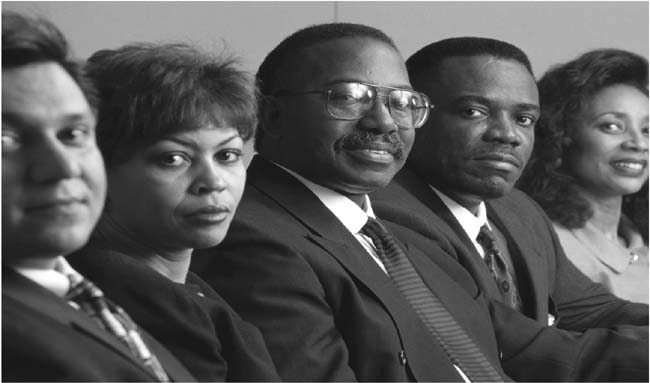
From the 1970s onward, Domhoff completed a series of works that examine the power elite from the macro level of analysis he used in Who Rules America. These works focus particularly on the issue of how the political landscape is molded by the power elite. Along with Richard L. Zweigenhaft, Domhoff continued his exploration of power structure by including the variables of race in Blacks in the White Establishment in 1991, and a follow-up report Blacks in the White Elite in 2003.
Another recent work, Diversity in the Power Elite, explores the issue of diversity in American society as it relates to entrance into the circles of the power elite. Despite some major changes in upward social mobility by women and other minority populations, Domhoff and his colleague Zweigenhaft concluded that the new diversity created little change in the overall structure of the higher circles. Domhoff continues to research aspects of power structure as well as his psychological interests. It is likely that, other than C. Wright Mills (and of course, Karl Marx), no other person has made more significant contributions to the study of class and power elitism than Domhoff.
...
- Business Fraud & Crimes
- Advertising Fraud
- Antitrust
- Arbitrage
- Bank Fraud
- Bankruptcy Fraud
- Bid Rigging
- Boycott
- Campaign Finance
- Canadian Mining Scandals
- Charity Fraud
- Cigarette Advertising
- Computer Hacking
- Copyright Infringement
- Corporate Criminal Liability
- Corporate Dumping
- Corporate Raiding
- Direct-Mail Fraud
- Economic Espionage
- Free Enterprise System
- Greenmail
- Hoarding
- Illegal Competition
- Industrial Espionage
- Insurance Fraud
- Interlocking Directorates
- Internet Fraud
- Kickbacks
- Labor Crimes
- Mail Fraud
- Market Manipulation
- Marketing Fraud
- Outside Directors
- Patent Infringement
- Predatory Practices
- Price Discrimination
- Price Fixing
- Puffery
- Redlining
- Revolving Door
- Small-Business Fraud
- Tariff Crimes
- Tax Evasion
- Trademark Infringement
- Tying Arrangements
- Unfair Trade Practices
- Unions
- Wire Fraud
- Companies
- A. H. Robins
- AAMCO
- Adelphia Communications
- Allied Chemical
- Allied Irish Banks
- American Cyanamid
- American Hospital Supply
- American Motors
- Anheuser-Busch
- Archer Daniels Midland
- Arthur Andersen
- AT&T
- B. F. Goodrich
- Banco Ambrosiano
- Bank of Credit and Commerce International
- Banker's Trust
- Barings Bank
- BASF
- Beech Aircraft
- Beech-Nut Nutrition
- Board of Directors
- Bre-X
- Canadian Mining Scandals
- Carl Karcher Enterprises
- Cendant
- Centennial Savings and Loan
- Chem-Bio
- Chevron
- Conoco
- Crédit Lyonnais
- Daiwa Bank
- Dow Chemical
- Drexel Burnham Lambert
- E. F. Hutton
- Eli Lilly
- Enron Corporation
- Film Recovery Systems
- Firestone Tires
- Fisher-Price
- G. D. Searle
- General Dynamics
- General Electric
- General Motors
- Georgia Pacific
- Global Crossing
- Great Electrical Equipment Conspiracy
- Gulf Oil Corporation
- IBM
- Imperial Food Products
- Investors Overseas Services
- ITT
- Johns-Manville
- Kerr-McGee
- Kidder, Peabody
- Lloyds of London
- Lockheed
- Madison Guaranty
- Merrill Lynch
- Metallgesellschaft
- Microsoft
- Morgan Grenfell
- Morton-Thiocol
- National Medical Enterprises
- NatWest Markets
- Northrop Grumman
- Owens Corning
- Pharmaceutical Industry
- Procter and Gamble, Inc.
- Revco
- Rite Aid
- Rockwell International
- Salomon Smith Barney
- Standard Oil
- Sumitomo
- Teledyne Industries
- Tyco International
- Unisys
- United American Bank
- United Fruit
- United States Steel
- Waste Management, Inc.
- WorldCom
- Consumers
- Advance Fee Scam
- Age Discrimination
- Automobile
- Bait and Switch
- Bank Fraud
- Beech-Nut Nutrition
- Bendectin
- Better Business Bureaus
- Breast Implants
- Caveat Emptor
- Charity Fraud
- Cigarette Advertising
- Consumer Deaths
- Contractor Fraud
- Credit Card Fraud
- Cyberstalking
- Dalkon Shield
- Direct-Mail Fraud
- Fertility Fraud
- Fisher-Price
- Gambling and Lotteries
- Identity Theft
- Impersonation
- Infant Formula
- Public Citizen Health Research Group
- Tampons and Toxic Shock
- Telemarketing Fraud
- Tobacco Industry
- Countries & Regions
- Africa
- Arab Nations
- Argentina
- Asia
- Australia
- Brazil
- Canada
- Canadian Mining Scandals
- Caribbean Islands
- Central America
- China
- Cuba
- Eastern Europe
- France
- Germany
- Greece
- Hong Kong
- Indonesia
- Ireland
- Israel
- Italy
- Japan
- Luxembourg
- Mexico
- Middle East
- Poland
- Russia
- Saudi Arabia
- Scandinavia
- Singapore
- South America
- South America
- Spain
- Switzerland
- Thailand
- United Kingdom
- United States
- Criminology & Justice
- Age Discrimination
- Ancient Mercantile Crime
- Art Fraud
- Board of Directors
- Bribery
- Capitalism
- Caveat Emptor
- Civil Forfeiture
- Class-Action Lawsuits
- Conflict Theory
- Consequences of White-Collar Crime
- Conspiracy
- Corporate Criminal Liability
- Corruption
- Crime Seriousness
- Critical Theory
- Differential Association
- Drug Trafficking
- Elite Crime
- Ethics
- Fear of Crime
- Felony
- Forensic Auditing
- Forgery
- Gender Discrimination
- Global Warming
- Globalization
- Hartung-Burgess Debate
- Human Trafficking
- Investigation Techniques
- Juries and Awards
- Justice, Department of
- Knapp Commission
- Legal Malpractice
- Military-Industrial Complex
- Misappropriation Theory
- Mollen Commission
- Money Laundering
- Multinational Corporations
- National White-Collar Crime Center
- Negligence
- Oligopoly
- Organized Crime
- Perjury
- Police Brutality
- Police Corruption
- Political Assassinations
- Pornography
- Prosecution
- Prostitution
- Public Corruption
- Racial Discrimination
- Racketeering
- Religious Fraud
- Respondeat Superior
- Risk Analysis
- Self-Control Theory
- Sutherland-Tappan Debate
- Techniques of Neutralization
- Financial & Securities Fraud
- Accounting Fraud
- Arbitrage
- Bad Checks
- Banco Ambrosiano
- Bank Fraud
- Bank of Credit and Commerce International
- Banker's Trust
- Bankruptcy Fraud
- Barings Bank
- Bendix Corporation
- Boesky, Ivan
- Bond Fraud
- Centennial Savings and Loan
- Check Kiting
- Commodity Fraud
- Counterfeiting
- Credit Card Fraud
- Currency Fraud
- Debt Restructuring Fraud
- Drexel Burnham Lambert
- Embezzlement
- Equity Funding Scandal
- Extortion
- Fiduciary Fraud
- Flaming Ferraris
- Insider Trading
- Investment Trust Fraud
- Nonprofit Organization Fraud
- Offshore Bank Accounts
- Offshore Entities
- Savings & Loan Fraud
- Securities Fraud
- Stock Fraud
- Teamsters Pension Fund
- Vatican Bank
- Government
- Bid Rigging
- Bribery
- Commodities Futures Trading Commission
- Corruption
- Defense Industry Fraud
- Environmental Protection Agency
- Federal Deposit Insurance Corporation
- Federal Trade Commission
- Food and Drug Administration
- Government Contract Fraud
- Government Procurement Fraud
- Graft
- HUD Scandals
- Iran-Contra
- Prisoners
- Securities and Exchange Commission
- Sentencing Guidelines.
- Tailhook Scandal
- Teapot Dome Scandal
- Laws
- Antitrust
- Bank Secrecy Act
- Boland Amendments
- Campaign Finance
- Celler-Kefauver Act
- Clayton Antitrust Act
- Clean Air Act
- Clean Water Act
- Comprehensive Thrift Act
- Computer Fraud and Abuse Act
- Consumer Product Safety Act
- Ethics Reform Act
- Fair Housing Act
- False Claims Act
- Federal Trade Commission Act
- Financial Crime Kingpin Statute
- Foreign Corrupt Practices Act
- Hart-Scott-Rodino Act
- Hobbs Act
- Insider Trading Sanctions Act
- Interstate Commerce Act
- Major Fraud Act
- Meat Inspection Act
- Occupational Carcinogens
- Occupational Safety and Health Act
- Pure Food, Drug and Cosmetics Act
- Racketeer Influenced Corrupt Organizations (RICO)
- Robinson-Patman Act
- Sherman Antitrust Act
- Toxic Substances Control Act
- Truth in Labeling
- Truth in Lending Act
- Witness and Victim Protection Act
- Medical & Healthcare Fraud
- People
- Agnew, Spiro
- Anderson, Jack
- Bakker, Jim and Tammy
- Benson, Michael L.
- Boesky, Ivan
- Braithwaite, John
- Bush, George H. W.
- Bush, George W.
- Butcher Brothers
- Capone, Alphonse
- Carnegie, Andrew
- Carson, Rachel
- Carter, Jimmy
- Clinard, Marshall
- Clinton, William J.
- Coffee, John C., Jr.
- Cohen, Albert K.
- Coleman, James W.
- Coolidge, Calvin
- Cressey, Donald
- Cullen, Francis T.
- Domhoff, G. William
- Edelhertz, Herbert
- Eisenhower, Dwight D.
- Fisse, Brent
- Ford, Gerald R.
- Frankel, Martin
- Geis, Gilbert
- Giuliani, Rudy
- Grant, Ulysses S.
- Green, Mark J.
- Holley, Louis Malcolm
- Hoover, Herbert
- Irving, Clifford
- Jesilow, Paul
- Jett, Joseph
- Johnson, Lyndon B.
- Keating Five
- Keating, Charles
- Kennedy, Robert F.
- Leeson, Nick
- Levi, Michael
- Levine, Dennis
- Madison, James
- Maxwell, Robert
- Milken, Michael
- Morgan, J. P.
- Nader, Ralph
- Nixon, Richard M.
- North, Oliver
- Pontell, Henry
- Reagan, Ronald
- Rich, Marc
- Roberts, Oral
- Rockefeller, John D.
- Roosevelt, Franklin D.
- Roosevelt, Theodore
- Ross, Edward
- Rusnak, John
- Short, James F. Jr.
- Shover, Neal
- Silkwood, Karen
- Simpson, Sally
- Sinclair, Upton
- Spitzer, Elliot
- Stanford, Leland, Sr.
- Stavisky, Serge
- Steffens, Lincoln
- Stewart, Martha
- Sutherland, Edwin H.
- Truman, Harry S.
- Vaughan, Diane
- Weisburd, David
- Wheeler, Stanton
- Whistleblowers
- Political Scandals
- Pollution
- Products
- Regulation
- Scams & Swindles
- Advance Fee Scam
- Art Fraud
- Bad Checks
- Bait and Switch
- Better Business Bureaus
- Bid Rigging
- Bond Fraud
- Charity Fraud
- Computer Hacking
- Consumer Product Safety Commission Act
- Contractor Fraud
- Counterfeiting
- Currency Fraud
- Daisy Chains
- Direct-Mail Fraud
- Grifters
- Home-Stake Swindle
- Nigerian 419
- Ponzi Schemes
- Real Estate Investments
- Scams
- Securities Fraud
- Stock Churning
- Sweepstakes Fraud
- War-Profiteering
- Work-Related Crimes
- Loading...
Get a 30 day FREE TRIAL
-
 Watch videos from a variety of sources bringing classroom topics to life
 -
Read modern, diverse business cases
-
Explore hundreds of books and reference titles

Read next

More like this
Sage Recommends
We found other relevant content for you on other Sage platforms.
Have you created a personal profile? Login or create a profile so that you can save clips, playlists and searches