
Entry
Reader's guide
Entries A-Z
Subject index
Uranium
Uranium is an exceptionally dense, metallic chemical element. With the exception that uranium compounds have for centuries assisted in tinting glass and coloring pottery, their present use is almost solely as a source of fuel for nuclear fission. Uranium's value thus lies in its ability to generate energy and atomic warfare. Because of the disposal of toxic and radioactive materials and because of the generation of by-product matter that has the potential for the building of nuclear arms, the wastes that uranium processing and consumption produce are among the most dangerous in human history.
Mining and Milling Waste
Waste from the uranium industry occurs at all stages of the nuclear fuel cycle. From mining alone, there are four main types: waste rock from the actual mining; tailings from the ore processing (commonly called “milling”); wastewater; and industrial waste, such as the radioactively contaminated scrap produced when a uranium mill is closed down. Uranium ore occurs naturally as mineralization in sandstones and quartz pebble conglomerate rocks, as well as (to a lesser extent) in other types of mineral vein deposits. Mining takes place in 18 countries. It is most prominent in Australia, Brazil, Canada, Kazakhstan, Malawi, Namibia, Niger, Russia, South Africa, and the United States. The ore's uranium content, which is sourced mainly from open-pit or underground mines, is often 0.1–0.2 percent. Hence, to obtain a sufficient grade of ore, large amounts of it have to be mined. Initially, up until the 1960s, uranium mining predominantly occurred in open-pit mines from ore deposits located near the surface. For the following 20 years, underground mines were viable. After the world market decrease of uranium prices from the 1980s onward, however, most became inefficient.
Low-level waste from nuclear power plants Is problematic because of the toxicity of uranium and Its compounds, rather than radioactivity. The sludge contains heavy metals and contaminants such as arsenic and chemical reagents used during milling.
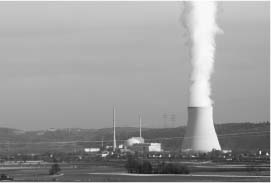
Uranium ore goes through several processes of conversion and enrichment to concentrate the radioactivity by 2–3 percent and thus become nuclear reactor–grade fuel or by 80 percent to become potent enough for use in atomic weapons. A series of crushing mills grind the crude uranium ore to the consistency of fine sand, to which chemical solvents are added for dissolving out the uranium. A mixture of uranium oxides, with a chemical formula equivalent to U308, emerges from the process. This mixture, known as “yellowcake,” makes up the raw material for all the subsequent processes that eventually lead to a chain reaction in a reactor core. Yellowcake contains 85 percent uranium by weight, but besides this, there remains a hundred-fold quantity of residual sand, called “tailings,” which also contain the radium that had accompanied the uranium. Per ton of ore, over 3,700 liters of liquid waste are also produced. This sludge is both chemically toxic and mildly radioactive.
Mill tailings, normally dumped as sludge in special piles or ponds, are generated in nearly the same quantities as those of the ore milled. At a grade of 0.1 percent uranium, 99.9 percent of the material mined is left over. Apart from the portion of the uranium removed, the sludge contains all the constituents of the ore. As long-lived decay products such as thorium-230 and radium-226 are not removed, the sludge contains 85 percent of the initial radioactivity of the ore. Due to technical limitations, all of the uranium present in the ore cannot be extracted. The sludge, therefore, also contains 5–10 percent of the uranium initially present in the ore.
...
- Archaeology of Garbage
- Consumption and Waste, Industrial/Commercial
- Acid Rain
- Aluminum
- Celluloid
- Coal Ash
- Computers and Printers, Business Waste
- Construction and Demolition Waste
- Copper
- Emissions
- Farms
- Fusion
- Garbage Project
- Hanford Nuclear Reservation
- High-Level Waste Disposal
- Hospitals
- Incinerator Waste
- Incinerators
- Incinerators in Japan
- Industrial Revolution
- Industrial Waste
- Iron
- Malls
- Medical Waste
- Midnight Dumping
- Mineral Waste
- Mining Law
- Noise
- Noise Control Act of 1972
- Nuclear Reactors
- Ocean Disposal
- Pesticides
- Power Plants
- Producer Responsibility
- Radioactive Waste Disposal
- Restaurants
- Rubber
- Sanitation Engineering
- Scrubbers
- Solid Waste Data Analysis
- Stadiums
- Sugar Shortage, 1975
- Supermarkets
- Sustainable Waste Management
- Thallium
- Uranium
- Waste Disposal Authority
- Consumption and Waste, Personal
- Adhesives
- Aerosol Spray
- Air Filters
- Alcohol Consumption Surveys
- Audio Equipment
- Automobiles
- Baby Products
- Beverages
- Books
- Candy
- Car Washing
- Carbon Dioxide
- Certified Products (Fair Trade or Organic)
- Children
- Cleaning Products
- Composting
- Computers and Printers, Business Waste
- Computers and Printers, Personal Waste
- Consumption Patterns
- Cosmetics
- Dairy Products
- Disposable Diapers
- Disposable Plates and Plastic Implements
- Dumpster Diving
- Engine Oil
- Environmental Tobacco Smoke
- Fast Food Packaging
- Fish
- Floor and Wall Coverings
- Food Consumption
- Food Waste Behavior
- Fuel
- Funerals/Corpses
- Furniture
- Garden Tools and Appliances
- Gasoline
- Gluttony
- Hoarding and Hoarders
- Home Appliances
- Home Shopping
- Household Consumption Patterns
- Household Hazardous Waste
- Human Waste
- Junk Mail
- Lighting
- Linen and Bedding
- Magazines and Newspapers
- Marketing, Consumer Behavior, and Garbage
- Meat
- Microorganisms
- Mobile Phones
- NIMBY (Not in My Backyard)
- Open Burning
- Packaging and Product Containers
- Paint
- Paper Products
- Personal Products
- Pets
- Post-Consumer Waste
- Pre-Consumer Waste
- Recyclable Products
- Recycling Behaviors
- Residential Urban Refuse
- Seasonal Products
- Septic System
- Sewage
- Shopping
- Shopping Bags
- Slow Food
- Sports
- Street Scavenging and Trash Picking
- Styrofoam
- Swimming Pools and Spas
- Television and DVD Equipment
- Tires
- Tools
- Toys
- Wood
- Yardwaste
- Geography, Culture, and Waste
- Africa, North
- Africa, Sub-Saharan
- Argentina
- Australia
- Brazil
- Canada
- Central America
- Chile
- China
- Developing Countries
- European Union
- France
- Germany
- Greece
- India
- Indonesia
- Iran
- Italy
- Japan
- Mexico
- Middle East
- Netherlands
- Pacific Garbage Patch
- Pakistan
- Philippines
- Poland
- Russia
- Saudi Arabia
- Scandinavia
- Singapore
- South Africa
- South America
- South Korea
- Space Debris
- Spain and Portugal
- Switzerland
- Thailand
- Turkey
- United Kingdom
- United States
- Global Cities: Consumption, Waste Collection, and Disposal
- History of Consumption and Waste
- Atomic Energy Commission
- Bubonic Plague
- Clean Air Act
- Clean Water Act
- Cloaca Maxima
- Earth Day
- Environmental Protection Agency (EPA)
- Federal Insecticide, Fungicide, and Rodenticide Act
- Fresh Kills Landfill
- Germ Theory of Disease
- Hazardous Materials Transportation Act
- History of Consumption and Waste, Ancient World
- History of Consumption and Waste, Medieval World
- History of Consumption and Waste, Renaissance
- History of Consumption and Waste, U.S., 1800–1850
- History of Consumption and Waste, U.S., 1850–1900
- History of Consumption and Waste, U.S., 1900–1950
- History of Consumption and Waste, U.S., 1950–Present
- History of Consumption and Waste, U.S., Colonial Period
- History of Consumption and Waste, World, 1500s
- History of Consumption and Waste, World, 1600s
- History of Consumption and Waste, World, 1700s
- History of Consumption and Waste, World, 1800s
- History of Consumption and Waste, World, 1900s
- Industrial Revolution
- Marine Protection, Research, and Sanctuaries Act
- Miasma Theory of Disease
- National Clean Up and Paint Up Bureau
- National Survey of Community Solid Waste Practices
- Price-Anderson Act
- Public Health Service, U.S.
- Recycling in History
- Resource Conservation and Recovery Act
- Resource Recovery Act
- Rittenhouse Mill
- Rivers and Harbors Act
- Safe Drinking Water Act
- September 11 Attacks (Aftermath)
- Société BIC
- Solid Waste Disposal Act
- Toxic Substances Control Act
- Trash as History/Memory
- Waste Reclamation Service
- Issues and Solutions
- Anaerobic Digestion
- Biodegradable
- Browning-Ferris Industries
- Capitalism
- Commodification
- Consumerism
- Definition of Waste
- Downcycling
- Environmental Protection Agency (EPA)
- Environmentalism
- Garbage in Modern Thought
- Goodwill Industries
- Incinerator Construction Trends
- Organic Waste
- Overconsumption
- Politics of Waste
- Pollution, Air
- Pollution, Land
- Pollution, Water
- Recycling
- Rendering
- Salvation Army
- Sierra Club
- Social Sensibility
- Street Sweeping
- Sustainable Development
- Toxic Wastes
- Transition Movement
- Trash to Cash
- Typology of Waste
- Underconsumption
- Waste Management, Inc.
- Waste Treatment Plants
- Water Treatment
- WMX Technologies
- Zero Waste
- People
- Sociology of Waste
- Garbage Dreams
- Avoided Cost
- Crime and Garbage
- Culture, Values, and Garbage
- Economics of Consumption, International
- Economics of Consumption, U.S.
- Economics of Waste Collection and Disposal, International
- Economics of Waste Collection and Disposal, U.S.
- Environmental Justice
- Externalities
- Freeganism
- Garbage Art
- Garbage, Minimalism, and Religion
- Garblogging
- Greenpeace
- Material Culture Today
- Material Culture, History of
- Materialist Values
- Needs and Wants
- Population Growth
- Race and Garbage
- Rubbish Theory
- Socialist Societies
- Sociology of Waste
- Surveys and Information Bias
- Waste as Food
- U.S. States: Consumption, Waste Collection, and Disposal
- Alabama
- Alaska
- Arizona
- Arizona Waste Characterization Study
- Arkansas
- California
- Colorado
- Connecticut
- Delaware
- District of Columbia
- Florida
- Georgia
- Hawaii
- Idaho
- Illinois
- Indiana
- Iowa
- Kansas
- Kentucky
- Louisiana
- Maine
- Maryland
- Massachusetts
- Michigan
- Minnesota
- Mississippi
- Missouri
- Montana
- Nebraska
- Nevada
- New Hampshire
- New Jersey
- New Mexico
- New York
- North Carolina
- North Dakota
- Ohio
- Oklahoma
- Oregon
- Pennsylvania
- Rhode Island
- South Carolina
- South Dakota
- Tennessee
- Texas
- Utah
- Vermont
- Virginia
- Washington
- West Virginia
- Wisconsin
- Wyoming
- Waste, Municipal/Local
- Loading...
Get a 30 day FREE TRIAL
-
 Watch videos from a variety of sources bringing classroom topics to life
 -
Read modern, diverse business cases
-
Explore hundreds of books and reference titles

Read next

More like this
Sage Recommends
We found other relevant content for you on other Sage platforms.
Have you created a personal profile? Login or create a profile so that you can save clips, playlists and searches