
Entry
Reader's guide
Entries A-Z
Subject index
Stadiums
Of all the activities of a sports organization, operating a stadium has one of the greatest environmental effects. Construction of sports facilities boomed as economies in the United States and Europe expanded in the 1990s and public investments in spectator sports were perceived as beneficial to civic identities. In 2010, 22 of the 30 Major League Baseball (MLB) teams played in buildings completed after 1990, and hundreds more buildings were built in the United States for National Football League (NFL), National Basketball Association (NBA), National Hockey League (NHL), minor league, and college teams during the period. The new buildings included features not seen in older facilities, such as luxury suites that mirrored the amenities of hotels, as well as expanded plumbing, catering, and concession services for all spectators. Development of these structures generated a considerable amount of construction waste and, once open, their lighting, scoreboard, public address, and other systems consumed energy. In the early 21st century, in response to economic crisis, consumer interest, and unstable energy costs, many sports organizations have made an effort toward more sustainable practices. Both Chicago and Tokyo included sustainability plans in their 2016 Olympics hosting bids, for instance, including Chicago's plan to recycle stadium seating into wheelchair seats. Some 75 percent of professional sports teams, according to a 2008 survey, have implemented or developed a sustainability plan for their team or stadium.
LEED Stadiums
The MLB Washington Nationals, the NHL Atlanta Thrashers, and the NBA Atlanta Hawks and Miami Heat have become the first four professional sports teams to play in LEED-certified venues. Developed by the U.S. Green Building Council, the Leadership in Energy and Environmental Design (LEED) Green Building Rating System focuses on energy efficiency, sustainable construction practices, and creating a healthy working environment. In part because it was formulated in 1998, when alternative energy sources were less commonly available, the LEED standards focus on energy efficiency with the assumption that fossil fuels are in use, and so do not properly reflect the advantages of other energy sources.
When the new Yankee Stadium was completed in 2009, it purchased renewable energy certificates sufficient for two years of electricity usage (33 million kilowatt hours). Much of the cooking oil in the stadium is recycled to produce biodiesel, and vendors have converted to recyclable paper products with no petroleum-plastic cups allowed. Converted plumbing fixtures conserve millions of gallons of water per year, the Great Hall uses natural cooling instead of electric air conditioning, and automated control systems and reduce lighting wattage.
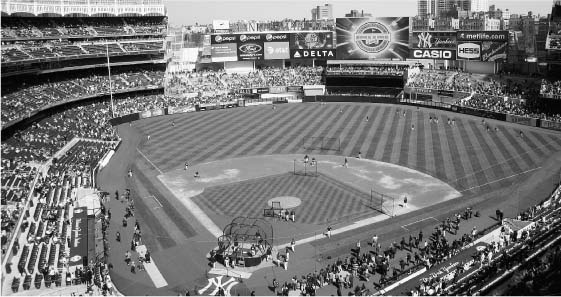
The resource consumption of a typical stadium is enormous, but much of it can be trimmed through proper design and practices. Some alterations are obvious: these LEED-certified venues use compact fluorescent lightbulbs, like many energy-conscious households. Furthermore, water conservation can offer significant savings. American Airlines Arena in Miami has reduced its water bill by $3 million per year. Recycled materials can be used for many purposes, including the carpeting at Philips Arena in Atlanta.
Sustainability
As of 2008, MLB has been advising its 30 franchises on environmental stewardship and sustainable resource management. As of the 2010 season, teams began issuing sustainability reports regularly to track their progress in attaining greater energy efficiency and reducing waste. While the NFL has not involved individual franchises in its environmental program, it has worked with the host cities of major events like the NFL Kickoff, the Pro Bowl, and the Super Bowl to use local renewable energy capabilities when possible, recycle as much attendee-generated waste as possible, and offset the environmental impact of these major events.
...
- Archaeology of Garbage
- Consumption and Waste, Industrial/Commercial
- Acid Rain
- Aluminum
- Celluloid
- Coal Ash
- Computers and Printers, Business Waste
- Construction and Demolition Waste
- Copper
- Emissions
- Farms
- Fusion
- Garbage Project
- Hanford Nuclear Reservation
- High-Level Waste Disposal
- Hospitals
- Incinerator Waste
- Incinerators
- Incinerators in Japan
- Industrial Revolution
- Industrial Waste
- Iron
- Malls
- Medical Waste
- Midnight Dumping
- Mineral Waste
- Mining Law
- Noise
- Noise Control Act of 1972
- Nuclear Reactors
- Ocean Disposal
- Pesticides
- Power Plants
- Producer Responsibility
- Radioactive Waste Disposal
- Restaurants
- Rubber
- Sanitation Engineering
- Scrubbers
- Solid Waste Data Analysis
- Stadiums
- Sugar Shortage, 1975
- Supermarkets
- Sustainable Waste Management
- Thallium
- Uranium
- Waste Disposal Authority
- Consumption and Waste, Personal
- Adhesives
- Aerosol Spray
- Air Filters
- Alcohol Consumption Surveys
- Audio Equipment
- Automobiles
- Baby Products
- Beverages
- Books
- Candy
- Car Washing
- Carbon Dioxide
- Certified Products (Fair Trade or Organic)
- Children
- Cleaning Products
- Composting
- Computers and Printers, Business Waste
- Computers and Printers, Personal Waste
- Consumption Patterns
- Cosmetics
- Dairy Products
- Disposable Diapers
- Disposable Plates and Plastic Implements
- Dumpster Diving
- Engine Oil
- Environmental Tobacco Smoke
- Fast Food Packaging
- Fish
- Floor and Wall Coverings
- Food Consumption
- Food Waste Behavior
- Fuel
- Funerals/Corpses
- Furniture
- Garden Tools and Appliances
- Gasoline
- Gluttony
- Hoarding and Hoarders
- Home Appliances
- Home Shopping
- Household Consumption Patterns
- Household Hazardous Waste
- Human Waste
- Junk Mail
- Lighting
- Linen and Bedding
- Magazines and Newspapers
- Marketing, Consumer Behavior, and Garbage
- Meat
- Microorganisms
- Mobile Phones
- NIMBY (Not in My Backyard)
- Open Burning
- Packaging and Product Containers
- Paint
- Paper Products
- Personal Products
- Pets
- Post-Consumer Waste
- Pre-Consumer Waste
- Recyclable Products
- Recycling Behaviors
- Residential Urban Refuse
- Seasonal Products
- Septic System
- Sewage
- Shopping
- Shopping Bags
- Slow Food
- Sports
- Street Scavenging and Trash Picking
- Styrofoam
- Swimming Pools and Spas
- Television and DVD Equipment
- Tires
- Tools
- Toys
- Wood
- Yardwaste
- Geography, Culture, and Waste
- Africa, North
- Africa, Sub-Saharan
- Argentina
- Australia
- Brazil
- Canada
- Central America
- Chile
- China
- Developing Countries
- European Union
- France
- Germany
- Greece
- India
- Indonesia
- Iran
- Italy
- Japan
- Mexico
- Middle East
- Netherlands
- Pacific Garbage Patch
- Pakistan
- Philippines
- Poland
- Russia
- Saudi Arabia
- Scandinavia
- Singapore
- South Africa
- South America
- South Korea
- Space Debris
- Spain and Portugal
- Switzerland
- Thailand
- Turkey
- United Kingdom
- United States
- Global Cities: Consumption, Waste Collection, and Disposal
- History of Consumption and Waste
- Atomic Energy Commission
- Bubonic Plague
- Clean Air Act
- Clean Water Act
- Cloaca Maxima
- Earth Day
- Environmental Protection Agency (EPA)
- Federal Insecticide, Fungicide, and Rodenticide Act
- Fresh Kills Landfill
- Germ Theory of Disease
- Hazardous Materials Transportation Act
- History of Consumption and Waste, Ancient World
- History of Consumption and Waste, Medieval World
- History of Consumption and Waste, Renaissance
- History of Consumption and Waste, U.S., 1800–1850
- History of Consumption and Waste, U.S., 1850–1900
- History of Consumption and Waste, U.S., 1900–1950
- History of Consumption and Waste, U.S., 1950–Present
- History of Consumption and Waste, U.S., Colonial Period
- History of Consumption and Waste, World, 1500s
- History of Consumption and Waste, World, 1600s
- History of Consumption and Waste, World, 1700s
- History of Consumption and Waste, World, 1800s
- History of Consumption and Waste, World, 1900s
- Industrial Revolution
- Marine Protection, Research, and Sanctuaries Act
- Miasma Theory of Disease
- National Clean Up and Paint Up Bureau
- National Survey of Community Solid Waste Practices
- Price-Anderson Act
- Public Health Service, U.S.
- Recycling in History
- Resource Conservation and Recovery Act
- Resource Recovery Act
- Rittenhouse Mill
- Rivers and Harbors Act
- Safe Drinking Water Act
- September 11 Attacks (Aftermath)
- Société BIC
- Solid Waste Disposal Act
- Toxic Substances Control Act
- Trash as History/Memory
- Waste Reclamation Service
- Issues and Solutions
- Anaerobic Digestion
- Biodegradable
- Browning-Ferris Industries
- Capitalism
- Commodification
- Consumerism
- Definition of Waste
- Downcycling
- Environmental Protection Agency (EPA)
- Environmentalism
- Garbage in Modern Thought
- Goodwill Industries
- Incinerator Construction Trends
- Organic Waste
- Overconsumption
- Politics of Waste
- Pollution, Air
- Pollution, Land
- Pollution, Water
- Recycling
- Rendering
- Salvation Army
- Sierra Club
- Social Sensibility
- Street Sweeping
- Sustainable Development
- Toxic Wastes
- Transition Movement
- Trash to Cash
- Typology of Waste
- Underconsumption
- Waste Management, Inc.
- Waste Treatment Plants
- Water Treatment
- WMX Technologies
- Zero Waste
- People
- Sociology of Waste
- Garbage Dreams
- Avoided Cost
- Crime and Garbage
- Culture, Values, and Garbage
- Economics of Consumption, International
- Economics of Consumption, U.S.
- Economics of Waste Collection and Disposal, International
- Economics of Waste Collection and Disposal, U.S.
- Environmental Justice
- Externalities
- Freeganism
- Garbage Art
- Garbage, Minimalism, and Religion
- Garblogging
- Greenpeace
- Material Culture Today
- Material Culture, History of
- Materialist Values
- Needs and Wants
- Population Growth
- Race and Garbage
- Rubbish Theory
- Socialist Societies
- Sociology of Waste
- Surveys and Information Bias
- Waste as Food
- U.S. States: Consumption, Waste Collection, and Disposal
- Alabama
- Alaska
- Arizona
- Arizona Waste Characterization Study
- Arkansas
- California
- Colorado
- Connecticut
- Delaware
- District of Columbia
- Florida
- Georgia
- Hawaii
- Idaho
- Illinois
- Indiana
- Iowa
- Kansas
- Kentucky
- Louisiana
- Maine
- Maryland
- Massachusetts
- Michigan
- Minnesota
- Mississippi
- Missouri
- Montana
- Nebraska
- Nevada
- New Hampshire
- New Jersey
- New Mexico
- New York
- North Carolina
- North Dakota
- Ohio
- Oklahoma
- Oregon
- Pennsylvania
- Rhode Island
- South Carolina
- South Dakota
- Tennessee
- Texas
- Utah
- Vermont
- Virginia
- Washington
- West Virginia
- Wisconsin
- Wyoming
- Waste, Municipal/Local
- Loading...
Get a 30 day FREE TRIAL
-
 Watch videos from a variety of sources bringing classroom topics to life
 -
Read modern, diverse business cases
-
Explore hundreds of books and reference titles

Read next

More like this
Sage Recommends
We found other relevant content for you on other Sage platforms.
Have you created a personal profile? Login or create a profile so that you can save clips, playlists and searches