
Entry
Reader's guide
Entries A-Z
Subject index
Sierra Club
The Sierra Club is a pioneering grassroots environmental association. Founded in 1892 by conservationist and preservationist John Muir and others, in San Francisco, California, the organization had over 650,000 members as of 2010 and chapters in all 50 states and Washington, D.C., in the United States. It is also affiliated with Sierra Club, Canada, which has been active since 1963.
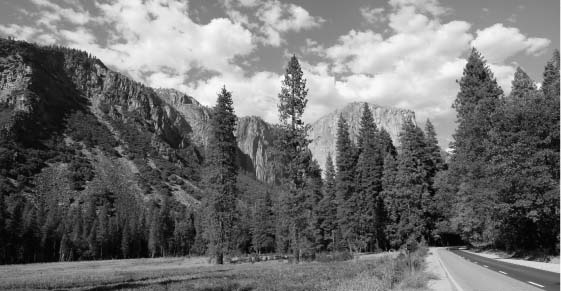
The Sierra Club's initial goals included establishing Glacier and Mount Rainier national parks, convincing the California legislature to give Yosemite Valley (entrance to the park shown here) to the U.S. federal government, and saving California's coastal redwoods. Today, the organization has expanded its scope to 17 conservation-related issues ranging from land-related concerns such as agriculture and forest and wilderness management to political activist causes such as environmental justice, military issues, nuclear issues, and land-use policies.
History of the Organization
The organization was founded by John Muir, Warren Olney (an attorney), and a group of professors from the University of California at Berkeley and Stanford University in May 1892. It was modeled after the eastern Appalachian Mountain Club, and their initial goals included establishing Glacier and Mount Rainier national parks, convincing the California legislature to give Yosemite Valley to the U.S. federal government, and saving California's coastal redwoods.
In the early part of the 20th century, the Sierra Club focused mostly on social and recreational activities by organizing outings and improving trails in the west. In the mid-1950s, the Sierra Club gained in national reputation in preventing the Echo Park dam construction in Dinosaur National Monument in Utah. Primarily because of this effort, it saw its membership swell from 10,000 in 1956 to 15,000 in 1960. In the 1960s, the organization continued campaigning against building dams that would flood portions of the Grand Canyon.
In 1966, full-page ads were placed in major newspapers such as the New York Times and the Washington Post, prompting the Internal Revenue Service (IRS) to suspend the club's 501(c) (3) status, pending an investigation. Hence, the organization noticed steep loss of revenue from contributions, but the memberships continued to increase steadily to about 75,000 members in 1969.
In the 1970s, the club focused on preserving Alaskan lands and eastern wilderness areas as well as supporting various environmental legislation, including the 1976 Toxic Substances Control Act, the Clean Air Act amendments, and the 1977 Surface Mining Control and Reclamation Act. The Sierra Club made its first U.S. presidential endorsement for Walter Mondale in 1984 and has since then continued to support mostly Democrats. In the 2008 presidential election, it endorsed Barack Obama for “his strong record of support for clean air, wetlands protection, and clean energy.”
Environmental Policies
The Sierra Club focuses primarily on 17 conservation-related issues: agriculture, biotechnology, energy, environmental justice, forest and wilderness management, global issues, government and political issues, land management, military issues, nuclear issues, oceans, pollution and waste management, precautionary principle, transportation, urban and land use policies, water resources, and wildlife conservation.
The club has been active in the protection of national forest and other federally owned public lands. It opposed the building of new nuclear reactors (both fission and fusion) until safety risks have been mitigated. It has argued for alternative energy sources to coal, given that coal accounts for over 40 percent of the nation's carbon dioxide emissions, which are a leading cause of respiratory illness. The organization has advocated investment in alternative energy resources, such as wind, solar, and other renewable resources, and favored restructuring energy markets to facilitate innovation, creation of green jobs, and efficient energy use.
...
- Archaeology of Garbage
- Consumption and Waste, Industrial/Commercial
- Acid Rain
- Aluminum
- Celluloid
- Coal Ash
- Computers and Printers, Business Waste
- Construction and Demolition Waste
- Copper
- Emissions
- Farms
- Fusion
- Garbage Project
- Hanford Nuclear Reservation
- High-Level Waste Disposal
- Hospitals
- Incinerator Waste
- Incinerators
- Incinerators in Japan
- Industrial Revolution
- Industrial Waste
- Iron
- Malls
- Medical Waste
- Midnight Dumping
- Mineral Waste
- Mining Law
- Noise
- Noise Control Act of 1972
- Nuclear Reactors
- Ocean Disposal
- Pesticides
- Power Plants
- Producer Responsibility
- Radioactive Waste Disposal
- Restaurants
- Rubber
- Sanitation Engineering
- Scrubbers
- Solid Waste Data Analysis
- Stadiums
- Sugar Shortage, 1975
- Supermarkets
- Sustainable Waste Management
- Thallium
- Uranium
- Waste Disposal Authority
- Consumption and Waste, Personal
- Adhesives
- Aerosol Spray
- Air Filters
- Alcohol Consumption Surveys
- Audio Equipment
- Automobiles
- Baby Products
- Beverages
- Books
- Candy
- Car Washing
- Carbon Dioxide
- Certified Products (Fair Trade or Organic)
- Children
- Cleaning Products
- Composting
- Computers and Printers, Business Waste
- Computers and Printers, Personal Waste
- Consumption Patterns
- Cosmetics
- Dairy Products
- Disposable Diapers
- Disposable Plates and Plastic Implements
- Dumpster Diving
- Engine Oil
- Environmental Tobacco Smoke
- Fast Food Packaging
- Fish
- Floor and Wall Coverings
- Food Consumption
- Food Waste Behavior
- Fuel
- Funerals/Corpses
- Furniture
- Garden Tools and Appliances
- Gasoline
- Gluttony
- Hoarding and Hoarders
- Home Appliances
- Home Shopping
- Household Consumption Patterns
- Household Hazardous Waste
- Human Waste
- Junk Mail
- Lighting
- Linen and Bedding
- Magazines and Newspapers
- Marketing, Consumer Behavior, and Garbage
- Meat
- Microorganisms
- Mobile Phones
- NIMBY (Not in My Backyard)
- Open Burning
- Packaging and Product Containers
- Paint
- Paper Products
- Personal Products
- Pets
- Post-Consumer Waste
- Pre-Consumer Waste
- Recyclable Products
- Recycling Behaviors
- Residential Urban Refuse
- Seasonal Products
- Septic System
- Sewage
- Shopping
- Shopping Bags
- Slow Food
- Sports
- Street Scavenging and Trash Picking
- Styrofoam
- Swimming Pools and Spas
- Television and DVD Equipment
- Tires
- Tools
- Toys
- Wood
- Yardwaste
- Geography, Culture, and Waste
- Africa, North
- Africa, Sub-Saharan
- Argentina
- Australia
- Brazil
- Canada
- Central America
- Chile
- China
- Developing Countries
- European Union
- France
- Germany
- Greece
- India
- Indonesia
- Iran
- Italy
- Japan
- Mexico
- Middle East
- Netherlands
- Pacific Garbage Patch
- Pakistan
- Philippines
- Poland
- Russia
- Saudi Arabia
- Scandinavia
- Singapore
- South Africa
- South America
- South Korea
- Space Debris
- Spain and Portugal
- Switzerland
- Thailand
- Turkey
- United Kingdom
- United States
- Global Cities: Consumption, Waste Collection, and Disposal
- History of Consumption and Waste
- Atomic Energy Commission
- Bubonic Plague
- Clean Air Act
- Clean Water Act
- Cloaca Maxima
- Earth Day
- Environmental Protection Agency (EPA)
- Federal Insecticide, Fungicide, and Rodenticide Act
- Fresh Kills Landfill
- Germ Theory of Disease
- Hazardous Materials Transportation Act
- History of Consumption and Waste, Ancient World
- History of Consumption and Waste, Medieval World
- History of Consumption and Waste, Renaissance
- History of Consumption and Waste, U.S., 1800–1850
- History of Consumption and Waste, U.S., 1850–1900
- History of Consumption and Waste, U.S., 1900–1950
- History of Consumption and Waste, U.S., 1950–Present
- History of Consumption and Waste, U.S., Colonial Period
- History of Consumption and Waste, World, 1500s
- History of Consumption and Waste, World, 1600s
- History of Consumption and Waste, World, 1700s
- History of Consumption and Waste, World, 1800s
- History of Consumption and Waste, World, 1900s
- Industrial Revolution
- Marine Protection, Research, and Sanctuaries Act
- Miasma Theory of Disease
- National Clean Up and Paint Up Bureau
- National Survey of Community Solid Waste Practices
- Price-Anderson Act
- Public Health Service, U.S.
- Recycling in History
- Resource Conservation and Recovery Act
- Resource Recovery Act
- Rittenhouse Mill
- Rivers and Harbors Act
- Safe Drinking Water Act
- September 11 Attacks (Aftermath)
- Société BIC
- Solid Waste Disposal Act
- Toxic Substances Control Act
- Trash as History/Memory
- Waste Reclamation Service
- Issues and Solutions
- Anaerobic Digestion
- Biodegradable
- Browning-Ferris Industries
- Capitalism
- Commodification
- Consumerism
- Definition of Waste
- Downcycling
- Environmental Protection Agency (EPA)
- Environmentalism
- Garbage in Modern Thought
- Goodwill Industries
- Incinerator Construction Trends
- Organic Waste
- Overconsumption
- Politics of Waste
- Pollution, Air
- Pollution, Land
- Pollution, Water
- Recycling
- Rendering
- Salvation Army
- Sierra Club
- Social Sensibility
- Street Sweeping
- Sustainable Development
- Toxic Wastes
- Transition Movement
- Trash to Cash
- Typology of Waste
- Underconsumption
- Waste Management, Inc.
- Waste Treatment Plants
- Water Treatment
- WMX Technologies
- Zero Waste
- People
- Sociology of Waste
- Garbage Dreams
- Avoided Cost
- Crime and Garbage
- Culture, Values, and Garbage
- Economics of Consumption, International
- Economics of Consumption, U.S.
- Economics of Waste Collection and Disposal, International
- Economics of Waste Collection and Disposal, U.S.
- Environmental Justice
- Externalities
- Freeganism
- Garbage Art
- Garbage, Minimalism, and Religion
- Garblogging
- Greenpeace
- Material Culture Today
- Material Culture, History of
- Materialist Values
- Needs and Wants
- Population Growth
- Race and Garbage
- Rubbish Theory
- Socialist Societies
- Sociology of Waste
- Surveys and Information Bias
- Waste as Food
- U.S. States: Consumption, Waste Collection, and Disposal
- Alabama
- Alaska
- Arizona
- Arizona Waste Characterization Study
- Arkansas
- California
- Colorado
- Connecticut
- Delaware
- District of Columbia
- Florida
- Georgia
- Hawaii
- Idaho
- Illinois
- Indiana
- Iowa
- Kansas
- Kentucky
- Louisiana
- Maine
- Maryland
- Massachusetts
- Michigan
- Minnesota
- Mississippi
- Missouri
- Montana
- Nebraska
- Nevada
- New Hampshire
- New Jersey
- New Mexico
- New York
- North Carolina
- North Dakota
- Ohio
- Oklahoma
- Oregon
- Pennsylvania
- Rhode Island
- South Carolina
- South Dakota
- Tennessee
- Texas
- Utah
- Vermont
- Virginia
- Washington
- West Virginia
- Wisconsin
- Wyoming
- Waste, Municipal/Local
- Loading...
Get a 30 day FREE TRIAL
-
 Watch videos from a variety of sources bringing classroom topics to life
 -
Read modern, diverse business cases
-
Explore hundreds of books and reference titles

Read next

More like this
Sage Recommends
We found other relevant content for you on other Sage platforms.
Have you created a personal profile? Login or create a profile so that you can save clips, playlists and searches