
Entry
Reader's guide
Entries A-Z
Subject index
Garbage Art
Garbage art (alternatively known as trash art or recycled art) is art created from materials including post-consumer and other waste, collected debris, or objects previously used for other purposes. It can be viewed as a special form of recycling, and the growth of this genre is a reflection of the increasing importance of environmentalism in all segments of society, including the arts. Creating art from garbage involves transforming the meaning of objects by placing them in new, aestheticized contexts. This practice is not new; tribal peoples have adapted bits of trash from industrialized societies into their traditional arts since coming into contact with products of the developed world. Reworking worn-out or otherwise-useless materials into new objects with aesthetic or functional value also has a long history in folk art traditions around the world. What is relatively new is the widespread popularity of garbage art in industrialized consumer societies in both fine art and community art contexts. Burgeoning interest in the new genre of garbage art is countercultural in several ways; work in the genre expresses critical perspectives on the materialism, commodification, environmental destructiveness, and individualism characteristic of modern consumer culture. Despite its critical political associations, garbage art has enjoyed rising popularity with the broad acceptance of environmentalist ideas that were once considered “radical” into mainstream society.
Garbage art may be seen as a subset of the broader category known as environmental art. The latter also includes works created from natural materials or designed to interact with environmental forces, rather than only those using waste-stream media. Sculpture that produces musical tones when the wind blows through it, or work that decoratively enhances natural objects, are examples of environmental art. Even more broadly, environmental art includes pieces designed for display or performance in natural settings, work inspired by nature, and other conceptual art about environmental relations.
Creation and Materials
Creating art from trash involves “consuming” garbage in the sense that artists appropriate and rearrange the materials in personal ways, transform their meanings, utilize them to their own ends, and represent them in new ways. It involves taking unwanted materials out of their “waste” context and recontextualizing them as “art.” The previous uses and effects of such objects may be symbolically employed to evoke meaningful associations and to communicate messages about consumer society or environmental damage. This remaking of the meaning of objects is a defining characteristic of the garbage art genre and it is often what makes it so enjoyable and accessible to the art-consuming public. The playful and surprising effects of recombining evocative and often familiar objects in ways that transform their meanings provoke a high level of engagement in viewers that does not depend on conventional art appreciation knowledge.
Garbage art (or trash or recycled art) has been in practice for centuries but has remained on the fringes of the art world. It is often seen as a subgenre of what is known as environmental art. Dumpster diving is a popular method of gathering materials.
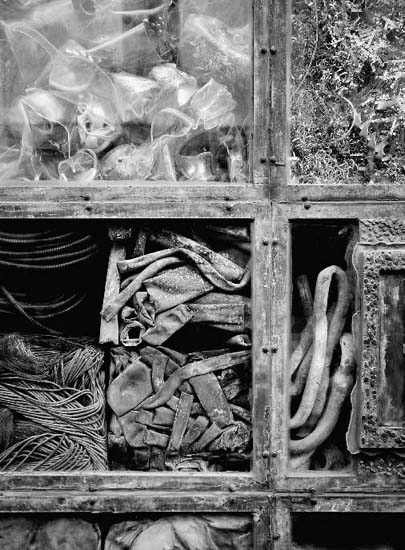
Broadly speaking, garbage art includes phenomena from the margins of industrialized society to its very center. The adoption of cast-off items of industrial origin for their ornamental value by people in nonindustrialized, tribal societies around the world can be considered instances of garbage art; for example, where pop-tops from beer cans, wire paper clips, or keys from sardine tins have been incorporated for their exotic novelty value into traditional jewelry forms. In postcolonial societies that are more thoroughly integrated into global systems of consumer political economy, items of industrial waste such as aluminum cans, telephone wire, and candy wrappers are used to produce artisanal creations such as toy cars, woven baskets, and handbags for both domestic consumption and the international ethnic art market. Such items are often marketed in the industrialized world as Fair Trade commodities produced in workers’ collectives, and they fetch high prices for this reason as well as their “ethno-chic” associations. The reuse of materials otherwise destined for the trash heap has also had a place in folk art produced by nonprofessional artists in developed nations. Traditional quilting, for example, arose as a frugal means of recycling the material from worn-out clothing to create warm bed coverings. Other examples are rugs woven from strips of waste cloth and sculpted figures (sometimes used to advertise auto-repair shops) made by welding together scrap car parts.
...
- Archaeology of Garbage
- Consumption and Waste, Industrial/Commercial
- Acid Rain
- Aluminum
- Celluloid
- Coal Ash
- Computers and Printers, Business Waste
- Construction and Demolition Waste
- Copper
- Emissions
- Farms
- Fusion
- Garbage Project
- Hanford Nuclear Reservation
- High-Level Waste Disposal
- Hospitals
- Incinerator Waste
- Incinerators
- Incinerators in Japan
- Industrial Revolution
- Industrial Waste
- Iron
- Malls
- Medical Waste
- Midnight Dumping
- Mineral Waste
- Mining Law
- Noise
- Noise Control Act of 1972
- Nuclear Reactors
- Ocean Disposal
- Pesticides
- Power Plants
- Producer Responsibility
- Radioactive Waste Disposal
- Restaurants
- Rubber
- Sanitation Engineering
- Scrubbers
- Solid Waste Data Analysis
- Stadiums
- Sugar Shortage, 1975
- Supermarkets
- Sustainable Waste Management
- Thallium
- Uranium
- Waste Disposal Authority
- Consumption and Waste, Personal
- Adhesives
- Aerosol Spray
- Air Filters
- Alcohol Consumption Surveys
- Audio Equipment
- Automobiles
- Baby Products
- Beverages
- Books
- Candy
- Car Washing
- Carbon Dioxide
- Certified Products (Fair Trade or Organic)
- Children
- Cleaning Products
- Composting
- Computers and Printers, Business Waste
- Computers and Printers, Personal Waste
- Consumption Patterns
- Cosmetics
- Dairy Products
- Disposable Diapers
- Disposable Plates and Plastic Implements
- Dumpster Diving
- Engine Oil
- Environmental Tobacco Smoke
- Fast Food Packaging
- Fish
- Floor and Wall Coverings
- Food Consumption
- Food Waste Behavior
- Fuel
- Funerals/Corpses
- Furniture
- Garden Tools and Appliances
- Gasoline
- Gluttony
- Hoarding and Hoarders
- Home Appliances
- Home Shopping
- Household Consumption Patterns
- Household Hazardous Waste
- Human Waste
- Junk Mail
- Lighting
- Linen and Bedding
- Magazines and Newspapers
- Marketing, Consumer Behavior, and Garbage
- Meat
- Microorganisms
- Mobile Phones
- NIMBY (Not in My Backyard)
- Open Burning
- Packaging and Product Containers
- Paint
- Paper Products
- Personal Products
- Pets
- Post-Consumer Waste
- Pre-Consumer Waste
- Recyclable Products
- Recycling Behaviors
- Residential Urban Refuse
- Seasonal Products
- Septic System
- Sewage
- Shopping
- Shopping Bags
- Slow Food
- Sports
- Street Scavenging and Trash Picking
- Styrofoam
- Swimming Pools and Spas
- Television and DVD Equipment
- Tires
- Tools
- Toys
- Wood
- Yardwaste
- Geography, Culture, and Waste
- Africa, North
- Africa, Sub-Saharan
- Argentina
- Australia
- Brazil
- Canada
- Central America
- Chile
- China
- Developing Countries
- European Union
- France
- Germany
- Greece
- India
- Indonesia
- Iran
- Italy
- Japan
- Mexico
- Middle East
- Netherlands
- Pacific Garbage Patch
- Pakistan
- Philippines
- Poland
- Russia
- Saudi Arabia
- Scandinavia
- Singapore
- South Africa
- South America
- South Korea
- Space Debris
- Spain and Portugal
- Switzerland
- Thailand
- Turkey
- United Kingdom
- United States
- Global Cities: Consumption, Waste Collection, and Disposal
- History of Consumption and Waste
- Atomic Energy Commission
- Bubonic Plague
- Clean Air Act
- Clean Water Act
- Cloaca Maxima
- Earth Day
- Environmental Protection Agency (EPA)
- Federal Insecticide, Fungicide, and Rodenticide Act
- Fresh Kills Landfill
- Germ Theory of Disease
- Hazardous Materials Transportation Act
- History of Consumption and Waste, Ancient World
- History of Consumption and Waste, Medieval World
- History of Consumption and Waste, Renaissance
- History of Consumption and Waste, U.S., 1800–1850
- History of Consumption and Waste, U.S., 1850–1900
- History of Consumption and Waste, U.S., 1900–1950
- History of Consumption and Waste, U.S., 1950–Present
- History of Consumption and Waste, U.S., Colonial Period
- History of Consumption and Waste, World, 1500s
- History of Consumption and Waste, World, 1600s
- History of Consumption and Waste, World, 1700s
- History of Consumption and Waste, World, 1800s
- History of Consumption and Waste, World, 1900s
- Industrial Revolution
- Marine Protection, Research, and Sanctuaries Act
- Miasma Theory of Disease
- National Clean Up and Paint Up Bureau
- National Survey of Community Solid Waste Practices
- Price-Anderson Act
- Public Health Service, U.S.
- Recycling in History
- Resource Conservation and Recovery Act
- Resource Recovery Act
- Rittenhouse Mill
- Rivers and Harbors Act
- Safe Drinking Water Act
- September 11 Attacks (Aftermath)
- Société BIC
- Solid Waste Disposal Act
- Toxic Substances Control Act
- Trash as History/Memory
- Waste Reclamation Service
- Issues and Solutions
- Anaerobic Digestion
- Biodegradable
- Browning-Ferris Industries
- Capitalism
- Commodification
- Consumerism
- Definition of Waste
- Downcycling
- Environmental Protection Agency (EPA)
- Environmentalism
- Garbage in Modern Thought
- Goodwill Industries
- Incinerator Construction Trends
- Organic Waste
- Overconsumption
- Politics of Waste
- Pollution, Air
- Pollution, Land
- Pollution, Water
- Recycling
- Rendering
- Salvation Army
- Sierra Club
- Social Sensibility
- Street Sweeping
- Sustainable Development
- Toxic Wastes
- Transition Movement
- Trash to Cash
- Typology of Waste
- Underconsumption
- Waste Management, Inc.
- Waste Treatment Plants
- Water Treatment
- WMX Technologies
- Zero Waste
- People
- Sociology of Waste
- Garbage Dreams
- Avoided Cost
- Crime and Garbage
- Culture, Values, and Garbage
- Economics of Consumption, International
- Economics of Consumption, U.S.
- Economics of Waste Collection and Disposal, International
- Economics of Waste Collection and Disposal, U.S.
- Environmental Justice
- Externalities
- Freeganism
- Garbage Art
- Garbage, Minimalism, and Religion
- Garblogging
- Greenpeace
- Material Culture Today
- Material Culture, History of
- Materialist Values
- Needs and Wants
- Population Growth
- Race and Garbage
- Rubbish Theory
- Socialist Societies
- Sociology of Waste
- Surveys and Information Bias
- Waste as Food
- U.S. States: Consumption, Waste Collection, and Disposal
- Alabama
- Alaska
- Arizona
- Arizona Waste Characterization Study
- Arkansas
- California
- Colorado
- Connecticut
- Delaware
- District of Columbia
- Florida
- Georgia
- Hawaii
- Idaho
- Illinois
- Indiana
- Iowa
- Kansas
- Kentucky
- Louisiana
- Maine
- Maryland
- Massachusetts
- Michigan
- Minnesota
- Mississippi
- Missouri
- Montana
- Nebraska
- Nevada
- New Hampshire
- New Jersey
- New Mexico
- New York
- North Carolina
- North Dakota
- Ohio
- Oklahoma
- Oregon
- Pennsylvania
- Rhode Island
- South Carolina
- South Dakota
- Tennessee
- Texas
- Utah
- Vermont
- Virginia
- Washington
- West Virginia
- Wisconsin
- Wyoming
- Waste, Municipal/Local
- Loading...
Get a 30 day FREE TRIAL
-
 Watch videos from a variety of sources bringing classroom topics to life
 -
Read modern, diverse business cases
-
Explore hundreds of books and reference titles

Read next

More like this
Sage Recommends
We found other relevant content for you on other Sage platforms.
Have you created a personal profile? Login or create a profile so that you can save clips, playlists and searches