
Entry
Reader's guide
Entries A-Z
Subject index
Candy
The package that candy comes in is a large part of its pleasure. From the tale of the five golden tickets in the Wonka chocolate bars in Roald Dahl's iconic novel Charlie and the Chocolate Factory to the heart-shaped gold and velvet embossed Valentine's Day candy boxes to Cracker Jack toys and comics or baseball cards bundled in with bubble gum, people love candy and the package it comes in.
Marketing
Even everyday candy sells itself through its packaging; a cursory look at the candy section of even the smallest convenience store will reveal an amazing display of marketing strategies in the form of package design, materials, color, and font. Novelty candy, like some breakfast cereals, have actually become part of the broader marketing strategy of other products. There are candies that are tied to the release of new movies, sporting events, and even concert tours as exemplified by the guitar- and microphone-shaped gummy candy sold to promote the 2010 concert tour of 15-year-old Hannah Montana.
Holidays
Candy is celebratory. Almost every culture celebrates with sweets, but in the United States, candy and its holiday packaging is central in the celebration of holidays such as Easter, Halloween, Valentine's Day, Christmas, and New Year's; a box of chocolates is often considered the perfect gift for the person who is “hard to buy for.” Candy is also big business. Much of the candy industry's total sales of around $28 billion per year are sold around the holidays. According to the National Confectioners Association, of the $92.91 spent on candy per person in the United States, $20.39 is spent on Halloween candy alone.
Most candy packaging ends up in landfills and can also be found anywhere people litter, such as on streets or in waterways. The mixed polymers used in plastic-film candy packing do not recycle well; most of this waste eventually winds up in a landfill.
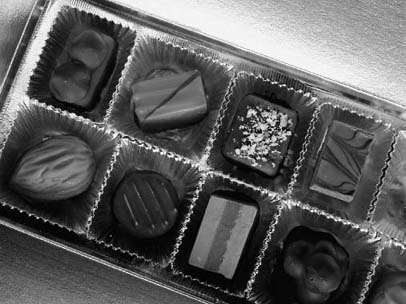
Consumer-Driven Packaging and Waste
All of this celebrating results in a punishing amount of material being sent into the waste stream. Waste and Resources Action Program (WRAP), the United Kingdom's waste management program, estimates that 3,000 tons of waste are generated by the packaging of Easter candy bought in the United Kingdom. In 2009, WRAP worked with confectionary manufacturers, who then significantly reduced the environmental impact of their Easter products.
Not all of candy's packaging is based on marketing strategy; much of it is driven by science. A candy dish is still seen as a form of hospitality, whether it is sitting on a grandmother's coffee table or on a hostess counter at a restaurant. Historically, people would simply reach in with fingers to grab a few unwrapped candies, but people now want after-dinner mints to be individually wrapped so that they are germ free. Keeping germs out of foodstuffs requires packaging.
Some design is concerned with keeping candy from breaking; people want to open candy and find it intact to have the pleasure of breaking it, dividing it up, unraveling or stretching it into bite-size pieces. Keeping candy intact during shipping and storing requires packaging.
...
- Archaeology of Garbage
- Consumption and Waste, Industrial/Commercial
- Acid Rain
- Aluminum
- Celluloid
- Coal Ash
- Computers and Printers, Business Waste
- Construction and Demolition Waste
- Copper
- Emissions
- Farms
- Fusion
- Garbage Project
- Hanford Nuclear Reservation
- High-Level Waste Disposal
- Hospitals
- Incinerator Waste
- Incinerators
- Incinerators in Japan
- Industrial Revolution
- Industrial Waste
- Iron
- Malls
- Medical Waste
- Midnight Dumping
- Mineral Waste
- Mining Law
- Noise
- Noise Control Act of 1972
- Nuclear Reactors
- Ocean Disposal
- Pesticides
- Power Plants
- Producer Responsibility
- Radioactive Waste Disposal
- Restaurants
- Rubber
- Sanitation Engineering
- Scrubbers
- Solid Waste Data Analysis
- Stadiums
- Sugar Shortage, 1975
- Supermarkets
- Sustainable Waste Management
- Thallium
- Uranium
- Waste Disposal Authority
- Consumption and Waste, Personal
- Adhesives
- Aerosol Spray
- Air Filters
- Alcohol Consumption Surveys
- Audio Equipment
- Automobiles
- Baby Products
- Beverages
- Books
- Candy
- Car Washing
- Carbon Dioxide
- Certified Products (Fair Trade or Organic)
- Children
- Cleaning Products
- Composting
- Computers and Printers, Business Waste
- Computers and Printers, Personal Waste
- Consumption Patterns
- Cosmetics
- Dairy Products
- Disposable Diapers
- Disposable Plates and Plastic Implements
- Dumpster Diving
- Engine Oil
- Environmental Tobacco Smoke
- Fast Food Packaging
- Fish
- Floor and Wall Coverings
- Food Consumption
- Food Waste Behavior
- Fuel
- Funerals/Corpses
- Furniture
- Garden Tools and Appliances
- Gasoline
- Gluttony
- Hoarding and Hoarders
- Home Appliances
- Home Shopping
- Household Consumption Patterns
- Household Hazardous Waste
- Human Waste
- Junk Mail
- Lighting
- Linen and Bedding
- Magazines and Newspapers
- Marketing, Consumer Behavior, and Garbage
- Meat
- Microorganisms
- Mobile Phones
- NIMBY (Not in My Backyard)
- Open Burning
- Packaging and Product Containers
- Paint
- Paper Products
- Personal Products
- Pets
- Post-Consumer Waste
- Pre-Consumer Waste
- Recyclable Products
- Recycling Behaviors
- Residential Urban Refuse
- Seasonal Products
- Septic System
- Sewage
- Shopping
- Shopping Bags
- Slow Food
- Sports
- Street Scavenging and Trash Picking
- Styrofoam
- Swimming Pools and Spas
- Television and DVD Equipment
- Tires
- Tools
- Toys
- Wood
- Yardwaste
- Geography, Culture, and Waste
- Africa, North
- Africa, Sub-Saharan
- Argentina
- Australia
- Brazil
- Canada
- Central America
- Chile
- China
- Developing Countries
- European Union
- France
- Germany
- Greece
- India
- Indonesia
- Iran
- Italy
- Japan
- Mexico
- Middle East
- Netherlands
- Pacific Garbage Patch
- Pakistan
- Philippines
- Poland
- Russia
- Saudi Arabia
- Scandinavia
- Singapore
- South Africa
- South America
- South Korea
- Space Debris
- Spain and Portugal
- Switzerland
- Thailand
- Turkey
- United Kingdom
- United States
- Global Cities: Consumption, Waste Collection, and Disposal
- History of Consumption and Waste
- Atomic Energy Commission
- Bubonic Plague
- Clean Air Act
- Clean Water Act
- Cloaca Maxima
- Earth Day
- Environmental Protection Agency (EPA)
- Federal Insecticide, Fungicide, and Rodenticide Act
- Fresh Kills Landfill
- Germ Theory of Disease
- Hazardous Materials Transportation Act
- History of Consumption and Waste, Ancient World
- History of Consumption and Waste, Medieval World
- History of Consumption and Waste, Renaissance
- History of Consumption and Waste, U.S., 1800–1850
- History of Consumption and Waste, U.S., 1850–1900
- History of Consumption and Waste, U.S., 1900–1950
- History of Consumption and Waste, U.S., 1950–Present
- History of Consumption and Waste, U.S., Colonial Period
- History of Consumption and Waste, World, 1500s
- History of Consumption and Waste, World, 1600s
- History of Consumption and Waste, World, 1700s
- History of Consumption and Waste, World, 1800s
- History of Consumption and Waste, World, 1900s
- Industrial Revolution
- Marine Protection, Research, and Sanctuaries Act
- Miasma Theory of Disease
- National Clean Up and Paint Up Bureau
- National Survey of Community Solid Waste Practices
- Price-Anderson Act
- Public Health Service, U.S.
- Recycling in History
- Resource Conservation and Recovery Act
- Resource Recovery Act
- Rittenhouse Mill
- Rivers and Harbors Act
- Safe Drinking Water Act
- September 11 Attacks (Aftermath)
- Société BIC
- Solid Waste Disposal Act
- Toxic Substances Control Act
- Trash as History/Memory
- Waste Reclamation Service
- Issues and Solutions
- Anaerobic Digestion
- Biodegradable
- Browning-Ferris Industries
- Capitalism
- Commodification
- Consumerism
- Definition of Waste
- Downcycling
- Environmental Protection Agency (EPA)
- Environmentalism
- Garbage in Modern Thought
- Goodwill Industries
- Incinerator Construction Trends
- Organic Waste
- Overconsumption
- Politics of Waste
- Pollution, Air
- Pollution, Land
- Pollution, Water
- Recycling
- Rendering
- Salvation Army
- Sierra Club
- Social Sensibility
- Street Sweeping
- Sustainable Development
- Toxic Wastes
- Transition Movement
- Trash to Cash
- Typology of Waste
- Underconsumption
- Waste Management, Inc.
- Waste Treatment Plants
- Water Treatment
- WMX Technologies
- Zero Waste
- People
- Sociology of Waste
- Garbage Dreams
- Avoided Cost
- Crime and Garbage
- Culture, Values, and Garbage
- Economics of Consumption, International
- Economics of Consumption, U.S.
- Economics of Waste Collection and Disposal, International
- Economics of Waste Collection and Disposal, U.S.
- Environmental Justice
- Externalities
- Freeganism
- Garbage Art
- Garbage, Minimalism, and Religion
- Garblogging
- Greenpeace
- Material Culture Today
- Material Culture, History of
- Materialist Values
- Needs and Wants
- Population Growth
- Race and Garbage
- Rubbish Theory
- Socialist Societies
- Sociology of Waste
- Surveys and Information Bias
- Waste as Food
- U.S. States: Consumption, Waste Collection, and Disposal
- Alabama
- Alaska
- Arizona
- Arizona Waste Characterization Study
- Arkansas
- California
- Colorado
- Connecticut
- Delaware
- District of Columbia
- Florida
- Georgia
- Hawaii
- Idaho
- Illinois
- Indiana
- Iowa
- Kansas
- Kentucky
- Louisiana
- Maine
- Maryland
- Massachusetts
- Michigan
- Minnesota
- Mississippi
- Missouri
- Montana
- Nebraska
- Nevada
- New Hampshire
- New Jersey
- New Mexico
- New York
- North Carolina
- North Dakota
- Ohio
- Oklahoma
- Oregon
- Pennsylvania
- Rhode Island
- South Carolina
- South Dakota
- Tennessee
- Texas
- Utah
- Vermont
- Virginia
- Washington
- West Virginia
- Wisconsin
- Wyoming
- Waste, Municipal/Local
- Loading...
Get a 30 day FREE TRIAL
-
 Watch videos from a variety of sources bringing classroom topics to life
 -
Read modern, diverse business cases
-
Explore hundreds of books and reference titles

Read next

More like this
Sage Recommends
We found other relevant content for you on other Sage platforms.
Have you created a personal profile? Login or create a profile so that you can save clips, playlists and searches