
Entry
Entries A-Z
Subject index
Appeal
In both the Senate and House of Representatives, a member may challenge a parliamentary ruling of the presiding officer if he or she believes it violates the chamber's rules. Such a challenge is known as an appeal. A senator appeals to fellow senators to overturn the presiding officer's decision, which can be done by majority vote. In the House, the ruling of the Speaker traditionally has been final, and members are seldom asked to reverse the Speaker's stand. To appeal a ruling is considered an attack on the Speaker. The Senate is more likely to overturn the rulings of its chair, often on political grounds that have little to do with the parliamentary situation.
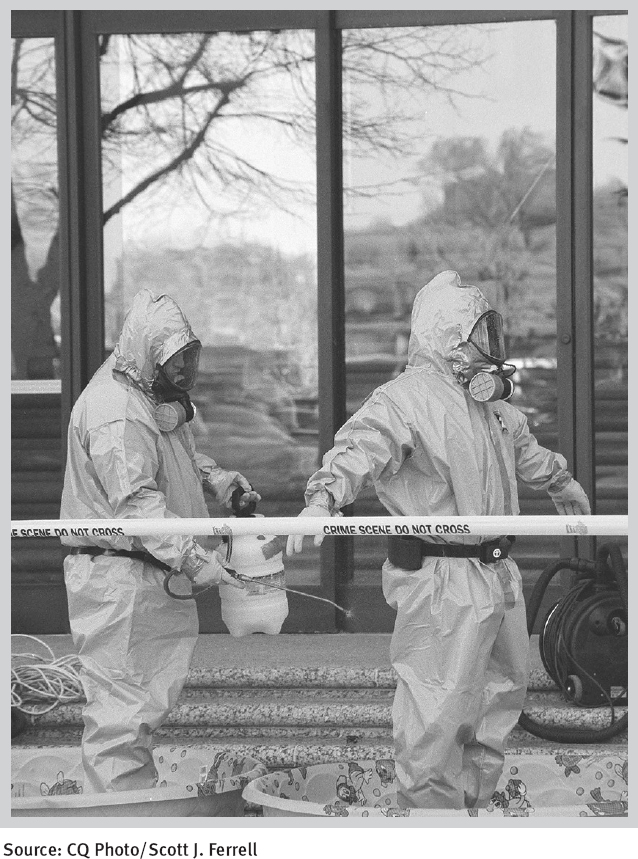
Biohazard workers rinse off after leaving the Hart Senate Office Building in 2001. The building, two blocks from the Capitol, was closed for cleaning after an anthrax-laden letter was opened in the office of Senate Majority Leader Tom Daschle.
Closer Look
The deadly anthrax bacteria were contained in a letter addressed to Senate Majority Leader Tom Daschle, D-S.D., that was opened in the Hart Senate Office Building. Traces of anthrax also were found in other congressional office buildings, all of which were closed temporarily, but the Hart building remained closed for decontamination for ninety-six days.
- anthrax
- senate
- majority leader
- office buildings
- appeals
- offices
- Loading...
Get a 30 day FREE TRIAL
-
 Watch videos from a variety of sources bringing classroom topics to life
 -
Read modern, diverse business cases
-
Explore hundreds of books and reference titles

Read next

More like this
Sage Recommends
We found other relevant content for you on other Sage platforms.
Have you created a personal profile? Login or create a profile so that you can save clips, playlists and searches