
Entry
Entries A-Z
Voters and Congress
Members of Congress play a dual role. As legislators, they pass laws and oversee the federal government's implementation of laws. As representatives, they listen to the views of voters back home and give voice to those views in Washington.
Members have attempted to balance the needs of the country as a whole against local concerns since the First Congress in 1789. The job has become even more challenging as the country and its national government have grown. Serving in Congress has become a full-time, year-round job. Constituencies have grown in size, diversity, and sophistication.
The president, congressional leaders, and national lobbyists all compete to win the support of legislators. But the home constituents hold the ultimate power. By definition, senators and representatives are successful politicians whose skills brought them to Congress in the first place. Not surprisingly, most are adept at courting public favor in their home states and districts.
Legislators keep themselves before the voters' eyes by making frequent trips back home, helping constituents with particular problems, sending out newsletters, and keeping a high profile in the local news. Paying attention to the voters back home has become even more important as the grass-roots influence of the political parties has waned in the decades since World War II.
Members also defend their electoral bases by playing the time-honored game of pork-barrel politics, the effort to obtain federal projects and grants to benefit the home state or district. In addition to doling out the public works projects and other benefits traditionally known as pork, Congress makes countless decisions that can help or hurt a member's constituents—from the closing of a military base to the inclusion of a particular provision in the tax code. Legislators often attempt to influence decisions in their constituents' favor, especially if the constituents are individuals, corporations, or institutions powerful enough to influence the outcome of an election.
Pork and constituent service are among the many advantages incumbents enjoy in congressional elections. Name recognition, a staff paid from public coffers, and media access are others. But in spite of these advantages most lawmakers feel anything but secure and campaign almost continuously. This is especially true of House members whose terms are only two years. This insecurity intensified in the early 1990s as a wave of anti-incumbent sentiment swept the nation and incum-bents began to do less well at the polls. By the 1994 elections this trend had become inflamed by scandals in the House and unpopular policies of Democratic president Bill Clinton. Thirty-four House incumbents, all of them Democrats, lost their seats. This, together with a ten-seat shift in the Senate, resulted in the first Republican Congress in forty years.
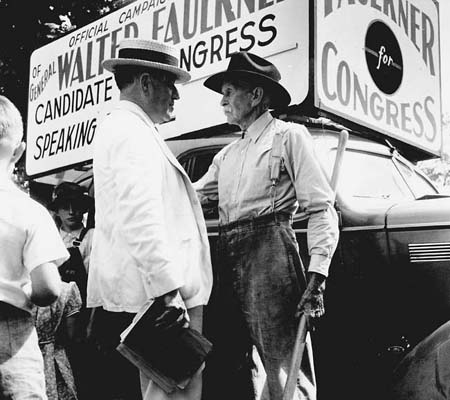
Library of Congress
Four years later in 1998 voter attitudes had changed again. During the midterm elections that year voters did none of what they were anticipated to do; they refused to turn against Clinton for his scandal involving a White House intern, and they ignored electoral precedent by increasing the number of seats the president's party held in Congress. Democrats picked up five seats in the House.
...
Get a 30 day FREE TRIAL
-
 Watch videos from a variety of sources bringing classroom topics to life
 -
Read modern, diverse business cases
-
Explore hundreds of books and reference titles

Read next

More like this
Sage Recommends
We found other relevant content for you on other Sage platforms.
Have you created a personal profile? Login or create a profile so that you can save clips, playlists and searches