
Entry
Entries A-Z
Daschle, Tom
A mild-mannered, popular politician who nonetheless was known for his steely determination to win and underlying partisanship, Tom Daschle (1947–) of South Dakota served as Senate majority leader during a chaotic period from mid-2001 to 2003. Daschle's Democrats captured the Senate after Vermont Republican Sen. Jim Jeffords decided in May 2001 to leave the GOP, become an Independent, and caucus with the Democrats. This change was made official on June 6. That gave the Democrats control of the chamber by a margin of 50 Democrats to 49 Republicans and one Independent.
A few months later, the September 11 terrorist attacks reshaped the congressional agenda as leaders tried to determine how to improve the nation's defenses. Daschle supported the Bush administration's decision to launch a military campaign in Afghanistan and, with reservations, backed a move in 2002 to give the administration the authority to invade Iraq.
However, Daschle's hold on the Senate was tenuous and Democratic losses in the 2002 elections handed control back to the Republicans in the 108th Congress (2003–2005).
Daschle began his congressional career as an aid to South Dakota Democrat Sen. James G. Abourezk in the mid-1970s, before winning a seat in the House in 1978. During his service in the House from 1979 until 1987, he secured his reputation as a fierce advocate of aid to farmers. In 1987 he moved to the Senate, where he became minority leader in 1995. In that post, he negotiated a landmark power-sharing agreement with the Republicans at the beginning of the 107th Congress in 2001, when the Senate was split 50-50 and the GOP was in control because Republican Vice President Richard Cheney had the power to break a tie vote. That agreement gave Democrats equal representation on Senate committees and equal staff resources and office space. That all changed a few months later when Jeffords made his switch.
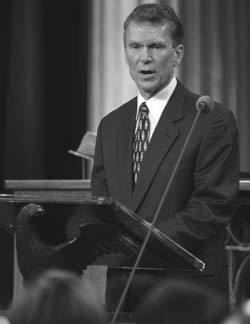
Scott J. Ferrell, Congressional Quarterly
After his tenure as majority leader, Daschle returned to the minority leader post in 2003. Although he had been considered a formidable candidate for the Democratic presidential nomination in 2004, Daschle in early 2003 took himself out of the race. He said he wanted to remain focused on leading his party in the Senate where “my passion lies.”
- senate
- minority leader
- majority leader
- South Dakota
- administration
- will to power
Get a 30 day FREE TRIAL
-
 Watch videos from a variety of sources bringing classroom topics to life
 -
Read modern, diverse business cases
-
Explore hundreds of books and reference titles

Read next

More like this
Sage Recommends
We found other relevant content for you on other Sage platforms.
Have you created a personal profile? Login or create a profile so that you can save clips, playlists and searches