
Entry
Entries A-Z
Aldrich, Nelson W.
Nelson W. Aldrich (1841–1915) was arguably the most influential member of the Senate from the 1890s until his retirement in 1911. A staunch conservative, he allied himself with other like-minded Republican senators to control the first powerful party leadership organization in the Senate.
Aldrich was elected to the House of Representatives from Rhode Island in 1879. In 1881 he resigned from the House to fill a vacant Senate seat, which he held for the next thirty years. A successful financier, Aldrich conformed to the contemporary stereotype of the Senate as a “millionaires' club.” Wealth, however, was not his only claim to the job. He was accomplished at parliamentary tactics and had a strong interest in the economic affairs of the country.
Until the 1890s members of the Senate had only experimented with leadership by political party. In the last decade of the nineteenth century, a group of Republican senators led by Aldrich and William B. Allison of Iowa pooled influence so that they might control the Senate. Calling themselves the School of Philosophy Club, members of the group cemented their ties during after-hours poker games. With the help of his friends, and through force of personality, Aldrich wielded tremendous power even though he held no leadership position until 1899, when he became chair of the Finance Committee.
With Allison, Aldrich effectively controlled committee assignments, the scheduling of legislation, and the business of standing committees. Loyalty to Aldrich and his group was rewarded by good committee assignments and timely consideration of legislation. Rebellious Republicans were punished with the opposite treatment. The Aldrich “machine” was so effective that it was able to hinder the enactment of President Theodore Roosevelt's progressive policies and to force concessions from Roosevelt.
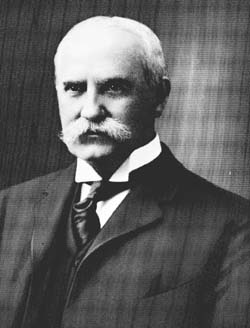
Library of Congress
A champion of commercial interests, Aldrich opposed any substantive regulation of business and was able to temper restrictions imposed by the Interstate Commerce Act of 1887 and the Sherman Antitrust Act. He supported protective tariffs and clashed with Roosevelt over tariff reform. A protectionist tariff bill sponsored by the Aldrich party machine proved so unpopular with the public that it contributed to Republican defeats in the 1910 elections, and the backlash gave impetus to the formation of the Bull Moose or Progressive Party. (See Parties, Political.)
- senate
- Sherman Antitrust Act
- tariff
- committees
- clubs
- legislation
Get a 30 day FREE TRIAL
-
 Watch videos from a variety of sources bringing classroom topics to life
 -
Read modern, diverse business cases
-
Explore hundreds of books and reference titles

Read next

More like this
Sage Recommends
We found other relevant content for you on other Sage platforms.
Have you created a personal profile? Login or create a profile so that you can save clips, playlists and searches