
Entry
Reader's guide
Entries A-Z
Subject index
Moses, Robert (1888–1981)
U.S. civil servant
Born in New Haven, Connecticut, Robert Moses grew up on Manhattan's East Side and received a Ph.D. in political science from Columbia University. Moses disliked the noise, corruption, and chaos of the New York City of his youth, and committed his life to changing it. In 1924, Governor Al Smith of New York appointed him head of the Long Island State Parks Commission. In this role, Moses established thousands of acres of parks and parkways, including Jones Beach State Park (1930), which was nearly two miles long and an important source of recreation and community for millions thereafter. But Moses had bigger tasks ahead.
In 1934, Moses became the New York City parks commissioner and set out to create the modern metropolis. He saw the city of his youth as too unruly, dirty, and dangerous. He spent billions to eliminate New York's congestion and bedlam. He constructed more than 416 miles of parkways, created over 650 playgrounds, designated millions of acres for parks and recreation facilities throughout the state, and built highways, tunnels, and bridges to connect the boroughs of the sprawling city. These monumental accomplishments included the Verrazano-Narrows Bridge (the longest suspension bridge of its time), the Brooklyn-Battery Tunnel, the United Nations Headquarters, and Lincoln Center. He was dubbed “the man who gets things done.”
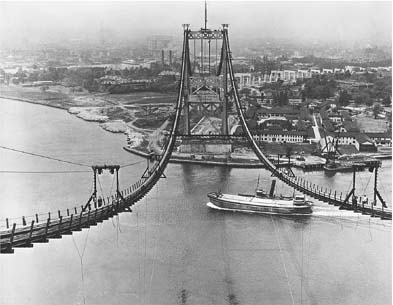
A section of the Triborough Bridge under construction in New York City.
Getting things done, however, required abandoning many of the progressive ideals he had held in his youth. Moses gained considerable power and developed an autocratic arrogance for all those who did not share his vision of New York. As head of the Triborough Bridge Authority, he forged an empire outside the control of elected civic officials, leading to many abuses.
By the 1950s, Moses's actions and attitude began to alienate many New Yorkers. First, his aggressive use of urban-renewal funds to bulldoze homes in lower-class neighborhoods, which he replaced with high-rise public housing projects, destroyed many communities. More than 300,000 New Yorkers were uprooted; Moses believed it was the price to pay for progress. Furthermore, he refused to build modern stadiums for New York's sports teams, resulting in the loss of the Giants and Dodgers, two of New York's baseball teams. The final straw came when he proposed putting a parking lot in Central Park and a highway through Washington Square. By the end of the 1950s, city officials pushed Moses out of office. He spent his last years in public service in charge of organizing the 1964 New York World's Fair. In 1968, Governor Nelson Rockefeller took control of the Triborough Bridge Authority away from Moses, who then retired.
Moses epitomized both the positive and negative aspects of city building in the twentieth century. Massive accomplishments made New York a more ordered city and established the modern metropolis. However, rather than fostering close-knit communities, Moses's methods destroyed neighborhoods and created a stale, cold, city where community was contrived, not real. City planners in New York and across the country have spent the last generation trying to restore the bustling, congested character of the urban environment that Moses removed.
...
- Activism and Social Transformation
- Activist Communities
- Alinsky, Saul
- Altruism
- Appendix 1—Resource Guides: Community Organizing and Activism
- Appendix 1—Resource Guides: Volunteerism
- Appendix 2—Libraries: Community Organizations and Action Groups
- Appendix 2—Libraries: Voting and Elections
- Blockbusting
- Civic Agriculture
- Civic Innovation
- Civic Journalism
- Civil Disobedience
- Collective Action
- Communities of Opposition
- Community Action
- Community Building
- Community Development Corporations
- Community Development in Europe
- Community Empowerment
- Community Garden Movement
- Community Organizing
- Community Studies
- Feminism
- Gay Communities
- Grassroots Leadership
- Healthy Communities
- Interest Groups
- National and Community Service
- Populism
- Pressure Groups
- Public Opinion
- Smart Growth
- Social Movements
- Social Movements Online
- Stakeholder
- Voluntary Associations
- Volunteerism
- Biographies
- Alinsky, Saul
- Aristotle
- Burgess, Ernest Watson
- Calvin, John
- Durkheim, Émile
- Geddes, Patrick
- Goffman, Erving
- Howard, Ebenezer
- Jacobs, Jane
- Le Bon, Gustave
- Lynd, Helen Merrell and Robert Staughton
- Mead, George Herbert
- Morgan, Arthur E.
- Moses, Robert
- Mumford, Lewis
- Olmsted Brothers
- Olmsted, Frederick Law
- Osho
- Owen, Robert
- Park, Robert Ezra
- Redfield, Robert
- Schmalenbach, Herman
- Simmel, Georg
- Stein, Clarence S.
- Tönnies, Ferdinand
- Tocqueville, Alexis de
- Veblen, Thorstein
- Weber, Max
- Whyte, William Hollingsworth
- Wirth, Louis
- Communities, Affinity
- Communities: Case Studies
- Amana
- Amish
- Appalachia
- Arcosanti
- Auroville
- Beguine Communities
- Bruderhof
- Burning Man
- Celebration, Florida
- Chautauqua
- Chernobyl
- Chinatowns
- Columbia, Maryland
- Damanhur
- Emissaries of Divine Light
- Ephrata
- Family, The
- Farm, The
- Findhorn Foundation Community
- Greenwich Village
- Hare Krishnas
- Harlem
- Harmony Society
- Hollywood
- Hutterites
- Jerusalem
- Las Vegas
- Left Bank
- Levittown
- Little Italies
- Lower East Side
- New Harmony
- Oneida
- Puritans
- Quakers
- Radburn, New Jersey
- Riverside Community
- Shakers
- Silicon Valley
- Twin Oaks
- Warsaw Ghetto
- Yamagishi Toyosato
- ZEGG
- Zoar
- Communities, Instrumental
- Activist Communities
- Agoras
- Appendix 2—Libraries: Self-Help and Support Groups
- Asylum
- Boomtowns
- Cattle Towns
- Colleges
- Communities of Opposition
- Communities of Practice
- Community Colleges
- Community Development Corporations
- Community Schools
- Elder Care and Housing
- Gangs
- Ghost Towns
- Homesteading
- Hospices
- Information Communities
- Markets, Street
- Merchant Communities
- Migrant Worker Communities
- Military Communities
- Mill Towns
- Mining Towns
- Prisons
- Public Libraries
- Resource-Dependent Communities
- Schools
- Shopping Centers and Malls
- Student Housing Cooperatives
- Total Institutions
- Twelve Step Groups
- Communities, Intentional
- Amana
- Amish
- Appendix 1—Resource Guides: Intentional Communities
- Arcosanti
- Ashrams
- Auroville
- Bruderhof
- Cohousing
- Damanhur
- Ecovillages
- Emissaries of Divine Light
- Ephrata
- Family, The
- Farm, The
- Findhorn Community Foundation
- Fourierism
- Hare Krishnas
- Harmony Society
- Hutterites
- Intentional Communities
- Intentional Communities and Children
- Intentional Communities and Communal Economics
- Intentional Communities and Daily Life
- Intentional Communities and Environmental Sustainability
- Intentional Communities and Governance
- Intentional Communities and Mainstream Politics
- Intentional Communities and New Religious Movements
- Intentional Communities and Their Survival
- Intentional Communities in Australia and New Zealand
- Intentional Communities in Eastern Europe and Russia
- Intentional Communities in France
- Intentional Communities in Germany, Austria, and Switzerland
- Intentional Communities in India
- Intentional Communities in Israel—Current Movement
- Intentional Communities in Israel—History
- Intentional Communities in Italy, Spain, and Portugal
- Intentional Communities in Japan
- Intentional Communities in Latin America
- Intentional Communities in Scandinavia and the Low Countries
- Intentional Communities in the United Kingdom and Ireland
- Intentional Communities in the United States and Canada—Current Movement
- Intentional Communities in the United States and Canada—History
- Monastic Communities
- Moravians
- Mormons
- New Harmony
- Oneida
- Osho
- Riverside Community
- Shakers
- Twin Oaks
- Utopia
- Zoar
- Communities, Primordial
- African American Communities
- African Americans in Suburbia
- Amish
- Appendix 1—Resource Guides: Community Studies
- Appendix 1—Resource Guides: Race and Ethnicity
- Appendix 1—Resource Guides: Religion
- Asian American Communities
- Beguine Communities
- Chinatowns
- Congregations, Religious
- Cults
- Cyborg Communities
- Disabled in Communities
- English Parishes
- Faith Communities
- Gangs
- Gay Communities
- Immigrant Communities
- Latino Communities
- Little Italies
- Monastic Communities
- Moravians
- Mormons
- Native American Communities
- Puritans
- Quakers
- Refugee Communities
- Sacred Places
- Scientology
- Shakers
- Shtetls
- Transcendentalism
- Transnational Communities
- Communities, Proximate
- Appalachia
- Appendix 1—Resource Guides: Community Studies
- Appendix 1—Resource Guides: Housing and Homelessness
- Chinatowns
- Condominiums
- Edge Cities
- Elder Care and Housing
- Hollywood
- Homelessness
- Little Italies
- Lower East Side
- Mobile Home Communities
- Neighborhoods
- Seasonal Homes
- Shantytowns
- Silicon Valley
- Small Towns
- Villages
- Community Design
- Appendix 1—Resource Guides: Community Planning and Development
- Arcosanti
- Celebration, Florida
- Cohousing
- Columbia, Maryland
- Congrès Internationaux d'Architecture Moderne
- Ecovillages
- Environmental Planning
- Fourierism
- Garden Cities
- Gated Communities
- Gentrification
- Gentrification, Stalled
- Greenbelt Towns
- HOPE VI
- Howard, Ebenezer
- Jacobs, Jane
- Levittown
- Morgan, Arthur E.
- Mumford, Lewis
- Neighborhood Unit Concept
- New Towns
- New Urbanism
- Olmsted Brothers
- Olmsted, Frederick Law
- Owen, Robert
- Radburn, New Jersey
- Regional Planning Association of America
- Siedlung
- Smart Growth
- Sprawl
- Stein, Clarence S.
- Urban Homesteading
- Utopia
- Vernacular Architecture
- Economics
- Appendix 1—Resource Guides: Community Economics
- Appendix 1—Resource Guides: Housing and Homelessness
- Appendix 2—Libraries: Business, Economic, and Employment Resources
- Appendix 2—Libraries: Community Health
- Asset-Based Community Development
- Bankruptcy
- Barter
- Black Economy
- Chain Stores
- Collective Consumption
- Community Currencies
- Community Health Systems
- Community Land Trust
- Community Ownership
- Consumer Culture
- Corporate Social Responsibility
- Economic Planning
- Entrepreneurship
- Export-Led Development in Regional Economies
- Food Systems
- Free Rider
- Housing
- Housing, Affordable
- Import-Replacing Development
- Informal Economy
- Labor Markets
- Land Use and Zoning
- Local Manufacturing
- Multiplier
- Nonmonetary Economy
- Plant Closures
- Public Goods
- Regulation
- Resource-Dependent Communities
- Shared Work
- Social Services
- Subsidies
- Sustainable Development
- Tourist Communities
- Tragedy of the Commons
- Transportation, Rural
- Transportation, Urban
- Waste Facility Siting
- Global Studies
- Apartheid
- Appendix 1—Resource Guides: Global and International
- Appendix 1—Resource Guides: Race and Ethnicity
- Appendix 1—Resource Guides: Religion
- Appendix 2—Libraries: Libraries and International Partnerships
- Artists' Colonies
- Ashrams
- Assimilation
- Birth
- Boundaries
- Buddhism
- Christianity
- Cities
- Cities, Medieval
- Civil Disobedience
- Colonialism
- Communism and Socialism
- Communities of Opposition
- Community Currencies
- Community Development in Europe
- Confucianism
- Cultural Ecology
- Culture of Poverty
- Dance and Drill
- Death
- Democracy
- Diasporas
- Displaced Populations
- Ecovillages
- Environmental Justice
- Ethnicity and Ethnic Relations
- Fascism
- Feminism
- Festivals
- Food
- Food Systems
- Gay Communities
- Genocide
- Global Cities
- Globalization and Globalization Theory
- Glocalization
- Hinduism
- Horticultural Societies
- Human Rights
- Immigrant Communities
- Imperialism
- Internet in Developing Countries
- Islam
- Island Communities
- Judaism
- McDonaldization
- Migrant Worker Communities
- Millenarianism
- Multiculturalism
- Music
- Pastoral Societies
- Pilgrimages
- Plantations
- Political Economy
- Race and Racism
- Rebellions and Revolutions
- Refugee Communities
- Regionalism
- Resettlement
- Sikhism
- Social Capital and Economic Development
- Sociolinguistics
- State, The
- Sustainable Development
- Tourist Communities
- Transnational Communities
- Villages
- Waste Facility Siting
- World War II
- Human Development
- Adolescence
- Adolescents and Landscape
- Age Integration
- Age Stratification and the Elderly
- Appendix 1—Resource Guides: Childhood and Adolescence
- Appendix 2—Libraries: Historical and Genealogical Research
- Appendix 2—Libraries: Literacy
- Birth
- Child Care
- Children
- Community Health Systems
- Community Mental Health Centers
- Community Schools
- Death
- Disabled in Communities
- Elder Care and Housing
- Elderly in Communities
- Family and Work
- Family Violence
- Gender Roles
- Healing
- Home Schooling
- Household Structure
- Human Development
- Initiation Rites
- Liminality
- Marriage
- Peer Groups
- Recreation
- Schools
- Youth Groups
- Internet and Communities
- Appendix 1—Resource Guides: Internet and Communities
- Appendix 2—Libraries: Community Bulletin Boards
- Avatar Communities
- Blogs
- Citation Communities
- Communications Technologies
- Community Informatics and Development
- Computers and Knowledge Sharing
- Cybercafes
- Cyberdating
- Cybersocieties
- Digital Divide
- Electronic Democracy
- Electronic Government and Civics
- Glocalization
- Information Communities
- Instant Messaging
- Internet in Developing Countries
- Internet in East Asia
- Internet in Europe
- Internet, Domestic Life and
- Internet, Effects of
- Internet, Social Psychology of
- Internet, Survey Research About
- Internet, Teen Use of
- Internet, Time Use and
- Newsgroups and E-Mail Lists
- Online Communities of Learning
- Online Communities, African American
- Online Communities, Communication in
- Online Communities, Computerized Tools for
- Online Communities, Diasporic
- Online Communities, Game-Playing
- Online Communities, History of
- Online Communities, Religious
- Online Communities, Scholarly
- Online Communities, Youth
- Personalization and Technology
- Social Movements Online
- Telecommuting
- Virtual Communities
- Virtual Communities, Building
- Wired Communities
- Politics and Law
- Anarchism
- Apartheid
- Appendix 1—Resource Guides: Conflict and Justice
- Appendix 1—Resource Guides: Politics and Government
- Appendix 2—Libraries: Voting and Elections
- Boosterism
- Citizenship
- Civic Structure
- Common Law
- Communism and Socialism
- Communitarianism
- Communities of Opposition
- Community Justice
- Community Policing
- Conflict Resolution
- Conflict Theory
- Crime
- Decentralization
- Democracy
- Deviance
- European Community
- Fascism
- Grassroots Leadership
- Incivilities Thesis
- Interest Groups
- Leadership
- Liberalism
- Libertarianism
- Local Politics
- National and Community Service
- National Community
- Neighborhood Watch
- Organized Crime
- Patriotism
- Polis
- Populism
- Pressure Groups
- Public Opinion
- Regulation
- Social Control
- Social Darwinism
- Social Justice
- Stakeholder
- State, The
- Town Meetings
- Vigilantism
- Processes and Institutions
- Guanxi
- Appendix 1—Resource Guides: Connection to Place
- Cocooning
- Collective Consumption
- Community Arts
- Community Attachment
- Community Colleges
- Community Indicators
- Community Organizing
- Community Psychology
- Community Satisfaction
- Community, Sense of
- Conformity
- Counterfeit Communities
- Decentralization
- Declining Communities
- Economic Planning
- Enclosure
- Environmental Planning
- Eugenics
- Fourierism
- Gentrification
- Globalization and Globalization Theory
- Glocalization
- Hierarchy of Needs
- Institutionalization
- Luddism
- Mass Society
- McDonaldization
- Millenarianism
- Natural Law
- Organizational Culture
- Place Identity
- Pluralism
- Political Economy
- Residential Mobility
- School Consolidation
- Sectarianism
- Small World Phenomenon
- Social Network Analysis
- Suburbanization
- Sustainable Development
- Systems Theory
- Ties, Weak and Strong
- Urbanism
- Urbanization
- Xenophobia
- Religion
- Amana
- Amish
- Appendix 1—Resource Guides: Religion
- Arcosanti
- Ashrams
- Auroville
- Beguine Communities
- Bruderhof
- Buddhism
- Calvin, John
- Christianity
- Confucianism
- Congregations, Religious
- Cooperative Parish Ministries
- Cults
- Damanhur
- Emissaries of Divine Light
- Faith Communities
- Hare Krishnas
- Harmony Society
- Hinduism
- Hutterites
- Initiation Rites
- Intentional Communities and New Religious Movements
- Islam
- Jerusalem
- Judaism
- Millenarianism
- Monastic Communities
- Moravians
- Mormons
- Oneida
- Online Communities, Religious
- Pilgrimages
- Puritans
- Quakers
- Religion and Civil Society
- Rituals
- Sacred Places
- Scientology
- Shakers
- Shtetls
- Sikhism
- Zoar
- Rural Life
- Agrarian Communities
- Agrarian Myth
- Agricultural Scale and Community Quality
- Amish
- Appalachia
- Appendix 1—Resource Guides: Rural Life and Studies
- Cattle Towns
- Civic Agriculture
- Community Land Trust
- Community Supported Agriculture
- Cooperative Extension System
- Cooperative Parish Ministries
- County Fairs
- Ecovillages
- English Parishes
- Ghost Towns
- Homesteading
- Horticultural Societies
- Main Street
- Out-Migration of Youth
- Pastoral Societies
- Ranching Communities
- Rural Community Development
- Rural Poverty and Family Well-Being
- Town and Hinterland Conflicts
- Transportation, Rural
- Watersheds
- Social Capital
- Altruism
- Appendix 1—Resource Guides: Social Capital
- Citizen Participation and Training
- Civic Agriculture
- Civic Innovation
- Civic Life
- Civil Society
- Collective Efficacy
- Community Development Corporations
- Community Garden Movement
- Community in Disaster
- Good Society
- Network Communities
- Nonprofit Organizations
- Progressive Era
- Religion and Civil Society
- Service Learning
- Social Capital
- Social Capital and Economic Development
- Social Capital and Human Capital
- Social Capital and Media
- Social Capital in the Workplace
- Social Capital, Benefits of
- Social Capital, Downside of
- Social Capital, Impact in Wealthy and Poor Communities
- Social Capital, Trends in
- Social Capital, Types of
- Social Network Analysis
- Ties, Weak and Strong
- Trust
- Voluntary Associations
- Volunteerism
- World War II
- Youth Groups
- Social Life
- Guanxi
- Age Integration
- Age Stratification and the Elderly
- Alienation
- Altruism
- Appendix1—Resource Guides: Social and Public Life
- Bars and Pubs
- Caste
- Charisma
- Civil Society
- Class, Social
- Community Psychology
- Conflict Resolution
- Conformity
- Crowds
- Cybercafes
- Cyberdating
- Dance and Drill
- Elderly in Communities
- Empathy
- Festivals
- Food
- Friendship
- Gated Communities
- Gemeinschaft and Gesellschaft
- Gender Roles
- Hate
- Healing
- Hierarchy of Needs
- Homelessness
- Household Structure
- Individualism
- Intentional Communities and Daily Life
- Internet, Domestic Life and
- Jealousy
- Kinship
- Loneliness
- Love
- Marriage
- Men's Groups
- Neighborhoods
- Neighboring
- Peer Groups
- Privacy
- Public Aid
- Public Harassment
- Recreation
- Secret Societies
- Small World Phenomenon
- Social Distance
- Social Network Analysis
- Sport
- Street Life
- Theme Parks
- Third Places
- Ties, Weak and Strong
- Town and Gown
- Urban and Suburban Life
- African Americans in Suburbia
- Appendix 1—Resource Guides: Small Towns and Village Life
- Appendix 1—Resource Guides: Urban and Suburban Studies
- Bedroom Communities
- Blockbusting
- Chinatowns
- Cities
- Cities, Inner
- Cities, Medieval
- Columbia, Maryland
- Community Land Trust
- Edge Cities
- Garden Cities
- Geddes, Patrick
- Gentrification
- Gentrification, Stalled
- Ghettos
- Global Cities
- Greenbelt Towns
- Greenwich Village
- Growth Machine
- Harlem
- Housing
- Jacobs, Jane
- Las Vegas
- Left Bank
- Levittown
- Little Italies
- Lower East Side
- Model Cities
- Mumford, Lewis
- New Towns
- New Urbanism
- Radburn, New Jersey
- Smart Growth
- Sprawl
- Suburbanization
- Suburbia
- Transportation, Urban
- Urban Homesteading
- Urban Renewal
- Urbanism
- Urbanization
- Loading...
Get a 30 day FREE TRIAL
-
 Watch videos from a variety of sources bringing classroom topics to life
 -
Read modern, diverse business cases
-
Explore hundreds of books and reference titles

Read next

More like this
Sage Recommends
We found other relevant content for you on other Sage platforms.
Have you created a personal profile? Login or create a profile so that you can save clips, playlists and searches