
Entry
Reader's guide
Entries A-Z
Subject index
Parole Guidelines Score
Prior to national efforts to reform prison conditions and improve parole guidelines, criminal behavior was thought to have its roots in the psychosocial and environmental aspects of an offender's life. Parole was seen as a major adjunct to the rehabilitation philosophy that dominated American corrections from the 1930s through the 1960s. This rehabilitation-over-retribution ideal, known as the “medical model,” assumed that criminal behaviors could be corrected. Theoretically, every offender could be dealt with on an individual basis to determine the precise causes of his or her criminal behavior. Parole was granted to those deemed to have met the then-nascent correction standards.
The national purpose of revising parole guidelines was to facilitate and improve parole boards' decision-making processes. The use of accountability-driven guidelines aids in helping to make policies more transparent. As a result, predictions about population projections can more easily and efficiently be made and revised. These forecasts can then help to educate and improve the planning of other prison-capacity management policies, including those framing reforms and legislative mandates.
Discretion and Independence
Parole board members, while independent and allowed to deliberate outside their board's guidelines and individually interpret policy, cast their votes as a unified body. As do parole policies of most other states, Texas's parole guidelines grant individual interpretations, and board members exercise their discretion to vote collectively outside the guidelines when necessary. California parole board members individually interpret guidelines yet vote as a caucus on parole issues. Similarly, Georgia's State Board of Pardons and Paroles, Michigan's Parole and Commutation Board, and the New York State Division of Parole all grant unrestricted, individual discretion to their members, whose deliberations will be finalized as well as perceived as collective decisions under their boards' signatures.
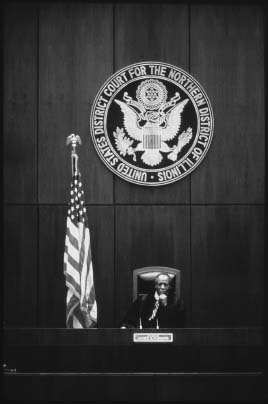
An independent parole board is as vital and as necessary as an independent judiciary. The U.S. Supreme Court ruled, in Swarthout v. Cooke, that a federal appeals court exceeded its power when it reversed a decision by the California Board of Parole hearings. Federal judges have no power to overturn state parole decisions, the Court said in a unanimous ruling that could affect, in the coming years, hundreds of cases in federal courts throughout the United States.
The U.S. Supreme Court made a unanimous ruling that federal judges have no power to overturn state parole decisions, reversing a decision by the California Board of Parole Hearings and thus ensuring the independence of parole boards.
Parole Guidelines
Parole guidelines are a tool that parole boards use to “score” inmates eligible for parole consideration. Scores are computed by calculating (1) inmates' risk factors and (2) their offense severity rankings. The purpose is to make the process of parole consideration a science and not a gamble. Most notable in this endeavor are Texas and Michigan. Texas parole guidelines consider, as risk factors, prior incarcerations and prison disciplinary conduct. The parole board relies on its own ratings of 1,931 felony offenses in the penal code and translates offense severity rankings into an arithmetic value. Risk and severity factors are scored separately and then merged in a composite score ranging from 1 to 7, with 1 representing the highest-risk and highest-offense severity. Offenders in the highest-risk and highest-severity category are scored as 1, and the approval probability range is 0 percent to 5 percent. Offenders in the lowest-risk and lowest-severity category are scored as 7, with an approval probability of 76 percent to 100 percent.
...
- Actuarial Risk Assessment
- Classification Systems
- COMPASS Program
- Firearms Charges, Offenders With
- Hare Psychopathy Checklist
- Level of Service Inventory
- Offender Needs
- Offender Responsivity
- Offender Risks
- Prediction Instruments
- Predispositional Reports for Juveniles
- Risk and Needs Assessment Instruments
- Risk Assessment Instruments: Three Generations
- Wisconsin Risk Assessment Instrument
- Absconding
- Augustus, John
- Benefit of Clergy
- Boston's Operation Night Light
- Case Management
- Caseload and Workload Standards
- Circle Sentencing
- Conditional Sentencing and Release
- Conditions of Community Corrections
- Continuum of Sanctions
- Crime Control Model of Corrections
- Curfews
- Diversion Programs
- Drug Courts
- Faith-Based Initiatives
- False Negatives and False Positives
- Family Courts
- Family Group Conferencing
- Family Therapy
- Felony Probation
- Field Visits
- Investigative Reports
- Juvenile Probation Officers
- Manhattan Bail Project
- Mediation
- Mental Health Courts
- Neighborhood Probation
- Offender Supervision
- Pre-Sentence Investigation Reports
- Pretrial Detention
- Pretrial Supervision
- Probation
- Probation: Administration Models
- Probation: Early Termination
- Probation: Organization of Services
- Probation: Private
- Probation and Judicial Reprieve
- Probation and Parole: Intensive Supervision
- Probation and Parole Fees
- Probation Mentor Home Program
- Probation Officers
- Probation Officers: Job Stress
- Project Safeway
- Recognizance
- Reparation Boards
- Restorative Justice
- Revocation
- Sanctuary
- Shock Probation
- SMART Partnership
- Specialized Caseload Models
- Teen Courts
- Victim-Offender Reconciliation Programs
- Wilderness Experience
- Attitudes and Myths about Punishment
- Attitudes of Offenders toward Community Corrections
- Bail Reform Act of 1984
- Banishment
- Beccaria, Cesare
- Bentham, Jeremy
- Certified Criminal Justice Professional
- Civil and Political Rights Affected by Conviction
- Community Corrections Acts
- Community Corrections and Sanctions
- Community Corrections as an Add-on to Imprisonment
- Community Corrections as an Alternative to Imprisonment
- Community Partnerships
- Cook County Juvenile Court
- Costs of Community Corrections
- Determinate Sentencing
- Employment-Related Rights of Offenders
- Ethics of Community-Based Sanctions
- Flat Time
- Front-End and Back-End Programming
- Goals and Objectives of Community Corrections
- History of Community Corrections
- Humanitarianism
- Indeterminate Sentencing
- Law Enforcement Administration Act Initiatives
- Long-Term Offender Designation
- Loss of Capacity to Be Bonded
- Loss of Individual Rights
- Loss of Parental Rights
- Loss of Right to Possess Firearms
- Loss of Welfare Benefits
- Net Widening
- Philosophy of Community Corrections
- Political Determinants of Corrections Policy
- President's Task Force on Corrections
- Prison Overcrowding
- Public Opinion of Community Corrections
- Public Safety and Collaborative Prevention
- Punishment
- Punishment Units
- Reducing Prison Populations
- Reintegration into Communities
- Second Chance Act
- Sentencing Guidelines
- Serious and Violent Offender Reentry Initiative
- Split Sentencing and Blended Sentencing
- Temperance Movement
- Three Strikes and You're Out
- Victims of Crime Act of 1984
- Violent Offender Reconciliation Programs
- Volunteers and Community Corrections
- Boot Camps
- Community Service Order
- Community-Based Centers
- Community-Based Vocational Networks
- Day Reporting Centers
- Electronic Monitoring
- Financial Penalties
- Fine Options Programs
- GPS Tracking
- Group Homes
- Halfway Houses and Residential Centers
- Home Confinement and House Arrest
- NIMBY Syndrome
- Probation and Parole: Intensive Supervision
- Residential Correctional Programs
- Residential Programs for Juveniles
- Restitution
- Restitution Centers
- Absconding
- Brockway, Zebulon
- Discretionary Release
- Elmira System
- Firearms and Community Corrections Personnel
- Furloughs
- Good Time and Merit Time
- Graduated Sanctions for Juvenile Offenders
- Irish Marks System
- Maconochie, Alexander
- Pardon and Restoration of Rights
- Parole
- Parole Boards and Hearings
- Parole Commission, U.S.
- Parole Commission Phaseout Act of 1996
- Parole Guidelines Score
- Parole Officers
- Pre-Parole Plan
- Prisoner's Family and Reentry
- Probation and Parole: Intensive Supervision
- Reentry Courts
- Reentry Programs and Initiatives
- Salient Factor Score
- Truth-in-Sentencing Provisions
- Victim Impact Statements
- Work/Study Release Programs
- Addiction-Specific Support Groups
- Correctional Case Managers
- Counseling
- Crime Victims' Concerns
- Cultural Competence
- Disabled Offenders
- Diversity in Community Corrections
- Drug- and Alcohol-Abusing Offenders and Treatment
- Drug Testing in Community Corrections
- Effectiveness of Community Corrections
- Elderly Offenders
- Environmental Crime Prevention
- Evaluation of Programs
- Female Offenders and Special Needs
- Job Satisfaction in Community Corrections
- Juvenile Aftercare
- Juvenile and Youth Offenders
- Liability
- Martinson, Robert
- Motivational Interviewing
- Offenders with Mental Illness
- Public Shaming as Punishment
- Recidivism
- Sex Offender Registration
- Sex Offenders in the Community
- Sexual and Gender Minorities and Special Needs
- Sexual Predators: Civil Commitment
- Therapeutic Communities
- Therapeutic Jurisprudence
- Thinking for a Change
- Victim Services
- “What Works” Approach and Evidence-Based Practices
- Women in Community Service Program
- Loading...
Get a 30 day FREE TRIAL
-
 Watch videos from a variety of sources bringing classroom topics to life
 -
Read modern, diverse business cases
-
Explore hundreds of books and reference titles

Read next

More like this
Sage Recommends
We found other relevant content for you on other Sage platforms.
Have you created a personal profile? Login or create a profile so that you can save clips, playlists and searches